Familiarity of Masters and Augusta should be lesson to other golf majors

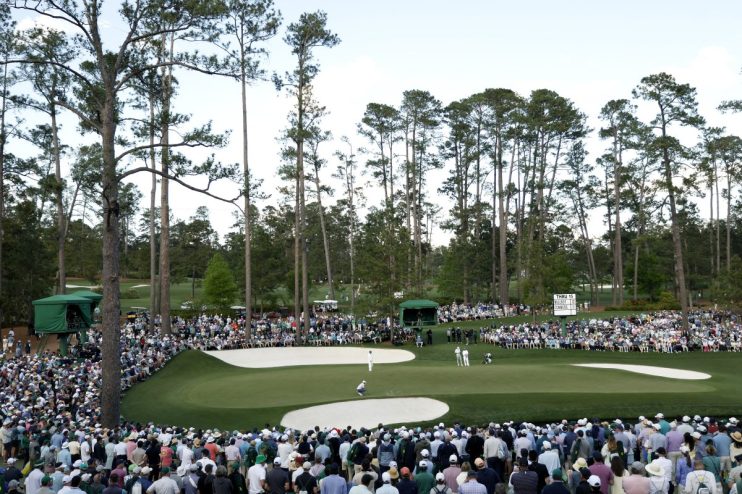
Let me get the azaleas reference out of the way in this first sentence. After all, no Masters preview is seemingly complete without citing Augusta’s horticultural features. The flora are just one ingredient, though, in the secret sauce of golf’s first major of the season which starts today.
Even if other sports could steal the Masters recipe, they’d be hard-pushed to assemble all its essential ingredients. The venue, the history, the victor’s iconic green jacket, the curated exclusivity juxtaposed with balloted inclusivity, the studied (feigned?) eschewing of commerciality, and of course the stiffness of the sporting challenge itself: each is an indivisible part of the whole.
As a members organisation, normal rules don’t apply to the Augusta National Golf Club when it comes to hosting sporting events. Profit maximisation isn’t an obvious concern, or at least not a primary one. This is reflected in ticket prices that are not designed to clear the market. Instead, a ballot for access creates a sense of Willie Wonka golden ticket privilege. $160 for a day pass might seem obscene to the hard-pressed or bonkers to the uninterested, but is a bargain for fans in today’s world of big gigs, festivals and mega sports events. Helpfully, the average spectator then spends a multiple of that sum on official merchandise – which doubtless comes with an embedded high margin.
Masters meritocracy
The democracy of a ballot is a major selling point to commercial partners who are lured by the cachet of exclusivity. Much like the All England Club’s insistence on white tennis gear for players at Wimbledon, so the Masters is notable for being played on a course almost devoid of partner branding. It is delivered, too, via television programming with fewer and shorter ad breaks than normal. For the event’s clutch of just seven official partners, less is more. Each is said to spend up to $10m for the privilege of association.
Were Augusta National Golf Club ever for sale, along with its Masters, the price would surely stretch into the billions
As a private club, Augusta National’s economics stretch opaqueness towards blackout. Online estimates suggest overall annual revenues north of $300m, mostly from the Masters. Augusta is reputed to have no more than 300 members, each a recipient of a personal invitation. Initiation fees are said to stretch into six figures. You may never get your money back, but if invited you can be sure that the financial success of the Masters means you’ll be sure to enjoy an incredibly well appointed club to play at for as long as you’re still able to dangle a putter.
Over nine decades of storied event history means Augusta has no need to reward Masters golfers in line with the other three majors on the circuit – although it does. $4.2m for the winner from a total prize purse of $20m hardly stands out from a string of lesser tournaments on the PGA circuit. The value of a winner’s green jacket in career monetisation must be a significant multiple of the cash prize on offer, however, in golf’s crazy economy.
The green jacket is to golfers what a Super Bowl ring is to American footballers, the yellow jersey on the Champs-Elysees to cyclists, the Lord’s honours board to cricketers and the Ballon d’Or to footballers.
Masters have a home
No point in an outsider trying to rationalise that golf economy, especially in these LIV-inflated times. But while it is fanciful to think that the world’s leading golfers might ever tee off at Augusta at a discounted prize rate, it’s near impossible to imagine they would skip the event in favour of higher sums on offer elsewhere. If you doubt that, just look at how eager LIV rebels have been to maintain access to each of the four majors – and imagine how keen LIV’s paymasters must be for one of their ‘own’ to triumph this weekend.
Creators of new sporting events obviously can’t buy history. They tend then to throw money at glitz, glamour and the athletes themselves – often with novel twists to formats thrown in. If there is one thing a newcomer could learn from the Masters, it is surely the value of the sense of place that Augusta embodies. Back indeed to those azaleas.
It is striking that the Masters is the only golf major with a fixed annual venue. Whereas the other three tournaments rotate around courses with the stature and infrastructure appropriate to the scale and status of the ‘major’ title, Augusta is a rooted point in the calendar as well as in the dreams of fans and competitors alike. Rather than chase dollars elsewhere, the rights holders – the members of the Augusta National – are happy to print them at home.
If the R&A was starting from scratch, knowing all it knows now about the golf industry, should it take The Open around Britain (as now), or would it be better to host it at home, at St Andrews, year-in, year-out? Travelling circuses have their attractions – witness the Olympics and the Super Bowl – but both memories and dreams have a greater chance of taking hold and flourishing when they have fixed roots.
Rooting about
On just that subject, Saudi Arabia’s contract to host the season-end WTA Finals is reportedly not being renewed beyond this year. And so this showcase women’s tennis event will uproot after just three seasons and seek fertile soil elsewhere. A sign of the immediate impact of the conflict in the Middle East, or a recognition that Saudi money doesn’t always constitute the right heritage-building solution?
World Athletics has itself just announced a new event – a standalone World Marathon Championships – for which it is seeking an inaugural host in 2030. Marathon to Athens would be an eye-catching choice and jump start the historical narrative, although that’s not a flat course as Pheidippides discovered to his cost back in 490BC. World Athletics is indeed working with Greek authorities to just that end.
“Our commitment is clear: to restore Attica not only as the birthplace of the Marathon, but as its global capital,” Nikis Hardalias, governor of the Attica region, said this week.
Why not source a permanent home for the Championships and start to build a history, though? Maybe Pheidippides’ route; but there are many options globally for a flat track marathon consisting of laps around iconic sites. Time to ginger up some competitive tension among ambitious mayors of the world’s greatest cities.
One vision
Last week I called for the ECB to be bold in seeking a solution to Middlesex CCC’s travails. A Sport inc. reader messaged to say: “Difficult to know what Middlesex can do other than find an alchemist as coach or an Abramovich to buy them.”
It’s not for the governing body to interfere with on-pitch matters, but the ECB is in a position to broker a solution between the MCC (Middlesex’s landlords), the ‘Tech Titans’ who paid £145m for a 49 per cent stake in the London Spirit franchise in The Hundred (the team based at Lord’s with MCC as 51 per cent owner) and Middlesex’s members. It wouldn’t take much cash or many more days of cricket hosted at Lord’s for Middlesex, rather than at its modest ‘out grounds’, to be transformative.
Yes, that would likely involve whole or partial demutualisation of the troubled county, and doubtless an entirely new board of Middlesex directors, but the prize for all concerned is an attractive one – a thriving first class men’s team playing regularly at the home of cricket, providing inspiration to youngsters across all of London’s boroughs north of the Thames. Governing bodies should not just be about governance. And MCC members should look beyond watching England internationals to their broader responsibilities to the game.
Ed Warner is chair of GB Wheelchair Rugby and writes his sport column at sportinc.substack.com