Vanquis boss defends scrapping dividend as bank swings to profit

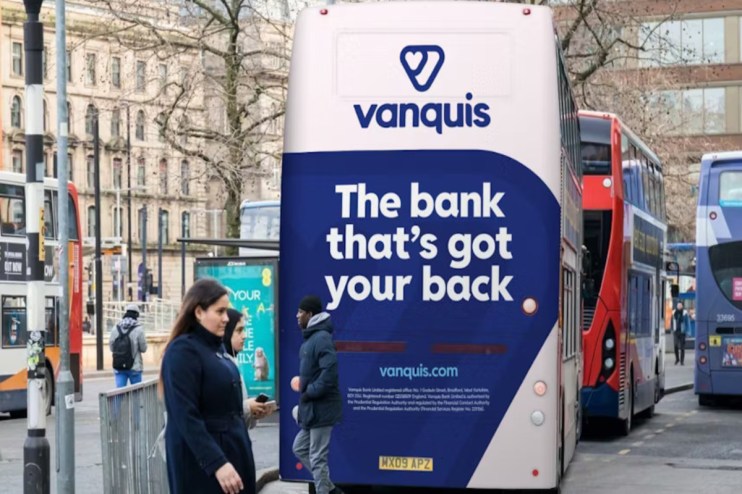
The boss of Vanquis Bank has said he makes no apologies for a “conservative” approach to capital distribution as he launched a staunch defence of the group’s decision to axe its dividend for the second consecutive year.
Ian McLaughlin, who took the helm at Vanquis in August 2023, said the bank’s “number one priority” was getting back to capital generative trading.
In the last 12 months the FTSE 250 bank swung back to profit, pocketing £8.3m compared to last year’s £138m loss.
This came as income edged up two per cent to £455m but operating costs were slashed 33 per cent to £266m. The firm’s cost to income ratio – a crucial metric for profitability – reduced by a whopping 31 points to 58.4 per cent.
Still, the firm scrapped its dividend for the second year in a row, instead stating it expects to deploy capital for growth in the near term and revisit its distribution policy in its 2026 results.
“If that looks a bit conservative in the early stage, I’m fine with that,” McLaughlin told City AM.
“Getting back to being predictable and sustainable in your results is a very, very important part of running a bank so you’ll never have me apologize.”
He added the business’ investors have been through a “turbulent time” with priorities for the year ahead focusing on restoring confidence.
The bank – formerly known as Provident financial – has endured a bruising last decade, following its 2017 scandal where it attempted to replace its 130-year-old model of self-employed agents with full-time staff in its doorstep lending division.
The transition failed as debt collections plunged, leading to Peter Crook, company chief at the time, resigning as shares crashed nearly 70 per cent in a single day.
Vanquis said it would exit doorstep lending – a form of high-cost, short-term borrowing where a lender’s representative visits your home to arrange the loan, deliver cash, and collect weekly repayments – in May 2021 after 141 years.
Vanquis shakes off FOS fuss
In 2024, the firm’s bottom line took a beating after a £71.2m write-off of its car finance business Moneybarn.
Complaint costs also rocketed 66 per cent to £47.4m as fees to the Financial Ombudsman Service (FOS) rose to £24.8m, driven by “unmerited claims management company claims weighing on performance”.
In September 2025, a High Court permitted Vanquis to sue a UK law firm operating a claims management business model as it sought damages for causing losses by unlawful means.
But following the revised FOS fee structure – introduced in the Treasury’s crackdown on the body – Vanquis recorded a major drop in fees to £6.4m as complaint costs reduced to £26.6m.
Vanquis’ net interest margin – a critical barometer of a bank’s ability to generate profit from its lending activities – contracted to 16.5 per cent, from 18.5 per cent last year.
McLaughlin said the entirety of the decrease reflected the “dilution effect” stemming from the group’s rapidly expanding second charge mortgage division.
The division enjoyed rapid growth last year, surging nearly 300 per cent. Its lower-yielding but lower-risk profile dramatically altered the bank’s traditionally high-interest lending mix with the bank’s risk margin down to 11 per cent from 11.8 per cent.
“We’re making sure that we’re delivering good outcomes for customers, and we’re lending them on the basis of affordability being in the right place.
“Could we do more going forward? Maybe – but for now, it’s steady as she goes.”