Fans and athletes both lose in sport’s endless entertainment loop

New tournaments, expanding global championships, tours of dubious sporting merit and very little rest – isn’t it time we gave our athletes a break, asks Ed Warner?
If only the world wasn’t spherical, maybe then we wouldn’t have lost the sporting seasons. As it is, summer bleeds from northern hemisphere to southern, which sends winter northwards in return.
The days of slow boats transporting athletes between continents are long gone. Instead the aviation industry facilitates the insatiable demands of its broadcast counterpart, in turn enabling every willing sport to become a year-round enterprise.
Its stars may become wealthier, but are we all actually poorer?
This Sunday’s Uefa Women’s Euro final marks the end, at last, of the 2024-25 European football season. But the 2025-26 one began 16 days ago in Gibraltar with the opening match in the first qualifying round of the Uefa Conference League.
It was a 2-2 draw between St Joseph’s and Cliftonville from Northern Ireland, in case the game had passed you by. St Joseph’s won after extra time in the return leg and will host Shamrock Rovers in the second qualifier this evening.
Seduced, no doubt, by the commercial reckoning underlying Fifa’s Club World Cup expansion, the International Cricket Council is reported to be on the verge of announcing an equivalent competition.
Shoe-horning a tournament into a fortnight in September 2027 might stretch both fan interest and players’ bodies to breaking point, but it seems as though supporter demand is being taken as a given and that money will triumph over concerns about athlete welfare.
The growing roster of cricket franchise leagues around the world rely on the rotation of talent between the various competitions, enabled in part by ownership groups with teams spanning the globe. Quite how stars will play against themselves, or choose which of their qualifying franchises to represent, remains to be seen.
The ICC must be confident that team brands will trump those of individuals. Or perhaps fan loyalty is deemed irrelevant, just so long as there is some percussive cricket to broadcast. Fodder for casual viewers and addicted gamblers alike.
September is the climax of the English county cricket season. But The Hundred franchise competition would be the qualification route into the ICC’s club tournament. So that’s all right then…
The major sports for individuals allow only a short break in their calendars. Just a few weeks for golfers and tennis stars to rest and repair. Even darts’ top players are grumbling about the relentless travel in a circuit that entices them with the lure of previously undreamt-of riches.
Self-employed athletes can of course choose to skip competitions. Track and field’s leading lights are notorious for late withdrawals from meets as they tailor their conditioning to peak at major championships.
Ranking systems, however, can be punishing masters of diaries. Miss a tournament in golf or tennis and risk plunging down the ladder, jeopardising automatic entry to the majors or lucrative end-of-year competitions.
Sympathy for wealthy athletes stressed by their workloads will likely be in short supply. However, sport’s quality is diminished by injuries to stars, or competitors doing just enough to justify their pay cheques while dreaming of their next day off.
Surely, too, our enjoyment as fans of the events that really matter is diminished if they are squeezed between made-for-TV filler. All parties need time to catch their breath.
Rare beasts
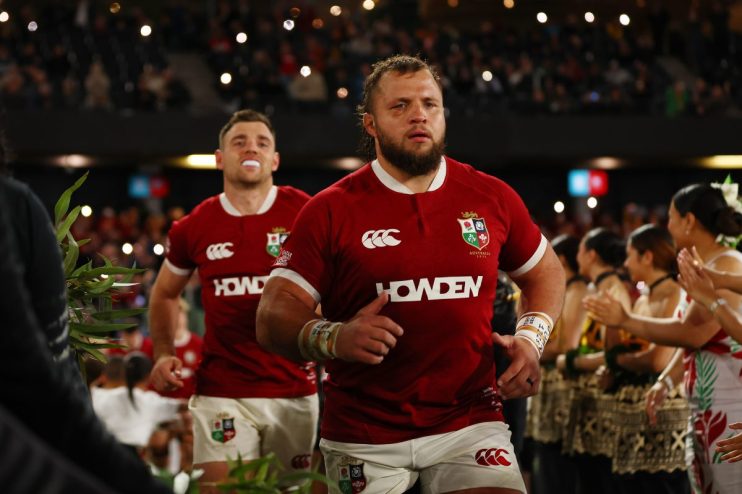
I am not ashamed to admit that I turned off the first British and Irish Lions Test against the Wallabies at half time, confident the contest by then lacked sufficient jeopardy to warrant postponing my weekend chores. It was that or skimp on the London Athletics Meet coverage later in the day.
Journalists in the Suncorp Stadium in Brisbane reported a subdued atmosphere. The TV editor repeatedly cut to images of fans of both teams having a jolly evening out rather than in a state of frenzied anxiety. More festival fun than prize fight.
The Lions brand is an extraordinary success story, partly for pure sporting reasons but also because it is carefully rationed and curated. A tour only every four years gives each a rarity value, and on-field success is far from guaranteed, making any triumph for a scratch collective especially worthy of celebration.
Another comfortable win against Australia this Saturday, though, and the four nations that own the Lions will do well to reflect carefully on the venture’s future development.
The first Lions tour in 1888 began with a 46 day journey to New Zealand’s South Island. A slow boat indeed.
Not that beating the Wallabies should come as any surprise. It’s not just that rugby union is receding in significance within Australian sport; history simply says that this is a series the Lions usually win.
Nine previous tours to Australia have seen them triumph seven times. The only lost series were those in 1930 and 2001. By contrast, a combined 26 tours to New Zealand and South Africa have produced merely five wins and two tied series.
Rugby Australia lost A$37m in 2024. Its CEO has forecast a $50m surplus this year on the back of the Lions’ visit.
Australia, though, is a money-spinning destination. It has comparative wealth and big arenas. Melbourne will hope to see a 100,000 crowd for the second Test.
The Lions’ behind-closed-doors Covid tour to South Africa generated a €9.6m surplus, shared between the unions of England, Ireland, Scotland and Wales. This jaunt Down Under should clear a multiple of that sum. Precious revenue indeed for governing bodies each facing financial challenges.
Those four unions are evidently exploring how they might extend the Lions brand a little without diminishing the cachet of the team’s quadrennial tour. An inaugural Lions Women tour is in the works.
With players enjoying a profit share arrangement for the first time this series, expect a communal interest in such an examination. As with the ICC’s club tournament, this is another case where player welfare will likely bow to financial forces.
60,000 bricks in the wall
A full London Stadium is a solid foundation for the city’s bid to host the 2029 World Athletics Championships. It was great to see government backing announced on Saturday just ahead of the Diamond League action.
I’m not sure if any other nation will want to compete with the prospect of 60,000 filled seats for every evening session in London, just as in 2017. Whatever the competition, I can only see one winner when World Athletics weighs up the options for its flagship event.
Ed Warner is chair of GB Wheelchair Rugby and writes his sport column at sportinc.substack.com