Global markets warned of ‘biggest energy crisis’ in modern history after oil surge

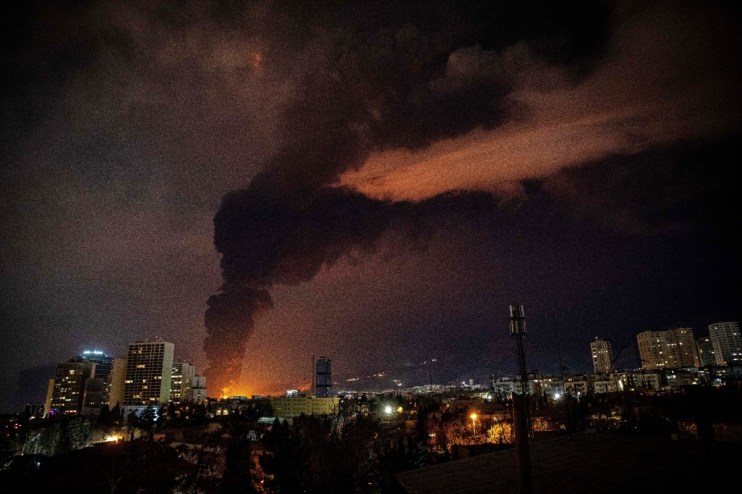
Global economies are facing warnings over what could the “biggest energy crisis” in modern history after the price of oil breached the $100 mark for the first time since the energy crisis in 2022.
Brent crude, the international benchmark for oil, surged over 25 per cent to highs of $118 per barrel as the week’s trading began in Asia – marking the commodity’s biggest one-day gain in six years.
Analysts had warned at the end of last week the commodity was stepping closer to the $100 mark with the eye-watering $150 also on the horizon.
“The weirdest part of this crisis was how for decades energy analysts have told us a closure of the Strait of Hormuz could see oil at levels closer to $150 than $100 but how slow many were to react to it,” Mizuho Bank’s Jordan Rochester said.
“The market is waking up from its slumber, coming round to our view that this may be a war but it’s also perhaps the biggest energy supply/logistics crisis we’ve ever seen in modern history.”
Wall Street titan Goldman Sachs has forecast the price of oil could breach the $150 mark by the end of the year if the war in the Middle East does not reach solution.
Analysts at the bank have warned the impact of the US and Israel’s war with Iran could have consequences 17 times worse than the peak of April 2022, where world economies battled an energy crisis following Russia’s invasion of Ukraine.
The fresh surge came as the Middle East war continued to hit key oil infrastructure leading to nations slashing production whilst traffic through the all-important Strait of Hormuz – which around a fifth of the world’s oil supply flows through – has all but halted.
Kuwait’s state oil company said over the weekend it was trimming output, while the United Arab Emirates’ state-run oil firm said it was “managing” some output, suggesting possible production cuts.
Trump: Oil surge is a ‘small price to pay’
In 2022 Brent crude briefly broke above $120 a barrel and hit highs of $145 a barrel in 2008, with both moves leading to major consequences for the global economy.
Kathleen Brooks, research director at XTB, noted Iraq was now producing a quarter of the oil it was before the US and Israel strikes on Iran, at 1.3m barrels per day down from 4.3m.
“This is roughly three per cent of global oil supply lost in a single event. Shockingly, this is worse than the oil supply situation after Russia attacked Ukraine.”
Goldman Sachs anticipated that flows of oil through the Strait of Hormuz would fall to 15 per cent on normal levels. But the blockade by Iran has meant just ten per cent of oil cargoes that usually pass through the waterway have been able to make it through.
In a Truth Social post reacting to the latest price surge, Donald Trump has said it is “a very small price to pay for USA, and world”.
The US president stated the oil price increases “will drop rapidly when the destruction of the Iran nuclear threat is over”.
Elsewhere, the Financial Times has reported G7 finance ministers are set to discuss a possible joint release of petroleum from reserves co-ordinated by the International Energy Agency in an emergency meeting today, in a bid to tackle surging oil prices amid conflict in the Middle East.
The ministers and Faith Birol, International Energy Agency executive director, are expected to hold a call at 8:30am New York time to discuss ways to mitigate the impact of the Iran war.