World’s top oil producer warns ‘catastrophic consequences’ after Iran threats

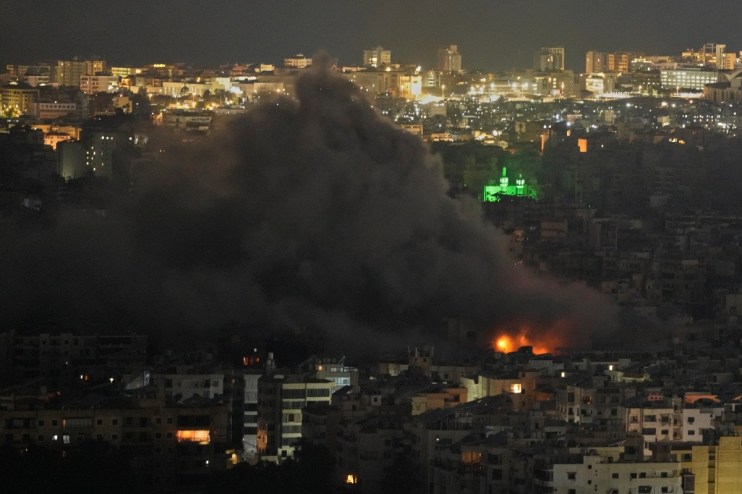
The world’s top oil producer has warned of “catastrophic consequences” for the commodity’s global market after Iran threatened to block key shipping routes.
Saudi Aramco – the state-owned national oil company of Saudi Arabia which controls over 270 billion barrels of reserves – has sounded the alarm that the Iran’s blocking of the Strait of Hormuz could upend the global economy.
Around a fifth of the world’s oil supply passes through the narrow waterway, which has all-but-halted since the outbreak of conflict in the Middle East.
Aramco chief executive Amin Nasser warned the disruption, which has already struck the shipping and insurance sector, could also hit aviation, agriculture and carmaking,
“There would be catastrophic consequences for the world’s oil market the longer the disruption goes on, and the more drastic the consequences for the global economy,” Nasser said.
“While we have faced disruptions in the past, this one by far is the biggest crisis the region’s oil and gas industry has faced.”
The warnings come despite the price of oil taking a tumble overnight on Monday after President Trump said the war in the Middle East was set to end “very soon”.
But tensions remain elevated with Iranian state media reporting the nation’s Revolutionary Guards stating they will “determine” when the war ends and would not allow “one litre of oil” to be exported from the region if strikes continue.
Analysts have also warned a peaceful resolution may not match the pace of the market rebound.
War continues at ‘full speed’ despite Trump remarks
Trump wrote on social media last night: “If Iran does anything that stops the flow of Oil within the Strait of Hormuz, they will be hit by the United States of America TWENTY TIMES HARDER than they have been hit thus far.”
Brent crude – the international benchmark for oil – fell to around the $90 mark after Trump described the Iran was as “very complete, pretty much.”
This came after oil notched its single fastest gain one-day in six-years reaching highs of $118 on the back of tensions in the Gulf.
“Given that the fighting is continuing and the key Strait of Hormuz remains impassable, worry is still percolating,” said Susannah Streeter, chief investment strategist at Wealth Club.
Streeter added prices were 25 per cent higher than when the conflict began, still providing a depth of anxiety for markets.
“Until a longer‑term resolution is found, companies and consumers are still set to pay the price for the attack by the US and Israel on Iran,” she said.
“The repercussions for an array of everyday costs affecting companies and households are becoming clear.”
The FTSE 100 roared back to life as markets opened on Tuesday, following suit with Asian markets which rebounded overnight.
London’s blue-chip index jumped over one per cent at the starting bell to 10,367.76p.
Ipek Ozkardeskaya, senior analyst at Swissquote, said: “The fact that investors overreact to every piece of news without questioning feasibility adds another layer of difficulty when navigating markets.”
She said despite Trump’s bullish intent the war was near completion “the conflict in the Middle East continues at full speed, political developments are not pointing to a near-term resolution, and there is little clarity about the US plans in this war”.
‘No one knows’ when war could end
French President Emmanuel Macron has ordered “unprecedented” naval deployment to the Strait of Hormuz in a bid to shield shipments and get oil supply flowing.
It comes after an emergency meeting with G7 finance ministers, centring around a discussion to release their strategic oil reserves to ease supply issues.
Ozkardeskaya said this served as the “catalyst” for yesterday’s major swing in oil prices as markets ended the day on mounting speculation that the Iran war “would end ‘soon'”.
“How soon? No one knows,” she added.
She noted the strategic reserves play may also not be the be defining win for the G7 nations, as they maintain the capacity to release just around 300 to 400 million barrels of oil.
“Global oil demand is about 100 million barrels per day. So we’re talking about roughly 3–4 days of global demand. That’s not much.”
Deutsche Bank analysts said the comments from Trump helped ease market fears of an “unsustained energy shock”, however they warned “the timing for any resolution of the war remains far from clear”.
“There are also doubts over Tehran’s willingness to de-escalate,” they added, with the latest round of strikes from Israel onto Iran last night set to further contribute to escalating tensions in the Gulf.