Which UK banks are next in line for a takeover?

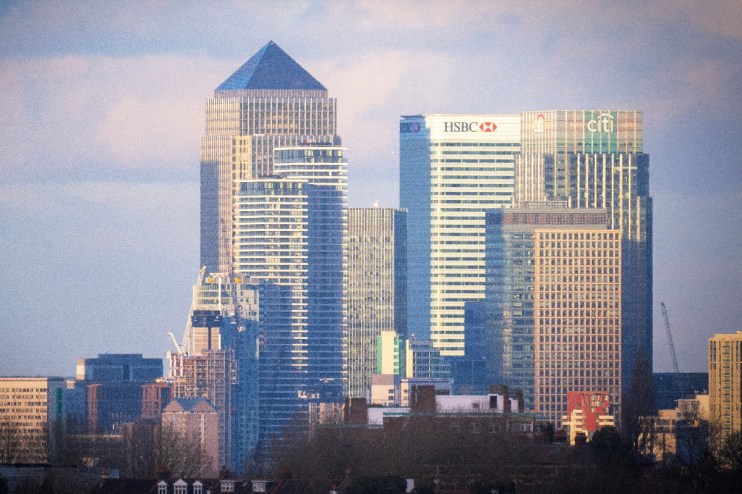
As the next wave of banking consolidation kicks off, specialist lenders are in the fray to be swallowed up.
The industry has seen a flood of mergers and acquisitions in recent years, of which the latest was a landmark tie-up between Santander and TSB Bank.
Santander snapped up 12-year old British high street lender TSB for £2.65bn at the beginning of July from Sabadell, in another mid-tier consolidation.
But Moody’s analysts have said further deals with mid-tier banks were “unlikely for the time being” and instead specialist lenders would “drive UK bank consolidation in the months ahead”.
Specialist banks make an attractive purchase for a big-name lender, as a way to diversify their operations through gaining a foothold in a more niche market.
“These banks are generally profitable, making them attractive to incumbent buyers, and are in some cases owned by private equity firms that may be open to merger and acquisition approaches,” analysts Alessandro Roccati and Simon James Robin Ainsworth said.
Paragon
Analysts named Paragon, which boasts a market capitalization of nearly £1.8bn, as a top contender for takeover.
As of July 9, Paragon’s price-to-earnings ratio – a key assessment for how much an acquirer is paying for each pound of the bank’s earnings – touched 9.26, meaning the bank’s stock traded at 9.26 times its earnings.
Between the attractive valuation for takeovers and healthy net interest margin – a crucial metric of how profitable a bank is from lending – the firm could catch the eyes of buyers.
The FTSE 250 bank’s profit jumped 26.7 per cent to £149.4m in the first half of the year after a boost from mortgage lending.
Paragon’s commercial lending portfolio includes development finance, SME lending and asset finance.
OSB
Specialist mortgage lender OneSavings Bank (OSB) focuses on subsegments such as buy-to-let.
The bank’s market capitalisation nears £1.9bn with a price-to-earnings ratio just short of seven.
OSB has already been caught in M&A speculation, with reports it had mulled a merger with Charter Court Financial Services group – a provider of specialist mortgage products.
The FTSE 250 bank last year flagged “increased competition in the subdued mortgage market” as the Bank of England began to take the chop to interest rates.
Shares took a beating last year but have since gained over 40 per cent for the year-to-date to 561p. Further rallies could help the bank tip its all-time high of 590p set in April 2022.
Shawbrook
Compared to OSB and Paragon, analysts noted Shawbrook was “unlike” its peers but still made a prime candidate for buyers.
The private equity-owned bank held £15bn in loans and £16bn in deposits at the end of 2024.
The firm has already made its M&A appetite clear with interest in a £5bn merger with UK fintech veteran Starling and reports its owners, Pollen Street, approached Metro Bank regarding a takeover.
Both potential deals appear to have fizzled out, but Moody’s analysts suggested Shawbrook could find itself at the heart of another bid – though on the receiving end.
Close Brothers
Close Brothers marks a different case for a deal due to its ongoing Supreme Court case.
The bank took its fight to overturn the Court of Appeal’s October ruling, which found it unlawful for banks to pay a commission to a car dealer without the customer’s informed consent, to the highest court in the land in April.
“The bank could become a takeover target if any such penalties were sufficiently large to weaken its solvency: its specialist expertise would be attractive to larger banks and its high
cost base would provide an opportunity for buyers to extract synergies,” Roccati and Ainsworth said.
But they warned “significant liabilities” could deter potential buyers.
The bank’s price-to-earnings ratio swung into the negative after plunging to a £104m loss in the first half of 2025.
Shares have managed to make some recovery since the Court of Appeal’s landmark verdict after rallying over 70 per cent for the year-to-date.
But this remains down over 17 per cent for the year floating around 400p.
The buyers
Of the “Big Five incumbents” – Natwest, Lloyds, Barclays, HSBC and Nationwide – analysts expect just three to be “interested in making targeted acquisitions”.
Lloyds is predicted to sit on the sidelines due to its established dominance in retail banking, holding an 18 per cent share of loans and 16 per cent in deposits.
Similarly, Nationwide is expected to be occupied with integrating its £2.3bn takeover of Virgin Money.
Instead, HSBC, Natwest and Barclays are expected to take an active position to strengthen their position in the competitive market.
Weak economic growth holding back credit demand, high operating costs and eroding net interest income were all cited behind the anticipated increase in deals.
“We foresee no let up in these pressures in the months ahead,” analysts said.