Celebrity-backed spirit brands steal the spotlight

Whisky Business: City AM’s monthly look at the world of whisky.
According to research conducted by the Financial Times, five of the biggest listed alcohol producers, Diageo, Pernod Ricard, Campari, Brown Forman and Rémy Cointreau, are sitting on $22bn worth of ageing spirits, the highest level of inventory in more than a decade.
This growing pool of unsold inventory has revived memories of the great ‘Whisky Loch’ of the 1980s, a result of excessive production in the 1960s and 1970s.
The resulting ‘Loch’ of unsold whisky had a profound impact on the industry. Prices were cut to shift the mountain of unsold stock, while dozens of distilleries were mothballed or closed as production plunged.
Today, it’s not just Scottish producers that are feeling the pain. At the end of last year, the maker of Jim Beam bourbon whiskey said it would halt production at its main site in Kentucky for all of 2026.
Pernod Ricard, the maker of Absolut vodka, Jameson Irish whiskey and Martell cognac, booked a 19 per cent drop in operating profit in the six months to the end of December, while Campari has slashed output and divested brands.
The backdrop for the industry has become so bad that Pernod Ricard and Brown-Forman have confirmed that they are discussing a “potential business combination” which they say would be “akin to a merger of equals”.
It’s likely that, as is the case with most mergers, a combination would lead to significant job losses as the enlarged group seeks to lower costs.
Celebrity-backed spirit launches
Spirits and beverage producers of all shapes and sizes are suffering from a downturn in demand driven by lower global consumption of alcoholic beverages.
According to IWSR, the global leader in beverage alcohol data and insights, across the 22 key markets that make up 75 per cent of global alcohol and spirit sales, global beverage alcohol (TBA) declined by two per cent in 2025, driven primarily by a drop in the consumption of “national spirits” (particularly Baijiu in China).
The spirits category was the worst-performing major category overall across the 22 markets in 2025, losing four per cent in volume and nine per cent in value.
However, as legacy brands struggle, newer, celebrity-backed brands are taking market share.
Over the past decade, there’s been a rise in celebrity-owned and heavily backed or endorsed brands, as public figures leverage their social media presence to launch new products.
Casamigos Tequila, co-founded by George Clooney, arguably ignited this trend after its $1bn (£740m) sale to Diageo in 2017.
Then, in 2020, Ryan Reynolds sold his stake in Aviation American Gin to Diageo for $600m (he bought the stake in 2018).
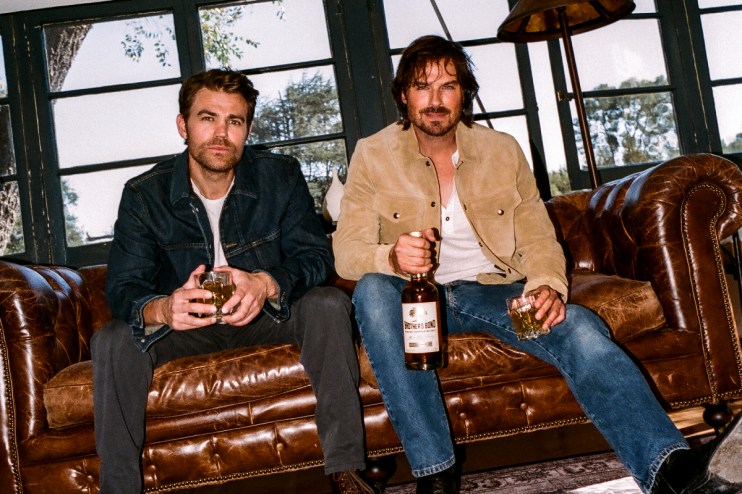
In 2020, the trend accelerated with the likes of Dwayne ‘The Rock’ Johnson’s Teremana Tequila hitting the shelves, along with Brother’s Bond Bourbon, founded by former Vampire Diaries actors Ian Somerhalder and Paul Wesley.
In 2024, SirDavis, a premium American rye whisky, was launched by Beyoncé in collaboration with Moët Hennessy. José Mourinho, Meghan Markle, Robbie Williams, Avril Lavigne, Kylie Minogue and 50 Cent all stepped into the space in 2025.
Market growth
In 2024, the year for which the most recent IWSR data is available, celebrity-backed brands, defined as both celebrity-owned and highly-backed/-endorsed brands, outperformed in three of the seven major alcoholic beverage categories.
The most notable jump was in the champagne category, where volume increased 26 per cent for celebrity-backed brands compared to a decline of seven per cent for the wider category.
Rum also recorded a strong outperformance, up 32 per cent for celebrity-backed brands compared to a one per cent decline for the rest of the market.
Notably, celebrity-backed whisky, gin and vodka brands underperformed the wider market by one to five per cent.
Ready-to-drink (RTDs) pre-mixed beverages were by far the fastest-growing celebrity-backed segment. RTD volumes jumped 266 per cent in 2024, compared to the market’s three per cent.
And while figures for the celebrity market in 2025 are not yet available, IWSR’s preliminary wider-market data suggest this trend continued.
RTD volume growth was two per cent and value growth was four per cent last year, the only major category to experience growth in 2025 across the markets covered in the data.
Roisin Vulcheva, IWSR Senior Insights Manager, attributes this jump to the health and wellness trend, saying, “Traditionally, celebrities have endorsed premium spirits categories such as whisky, cognac, vodka, tequila, and gin.
In recent years, they have become increasingly active, particularly in RTDs and non-alcoholic beer, tapping into the growing moderation trend while partnering with brands that align with their lifestyle and brand positioning around health and wellness.”
Notably, consumers also appear willing to pay more for celebrity-backed brands.
Figures published back in 2023 by Union, a hospitality insights platform, showed that consumers are happy to pay up to 73 per cent more on average for celebrity spirits.
As concerns grow for the state of the rest of the industry, it looks as if, for the time being at least, celebrity-backed brands will continue to grab market share.