Nato and Europe must be ‘stronger,’ JP Morgan’s Dimon tells Davos

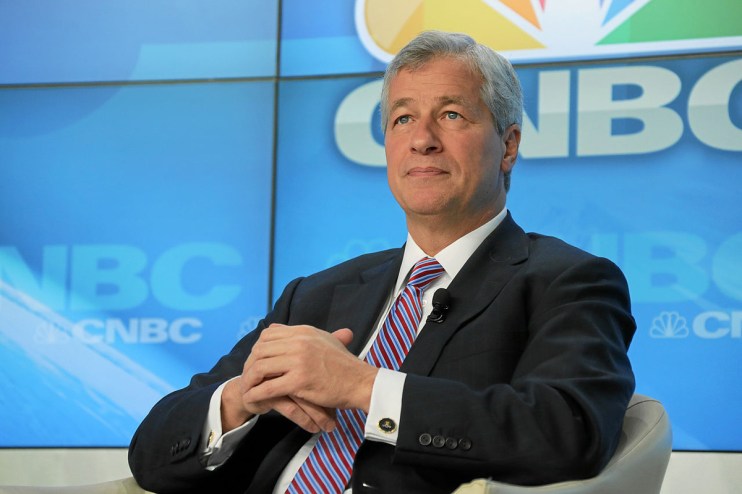
The world’s most influential banker has said the world is “simply not safe” and called for a stronger Nato and Europe in a chilling warning to the economic elite at Davos.
Speaking at the World Economic Forum, JP Morgan’s top boss Jamie Dimon said the eyes of the world “woke up” after Russia’s invasion of Ukraine.
“We thought the world was safe – it’s simply not safe.”
When pressed on Trump’s latest tariff salvo on European nations, where he threatened 10 per cent levies from 1 February due to the defence of Greenland’s sovereignty, Dimon endorsed the use of “economic persuasion to push Europe to be stronger.”
“We need a stronger Nato, we need a stronger Europe,” he said.
Though when asked for his opinion on whether Trump was making the world safer, he said it was not a “binary thing”.
“We should do what we have to do to create national security… some of that may require policy that is not typical, like tariffs,” he said.
But Dimon did also make clear he was “not a tariff guy in general”.
“I don’t think in general it’s a great idea,” he said confirming tariffs as a economic policy was an area of disagreement between himself and the President.
When accused if there was a climate of fear in American chief executives to criticise Trump, Dimon hit back: “I have made clear I want a stronger Nato, a stronger Europe. Some of the things Trump has done are causing that, some are not.”
JP Morgan feels Trump’s wrath
After JP Morgan’s full-year results released earlier this month, Dimon triggered friction with the President as he weighed in on Trump’s latest attacks on the Federal Reserve.
“Anything that chips away” at the central bank’s independence “is not a good idea,” he said, adding “everyone we know believes in Fed independence”.
Trump hit back branding Dimon as “wrong” and accusing him of wanting “higher [interest] rates” in order to “make more money that way”.
Just days later, the President ramped up his attacks threatening to sue JP Morgan in the coming weeks for “incorrectly and inappropriately” debanking him following the 6 January riots.
In the financial rpeort, Dimon also warned markets not to underestimate current geopolitical and economic risks as the US banking giant hiked its provisions for bad loans.
While the banker acknowledged the US economy had remained “resilient” with consumer and business trends “generally healthy,” ongoing risks had persisted.
“Markets seem to under-appreciate the potential hazards – including from complex geopolitical conditions, the risk of sticky inflation and elevated asset prices,” he said.