UK ready to mirror US with female athletes becoming investors

For three consecutive years, not a single female athlete has appeared among the world’s 100 highest-paid athletes.
The bar keeps rising. In 2025, the threshold jumped to $53.6m, up 19 per cent year on year. Coco Gauff, the highest-earning female athlete in the world, made $34.4m and still fell nearly $20m short.
Meanwhile the global women’s sports market has exploded from $1.88bn in 2024 to a projected $2.35bn in 2025. Broadcast deals are climbing, sponsorship is accelerating and investors are scrambling for access.
Wealth is being created. It’s just not reaching the women who create it.
Female athletes stateside
In conversations I have with athletes, that disconnect is becoming harder to ignore. Visibility is no longer the problem. Demand is no longer the problem. What’s missing is a clear path to long-term security once the contract ends and the spotlight moves on.
The reason isn’t a lack of momentum. It’s how the system is set up.
Female athletes have been paid to perform and paid to endorse, but rarely paid to own. And ownership is where generational wealth gets built. It’s the difference between being part of the story and having a say in how it’s written.
In the United States, a generation of athletes has refused to wait for the system to include them. They’ve started building around their careers while they’re still playing, and claiming equity as they go.
Serena Williams was early. Her venture capital portfolio now includes more than 80 companies, many focused on underrepresented founders. She understood what most athletes only realise in retirement: influence without ownership expires the moment you stop competing.
Naomi Osaka followed a similar path. Through her media company Hana Kuma, she raised $5m from institutional investors including Epic Games and Fenway Sports Group. Allyson Felix, the most decorated track and field Olympian in history, founded Saysh, a women-first footwear brand that has since raised $8m in venture capital. Both hold equity in businesses designed to scale long after their sporting careers end.
Going further
Others have gone further by reshaping the structures of sport itself. Former WNBA star Renee Montgomery became part-owner of the Atlanta Dream. Napheesa Collier and Breanna Stewart co-founded Unrivaled, a 3-on-3 basketball league where every player receives equity ownership. Fifteen percent of the league’s total equity is shared among its inaugural players, giving athletes a meaningful stake in the infrastructure they’re helping to build.
Perhaps the clearest signal of what’s possible comes from Michele Kang, who now owns three professional women’s football clubs across multiple continents. Her multi-club model has no real parallel in the men’s game. It’s being built from the ground up, with women positioned not as short-term commercial assets, but as part of a long-term value ecosystem.
These moves are already having an impact. The WNBA recently proposed a new maximum salary of $1m, four times last season’s supermax, alongside expanded revenue sharing. That shift didn’t happen in isolation. When athletes create alternatives and build leverage elsewhere, the balance of power begins to move.
UK shift
In the UK, the infrastructure is younger, but the intent is sharpening.
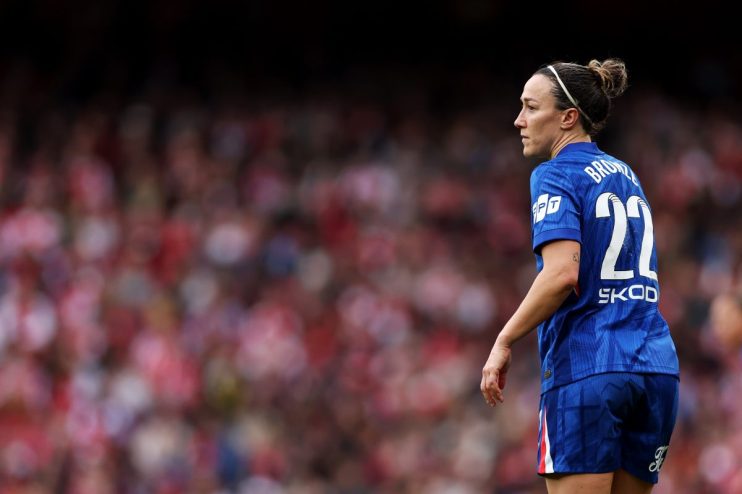
Chelsea captain Millie Bright has taken an equity stake in Sokito, a sustainable football boot company backed by dozens of professional players. Lucy Bronze holds an ownership position in sports nutrition brand Soccer Supplement. Olympic champion Dame Jessica Ennis-Hill co-founded Jennis, a women’s health platform that raised around £1m in early-stage funding as a venture-backed business.
Individually, these may look modest compared to US mega-deals. Collectively, they point to a mindset shift. UK athletes are starting to ask different questions, not just about sponsorship rates, but about equity, governance and what happens after retirement.
Where the US has already tested athlete-led ownership models at scale, the UK is now at a stage where those structures can still be shaped deliberately rather than retrofitted later.
Much of men’s sport operates within closed systems established decades ago, where ownership is consolidated and access is limited. Women’s sport is different. Leagues are forming, investment frameworks are evolving and ownership models are still being shaped in real time, often in parallel with commercial growth rather than after it.
For athletes entering the professional game today, that creates opportunity. Not just to benefit from growth, but to help define how value is owned and retained as the ecosystem matures.
Front row seat for female athletes
My work at the Women’s Sports Alliance gives me a front-row seat to this shift. Five years ago, most athlete conversations centred on contracts, injuries or tax. Today, they’re increasingly about brand, visibility and how to make that attention work harder over the long term.
Our ambition is straightforward. By 2030, at least ten female athletes should appear on the list of the world’s 100 highest-paid athletes. That target isn’t about prestige. It’s a signal that ownership, not just earnings, is beginning to change the underlying economics of women’s sport.
What’s missing is consistent support that helps athletes step into ownership early, while leverage is growing and options are expanding.
The US has shown what becomes possible when athletes approach ownership with confidence and intent. The UK now has the chance to follow its own version of that path, one shaped by its own sporting culture, capital base and governance norms.
Jordan Guard is founder of the Women’s Sports Alliance