Premier League + and why owning the broadcast isn’t owning the fan

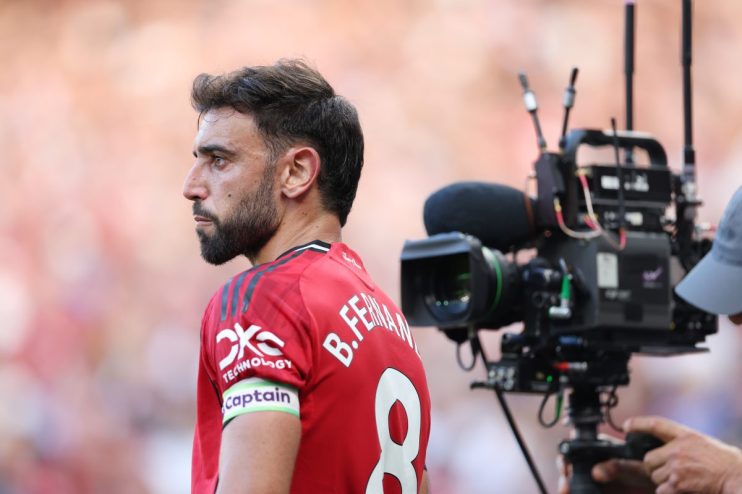
The Premier League and Uefa’s moves into streaming platforms misunderstand the way fans want to consume football, says George Gilmore.
In the last few months, the two leading lights in global club football, the Premier League and Uefa, have announced they will be launching direct-to-consumer broadcast offerings. In so doing, a revolutionary, if predictable, moment for football broadcasting has finally arrived. The world’s most popular competitions are making concrete moves to own more of the pie.
But, whilst this may at first glance seem like a no-brainer, on closer inspection an uncomfortable question emerges: is either platform being built around what the rights holders want to sell, or what fans actually want to buy? The distinction matters, and the recent history of leagues that have tried exactly this is not especially encouraging.
The editorial problem nobody is talking about
Premier League + will stream all 380 matches per season, supported by a 24/7 content channel and additional programming, initially in the Singapore market. Uefa’s platform meanwhile will most likely be launched in India or Indonesia, airing Champions League matches from 2027. On paper these appear to be comprehensive product offerings that the leagues control entirely – and that is precisely their weakness.
Modern sports consumption is not just about access to live action. It is about conversation, analysis, and criticism. The content that drives genuine fan engagement is rarely produced by the institution itself; it is produced by people willing to say VAR is a waste of time, that wages are too high, or that the manager made the wrong call.
Sky Sports’ Monday Night Football built its reputation on genuine debate. Roy Keane, and Alan Hansen before him, have built successful media careers by being hyper-critical, riling others up along the way. YouTube channels and podcasts like Tifo Football and the Football Ramble have amassed millions of subscribers precisely because they operate independently of the entities they cover. Fans trust voices that can bite the hand that feeds.
The Premier League and Uefa cannot do this. A league- or federation-owned platform will never credibly host programmes questioning VAR policy, interrogating owner conduct, or holding referees to account.
And if there’s any doubt about who controls the editorial, the Premier League at least has been explicit: the commentary, punditry and shoulder content for Premier League + will be produced entirely in-house through Premier League Studios, based out of a new 73,000-square-foot production hub in West London.
The result will inevitably be output that feels managed, and younger audiences are extraordinarily sensitive to that, actively seeking out content that feels real, unfiltered and personality-driven.
How audiences actually consume sport now
This is not merely an editorial problem. It is a structural one, rooted in how a new generation of fans has been shaped by the internet.
Younger audiences don’t sit down to watch a 24/7 sports channel; they congregate digitally around creators who have built trust and community over years. They watch tactical breakdowns on YouTube, follow podcasters who have been in their ears for a decade, and engage with short-form content where the algorithm, not a scheduling executive, determines what they see.
The real competitive threat to the Premier League and Champions League is not ceding audience ownership to Sky or TNT Sports, it is losing the audience entirely as the product is not accessible where the audience wants it.
Fail to reach audiences through the channels they already inhabit, and the platform will not simply lose viewers to rival broadcasters, it will lose them to entertainment products that are far more willing to distribute through the creators these audiences already trust. Sport does not have unconditional audiences. It has to earn them, every generation.
Lessons from Spain and Formula 1
LaLiga recently announced LaLiga+, its DTC platform, would cease operating next month, just as the Premier League prepares to launch a similar, albeit not identical, offering. After almost a decade, LaLiga concluded that the market had shifted too fundamentally.
“Audiences are no longer concentrated in a single environment,” the Spanish league acknowledged, “but are fragmented and consume content through multiple channels.”
That is an astute assessment of the situation. The centralised DTC model cannot keep pace with how fans actually behave.
Formula 1’s streaming platform is frequently cited as the model for DTC platforms to follow, and it is impressive: multi-camera feeds, live telemetry, onboard footage from every car. However, when Apple arrived with $700m, F1 handed over its biggest market without hesitation.
The moment a better-resourced distributor appeared, the owned platform became leverage, not legacy. The lesson is not that owned platforms are worthless, rather that they are instruments, not destinations.
The case for diversified distribution
The long-term answer is, perhaps counterintuitively, not to own more of the audience relationship directly. It is to be present everywhere the audience already is. That means licensing rights to YouTube, TikTok and creators. It means partnering with podcast networks and gaming platforms, not just broadcasters.
Yes, this distributes the audience across channels the league does not own, but the alternative – gating content and hoping fans follow – requires audiences to change their behaviour, which is a far harder trick to pull off.
The Bundesliga points the way
In the UK, for the 2025-26 season, the Bundesliga became the first major European league to award official live broadcast rights to content creators – alongside conventional deals with Sky Sports, Amazon Prime Video and the BBC.
The initial reports suggest the strategy is working, with increased viewership year-on year, a notable jump on YouTube, and a significant growth of social media mentions for the league. Crucially, UK viewers on the creator channels were predominantly skewing younger – an audience demographic traditional broadcasters have been haemorrhaging for years.
The league has since extended the model internationally. In Canada, through a partnership with Creator Sports Network, creators are now hosting free live watch-alongs of select matches on YouTube and Twitch – running alongside, not instead of, existing Dazn and OneSoccer broadcast deals.
The approach is consistent: use creators to reach audiences where they already congregate, while conventional broadcast partnerships continue to underpin revenue. The Bundesliga is not abandoning rights income; it is augmenting it with reach.
LaLiga+’s closure statement was on the money: the future lies in “continuing to connect with audiences wherever they are.” That should be the real goal.
Diversified distribution means accepting you will never fully own the fan relationship, but it protects against something far more damaging: the slow disappearance of an audience that never formed the habit of showing up in the first place.
George Gilmore is a sports marketing leader and Global Marketing Director at 54.