Forget medal targets, Winter Olympics success will be decided on sofas not ski slopes

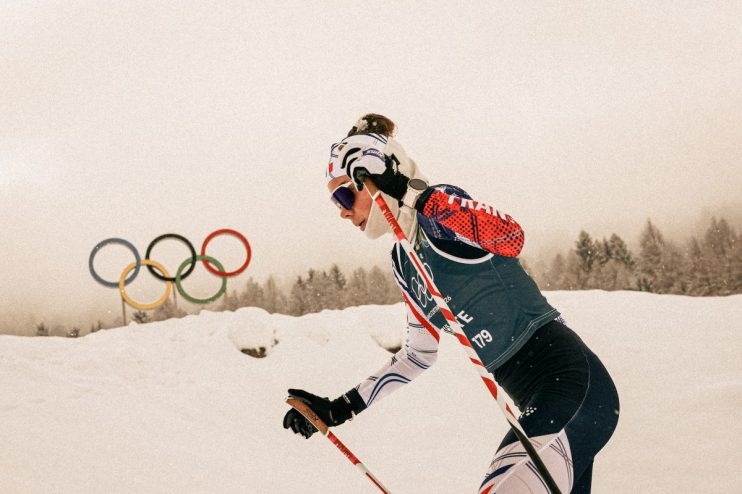
Sports fans have a feast of action, from the Winter Olympics to the Six Nations and the T20 World Cup, to gorge on over the coming days, writes Ed Warner.
Have you planned your viewing schedule for the next few days? Pushed the football to the margins of your calendar for once?
Six Nations opener this evening, Winter Olympics from tomorrow, men’s T20 World Cup starting Saturday, Super Bowl on Sunday, even LIV Golf 2026 which got into the swing in Riyadh yesterday.
Hang on, scratch the LIV Golf. Statistically speaking, the chances of you both reading this and seeking out golf’s ailing disruptor on TNT Sports or YouTube must be infinitesimally slim.
The best I can come up with to try and tempt you to reach for your TV remote is that it’s a floodlit, after-dark event. Counteracts the heat and helps mask the size of the crowd. One stroke, two birdies.
The International Olympic Committee needs its Milano Cortina 2026 Games to be slickly organised, genuinely rather than artificially snowy, and packed with televisual drama during European prime-time viewing hours. In short, everything its abject Beijing 2022 was not.
In a world of receding snow lines, the best selling point for minority sports inaccessible to the majority must be the drama their athletes are able to conjure up.
There have been logistical and political issues in the run-up to these Olympics – ‘twas ever thus. Their split sites will frustrate those on the ground attempting to embrace the entire event, so expect some media carping. But the real audience for the IOC is those of us sofa-bound, channel surfers.
Just as the IOC craves a great Games overall, so Team GB need a vastly improved Winter Olympics after they won just two medals in Beijing, down from five in each of the previous two editions.
I have an adverse Pavlovian reaction whenever medal targets are trumpeted, but there is no escaping them it seems. This time around UK Sport has declared a target range of 4-8 medals in the belief GB will be the leading non-Alpine nation.
I’ve no short-track skater’s skin-suit in this game and will be content to judge British athletes primarily on their competitiveness in notoriously random events. If medals follow, fantastic.
Like most British fans, I suspect, I’m simply hoping to be entertained. Let the Games commence then! And pray that Canada beat the United States in the men’s ice hockey final on 22 February.
Forfeits and fall guys
UK Sport’s new chair, Nick Webborn, has used the publicity attending the approach of these Olympics to call for broadcasters, especially the BBC, to devote more hours to Olympic sports – summer and winter – between Games. All power to his elbow.
This is not a problem facing cricket’s administrators. Theirs is one of self-inflicted overload. Yet another white-ball World Cup, squeezed into a calendar chock-full of franchise tournaments around the globe.
This one is seemingly deprived of its commercial highlight as a result of the deep political rift between Pakistan and India, the former deciding to forfeit the group stage match between the two nations.
Of course, this should be grounds for ejecting Pakistan, but that won’t happen – ironically, because the International Cricket Council is so obviously dominated by Indian interests.
None of which should bother those of us tuning in to watch a festival of sixes and clattered wickets. Unless Pakistan and India come together in the knock-out stages and a repeat forfeit craters the tournament’s sporting credibility.
Even more than Team GB, the England and Wales Cricket Board sorely needs sporting success in India and Sri Lanka over the coming month.
With global tournaments coming round annually, the England team’s triumphs in 2019 (50-over) and 2022 (T20) seem a lifetime ago. Instead, the calamitous Ashes series this winter and the current furore over Harry Brook’s altercation with a bouncer in New Zealand are determining the team’s public standing.
Score runs at critical moments and steward his team to, say, the semis as a minimum and England’s young captain Brook’s misdemeanour will swiftly be forgotten. His seniors in the ECB’s hierarchy might be lucky to be rescued by such sporting success, however.
Appoint a youngster as captain, however talented a cricketer he might be, and you have a duty of care to him, his teammates and your employer. There is a chain of responsibility here and the only question should be just where in that chain jobs will be lost. Any more procrastination and obfuscation and the ECB’s board itself may be vulnerable.
That’s all, though, for the days and weeks between the World Cup and England’s summer campaigns on home soil. Meantime, let the cricket commence!
Chicken dinners in the USSR
If Pakistan sniffs a possible triumph towards the sharp end of the tournament, its team may yet take the field against India. Stranger things have happened. Last week’s column on sporting boycotts – the Moscow Olympics in particular – prompted one reader to get in touch:
“I was living in the USA in 1980 during a lecturer exchange programme. In addition to the Olympic boycott, food shipments to the USSR were also halted. As a result the local county school meals organiser had a letter telling her to expect several train cars of chickens. Meal planning was swiftly reorganised to make use of them.
“Only a couple of weeks later she had another letter informing her that food shipments to the Soviet Union had been reinstated. I saw both letters. There had been protests from the farming community over the impact on them and food shipments had been resumed. Clearly chickens carry more clout than athletes.
“Interestingly in 1981 the annual USA v USSR athletics match went ahead in June in what was then Leningrad and the USA lost.”
This final sentence sent me hurriedly to Google and a New York Times report on the meet. Two things leapt out: “the small but vociferous” group of American students studying at Leningrad University, and the sole athlete citing Soviet occupation of Afghanistan as his reason for not taking part – one Alberto Salazar, much later the disgraced coach of Mo Farah and other athletes.
Just imagination, running away
That US track and field team competed in a faux amateur era that is buried in the distant past. A time when the sport garnered far greater attention than today.
The only athletics coverage of note during this winter’s off-season has been for the sums still owing to athletes from Michael Johnson’s failed Grand Slam Track series.
My direct knowledge of athlete appearance fees is now nine years out of date, when Usain Bolt could command a tax-free $250k for a Diamond League meeting, but few other athletes were paid six figures and the majority competing just a fraction of that.
Athletics has, at best, gone sideways in the intervening years, which makes the sums still due to athletes from GST jaw-dropping.
Only half of the contracted money due to athletes has been paid. Sydney McLaughlin-Levrone is out of pocket to the tune of $268,750. Sums due to others scale down from that.
Without securing a deep-pocketed investor hungry for a trophy sporting asset (think Saudi Arabian sovereign wealth and LIV Golf), it is astounding that anyone could ever have thought such numbers would add up in athletics.
American business has a tendency to laud those who rise from the ashes of insolvency. If Grand Slam Track is to be resurrected, as is rumoured, athletes’ agents would do well to demand 50 per cent of fees on contract signature and the balance on the eve of competition in future.
Cash is always king. Let Michael Johnson and Grand Slam Track bear the risk of last-minute athlete hamstring strains and sniffles.
Ed Warner is chair of GB Wheelchair Rugby and writes his sport column at sportinc.substack.com