Scotch whisky makers look to India amidst Trump tariff worries

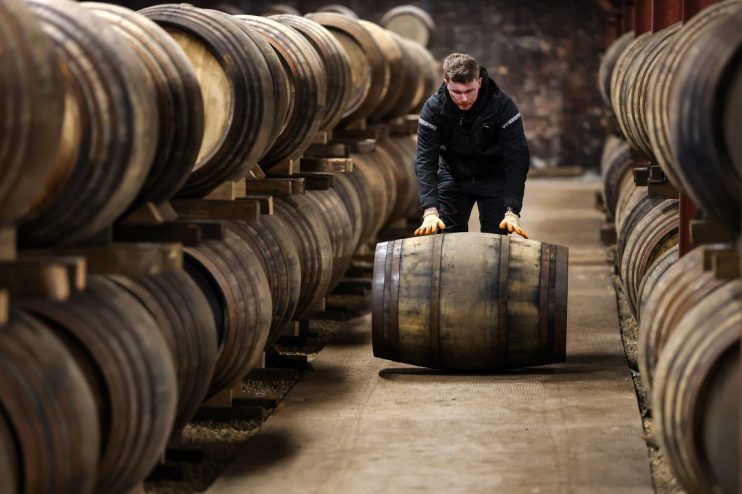
Scotch whisky makers selling into the US faced a challenging year as a result of Donald Trump’s tariffs, according to new figures, but many distilleries spy a long term opportunity in India.
Figures out last week from the Scotch Whisky Association (SWA) showed that the value of Scotch exports to the US declined by four per cent in 2025. In volume terms, exports were just over nine per cent lower than the year before.
The fall was particularly pronounced between May and December, after Trump imposed 10 per cent tariffs on all foreign imports in April. The value of Scotch exports to the US in those months fell seven per cent in value and 15 per cent in volume.
Commenting on the figures, Mark Kent, chief executive of the SWA, admitted that “tariffs and geo-political tension” had caused “significant turbulence in some key markets”.
Distilleries may face further pressure on US sales later this year, when a five-year suspension of a 25 per cent tariff on single malt whiskies is due to expire.
This additional tariff, which was levied between October 2019 and March 2021 due to a dispute over subsidies between Airbus and Boeing, would push up the overall rate to 35 per cent.
Distilleries look to India
While US markets will remain challenging, there was a bright spark for Scotch makers with India, where the value of exports rose by 15 per cent in 2025 to £286m.
Although the US is the largest Scotch market in the world by value, India comfortably won the crown in terms of total consumption, importing 220m bottles a year. France came a relatively distant second, importing 152m bottles.
With a growing middle class, many analysts expect the market for Scotch in India to continue growing fast, particularly when the UK-India trade deal comes into force later this year.
As part of the deal, tariffs on whisky were slashed from 150 per cent to 75 per cent, which is expected to come into effect from April. The tariffs are then set to fall to 40 per cent after ten years.
Currently, Scotch makes up just three per cent of the Indian market, but the SWA projects it could increase to six per cent as a result of the deal, boosting the UK economy by £1bn over five years.
Achyuth Anil, a researcher at the Centre for Inclusive Trade Policy, said Indian consumers would likely be drawn to the premium nature of Scotch. “Scotch has been the premiere whisky in India for a while, going back to colonial times. It’s just that it’s not been accessible to a majority of the market,” he said.
Already firms have been targeting the Indian market. Diageo, which owns brands Johnny Walker and Talisker, said the tariff reductions would enable it to pass on lower prices to consumers.
“It will likely enable a high single-digit decrease in consumer prices, which we believe should lead to a similar high single-digit percentage increase in volumes,” Diageo finance chief Nik Jhangiani said on an earnings call last summer.
The Artisanal Spirits Company, a listed firm which sells premium whiskies to its members, also announced franchise deals in India just a month after the trade deal had been signed.
Although it is only expected to deliver “marginal returns” at first, the firm said it was positioning for the “long-term opportunity” in India. “The opportunity in India is significant for the wider industry,” Andrew Dane, the firm’s chief executive, told City AM.
Fierce competition in the Indian market
But Scotch makers will not have it all their own way. Over the last few years many domestic distilleries have been ramping up their production of single malts, traditionally the most premium variety.
According to the Confederation of Indian Alcoholic Beverage Companies, domestically produced single malts accounted for 53 per cent of the market in 2023, up from just 15 per cent in 2017.
Many of India’s biggest brands, like Amrut and Paul John, have won global awards. “They’re already building the premiumisation narrative that Scotch hopes to exploit,” said Duncan McFadzean and Martin Purvis, analysts at Commercial Spirits Intelligence.
The analysts at Commercial Spirits Intelligence pointed out that Indian distilleries can benefit from a secret weapon that Scotland will never possess: a tropical climate. Depending on where you are in India, the climate means one year of ageing equals three years in Scotland, allowing for faster inventory turns, they said.
Scotch exporters will also have to navigate India’s complex tax environment. “India isn’t a single market. It’s 28+ distinct markets, each with its own excise system, licensing requirements, and regulatory quirks,” McFadzean and Purvis said.
Anil also noted that tax changes could be unpredictable and fast-moving. “Some of these prohibitions or restrictions seem to be haphazard or brought on quite quickly, rather than with a consistent policy objective in mind,” he said.
So while the trade deal will be a major boost for Scotch exporters in the long run, the industry may yet face some challenging moments ahead.