Luke Littler face trademark is ‘smart move’ but ‘not silver bullet’, say experts

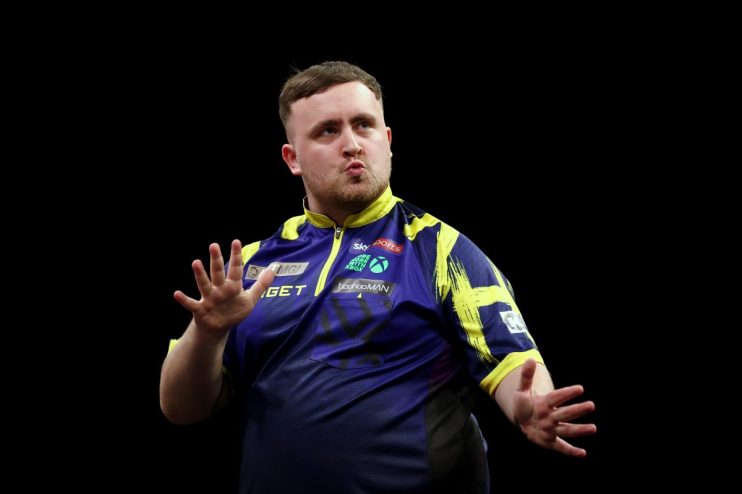
Darts sensation Luke Littler’s has moved to trademark his face amid AI deepfake fears. We ask IP and sports rights experts whether it checks out.
Luke Littler and Matthew McConaughey aren’t obvious bedfellows, but the all-conquering darts sensation has taken a leaf out of the Magic Mike star’s playbook.
Littler has lodged an application with the Intellectual Property Office to protect the use of his face, amid concerns that AI deepfakes could be used to fraudulently claim his endorsement of products with which the Warrington teenager has no affiliation.
In doing so he has heeded a warning from Hollywood star McConaughey, who said earlier this year he took similar steps in order to “create a clear perimeter around ownership, with consent and attribution the norm in an AI world”.
So is this the future for high-profile sportspeople? And for Littler, who first trademarked his name and “The Nuke” nickname in 2024 following his explosion onto the darts scene as a 16-year-old, how effective will these steps prove to be?
Alex Newman, an IP lawyer and partner at national law firm Mills and Reeve who led England and Chelsea footballer Cole Palmer’s successful trademark applications, praised the move.
“This new application to register a portrait of his face shows that he and his team are now thinking more expansively about how trademark registrations can help him to control the commercial use of his other distinctive personal brand assets, such as his likeness, which have not traditionally been the subject of registered trademark protection,” Newman said.
“In this respect, he is following in the footsteps of the likes of Cole Palmer and Matthew McConaughey to find new ways to combat new and emerging threats to that control, including deep fakes.”
Littler protecting £20m sponsorship deals
Michael Porter, a sports marketing strategist at Porter Wills, said Littler’s application was necessary to protect his multi-million-pound endorsements with the likes of Xbox and KP Nuts.
“When a brand signs an athlete, they are not buying fame. They are buying exclusivity; the right to say their product is the only one associated with that face, that name, that image,” added Porter.
“That exclusivity justifies the premium. AI breaks that logic. If anyone can generate a convincing version of Luke Littler endorsing something, the commercial value of the real endorsement erodes.
“Littler has a £20m deal with Target Darts and his face on products in Argos and Smyths. That is not a personal brand. That is a commercial asset. Protecting it is basic asset management.
“The pitfall most athletes miss is timing. Trademark protection takes months to process and requires the mark to function as a genuine commercial identifier, not just a photograph. Filing too late means you are reacting to damage already done. Filing too narrowly limits protection to categories that may not cover every commercial use.
“Littler is moving early and that is the right call. Most athletes wait until a sponsor calls to question why their image appears where it should not.”
Jonty Warner, a lawyer at Warner IP, said Littler’s application was “potentially a smart move” but no guarantee of protection against the misuse of his face.
“Although the term gets thrown around, the UK has no standalone ‘image right’, so celebrities have limited tools to control unauthorised use of their likeness,” Warner said.
“A trade mark registration fills that gap to some extent, giving Littler a potential enforcement route against counterfeit merchandise and the growing threat of AI-generated deepfakes.
“It’s definitely not a ‘silver bullet’, but I can see why he’s filed it.”
Trademarking ‘won’t stop all online misuse’
Matthew Harris, an intellectual property lawyer at Pinsent Masons, said Littler’s meteoric rise made him “an obvious target for unauthorised or malicious exploitation”.
He added: “A registered trade mark would give him a clear, enforceable right to stop the commercial misuse of this, strengthening his control over licensing and merchandising, and potentially streamlining online takedown requests.
“But registration is not automatic. Littler must show that his face functions as a badge of commercial origin and is distinctive, something harder to prove given he only came to prominence after the 2024 PDC World Darts Championship.
“Even if granted, protection applies only to commercial use of the registered goods or services. It won’t stop all online misuse, nor replace copyright, passing off or privacy‑based rights. A face mark is powerful but works best as part of a broader image‑rights strategy.”
McConaughey and Littler aren’t the only celebrities to have taken this step. Harris cites Jeremy Clarkson and Formula 1 star Max Verstappen as other examples, and says that, for athletes who have long trademarked their names and slogans, “extending that protection to something as recognisable as their face is a natural next step”.
Littler could find himself needing to repeat the exercise, however. Said Warner: “As a practical point, Luke Littler is still only 19, so I do wonder whether he intends to file new applications as he gets older and his appearance changes.”