How South Wales became one of the UK’s most exciting food destinations


Laverbread, rarebit, cawl – Glamorgan sausage at a push. The idea of Welsh food tends to be tied to a handful of dishes, but the country has some of the best produce – and best restaurants – in the UK. The emergence of Wales as a ‘foodie’ destination has slowly built over the last decade or so. In 2023, double-starred Ynyshir was named the best restaurant in the UK, and just last year Gorse won Cardiff its first Michelin star.
Growing up, my own experience of Welsh food revolved around what I would look forward to when visiting family across South Wales; milkshakes at Verdi’s – an iconic Italian-Welsh restaurant on Mumbles prom – followed by huge plates of carbonara. But things have moved on and South Wales has a thriving restaurant scene serving up the best food the country has to offer.
Michelin-starred dining
Among a flurry of newly starred restaurants, there are two mainstay South Walian titans that have been at the forefront of fine dining: The Walnut Tree near Abergavenny and The Whitebrook just outside Monmouth.
The Walnut Tree opened in the 1960s by Franco Taruschio – whose cookbook was nestled firmly between Delia and Nigella when I was growing up. Under chef Stephen Terry, it won its first Michelin star in 2002, which it then lost in 2004 when Terry left to set up The Hardwick (an excellent and much missed restaurant, which closed in 2023 following a £150,000 theft by its financial administrator). In a strange and very of its time twist, The Walnut Tree went on to appear on Gordon Ramsay’s Kitchen Nightmares before closing in 2007. After reopening under head chef Shaun Hill, it won back its star in 2010, which it still holds to this day.

The Whitebrook sits deep in the Wye Valley and sources food from its abundant surroundings. On my visits, I’ve spotted head chef Chris Harrod heading out for an afternoon of foraging. It might not be the most attractive restaurant (especially considering its bucolic location) but the food does the talking. Deeply charred meadowsweet cured mackerel, pink gamey hogget with salsify and poached pear with pine and buttermilk: Harrod’s food celebrates Wye Valley produce with minimal affectation and a huge amount of respect.
Perfect pubs
Between Monmouth and Abergavenny, and in the winding village of Bettws Newydd, you’ll find The Black Bear Inn, the Platonic ideal of a local gastropub. In winter there is a log burning stove and in summer the doors are opened up, with the pollen specked breeze
carrying wonderful smells into the garden. The weekly menu is short and meticulous, the cooking hearty but concise. There are a few mainstays on the menu, especially in the very good ‘snacks’ section: treacly charred bread, oysters and iridescent pickled sardines sitting in pools of olive oil.

The Hare and Hounds in Aberthin and Wright’s Food Emporium in Llanarthne are two other spots that walk this tightrope between being great locals and destination restaurants.
The first time I went to The Hare and Hounds was during one of the iterations of lockdown, when you could only eat outside. Sitting in the not particularly warm countryside in the Vale of Glamorgan, I remember being blown away by hanger steak and grapes. Every time I’ve been back, the food rarely misses, from oozing, crispy pig cheek to plump parcels of gnocchi in a buttery blanket. Head chef Tom Watts-Jones worked at St John before returning to Aberthin, and there is a generous, salty, rich vein that runs between The Hare and Hounds and Fergus Henderson. Its sister restaurant, The Heathcock in Cardiff, is also well worth a visit.
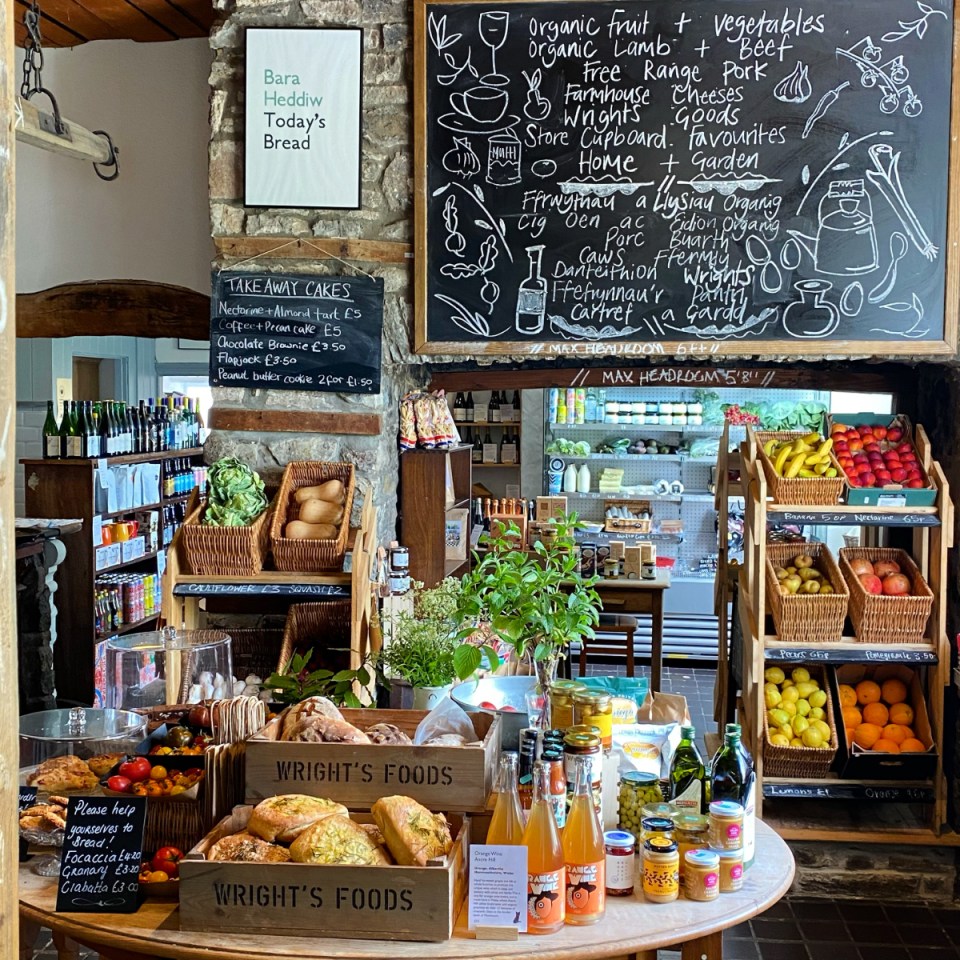
Wright’s Food Emporium is part impeccably stocked deli, part cafe that’s only open half the week and closes at 6pm. Set up by husband and wife Simon and Maryann, Wright’s is at the heart of the local community and sources from the best producers in Wales. The walls are laden with wines, perries, sauces, meats, cheeses, butter, pasta, tinned fish, coffee, fruit, veg, bread, honey, cakes and so on. It’s an education in Welsh production. It’s also a pilgrimage spot for one of my favourite sandwiches in the world: The Cubano. It’s basically a Welsh riff on the famous Cuban/Floridian sandwich. Fat slabs of pork belly, sharp Hafod cheddar, local ham and scattering of pickles on a freshly baked and perfectly chewy bap.
The influence of St John crops up again at The Shed in Swansea. Jonathan Woolway, former chef director of the Smithfield icon, returned to Wales to create a restaurant with St John’s fingerprints and Welsh DNA. Located on the docks, The Shed is much bigger – too big perhaps – than its name suggests. Welsh rarebit, cockles, grilled mackerel and cold lamb all nod in Henderson’s direction, but the food feels entirely of its place. Woolway uses the Welsh expression ‘hiraeth’ to explain his return to Swansea, and you feel this deep longing for home in every bite. They also offer a ridiculously good value lunch menu (three courses for £28), which makes you long for prices like this in London.
Eating in Cardiff
Cardiff has often felt somewhat overshadowed by other places in Wales, but the aforementioned Gorse is opening a new chapter in the capital. Headed up by Tom Waters, this little restaurant is punching well above its weight with gentle, precise and very Welsh cooking. The tasting menu is the best of Wales: Gower salt marsh lamb, bara brith with cheese and truffle, a broth of native seaweeds and a toasted oat llymru playfully pay homage to a land of superlative suppliers.
If you’ve had your fill of lamb, laverbread and llymru, then Cardiff’s Matsudai Ramen is the brothy antidote. This place has developed a bit of a cult following for its steaming bowls of noodles in a rich, salty chicken and pork soup. Set up by James Chant, who worked in the music industry and with no cooking background, Matsudai wears its ramen nerdiness and total obsession to the slurp very much on its sleeve.