Does NFL hold key to resolving football’s bitter welfare row?


A bitter row between Fifa and players’ union Fifpro escalated at the recent Club World Cup in the US, but looking across the pond could provide the solution.
Fifa president Gianni Infantino may be fond of his slogan “football unites the world” but the recent Club World Cup only appeared to drive a wedge even further between the governing body and many of its most important stakeholders.
The new 32-team competition, to take place in the summer every four years, was already the subject of a legal fight brought by players’ union Fifpro and domestic leagues over what they saw as the imposition of an extra tournament without adequate consultation.
Infantino then poked the hornets’ nest by failing to show up for a related meeting about player welfare with Fifpro in New York on Saturday, the eve of the Club World Cup final at the nearby MetLife Stadium, prompting a scathing response from the union’s president.
At the heart of the feud is the issue of player workload. Fifpro president Sergio Marchi this week accused Infantino and Fifa of riding roughshod over its concerns with “a grandiloquent staging inevitably reminiscent of the ‘bread and circuses’ of Nero’s Rome”.
Earlier this year Fifpro issued a study drawing on the views of industry experts, who called for the implementation of certain safeguards to prevent player burnout and injury, such as mandatory four-week rests plus at least four weeks’ conditioning in between seasons.
That would, however, threaten the staging of the Club World Cup, whose finish came less than five weeks before a new Premier League season is due to begin and is therefore likely to be fiercely resisted by Fifa, for whom it is a potential long-term cash cow.
Part of the problem is the lack of centralised data collection on workload and rest, and their impact on injury and recovery, in a highly fragmented sport. But amid all the bickering in the Big Apple, a solution may have been close to hand.
American sports have long been at the vanguard of using data, and the NFL in particular is seen as a leader in using the numbers to make evidence-based decisions on player welfare and the many factors that can influence it.
“The NFL probably is the gold standard in relation to this,” says Stephen Smith, founder and CEO of Kitman Labs, a leading sports science and data firm whose clients include the American football competition, England Rugby and the Premier League.
“They’re collecting every single injury, how that happened, the field it happened on, the equipment that the person was wearing, the surface condition, the humidity, the temperature – they’re collecting absolutely everything, so that they can start to look at that and then understand what aspects of their game are impacting their injuries.
“Over the last 10 years, there’s been over 30 rule changes implemented to their game, all based on empirical evidence – not based on opinion or professional practitioners saying that certain things are causing injuries – based on real numbers and real data that’s impacting their game.”
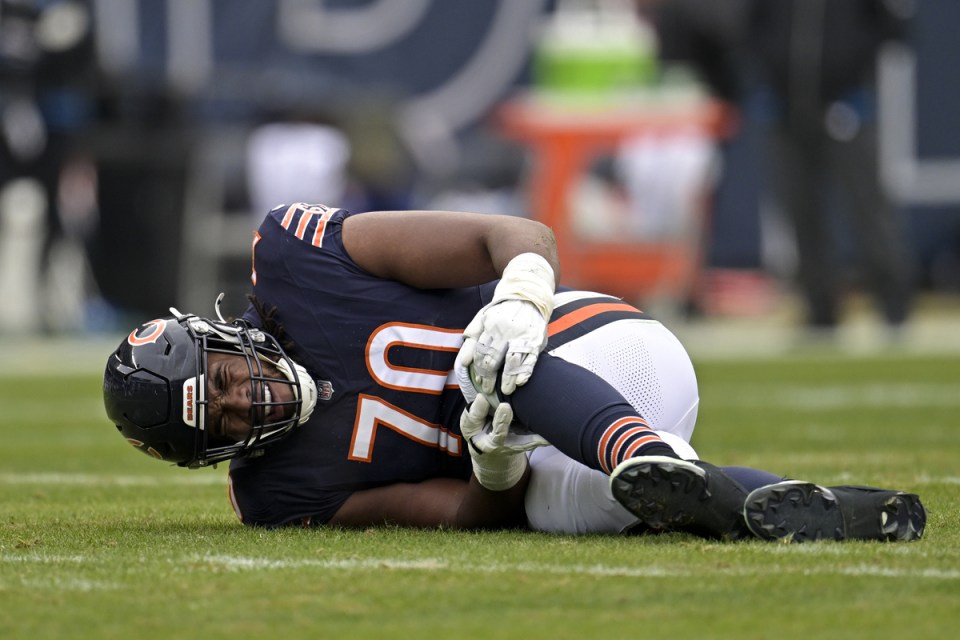
While extra games unquestionably increase workload for the teams and players taking part, Fifpro’s argument for greater protections has not been helped by the lack of proof it is able to provide for the solutions it is suggesting, says Smith.
“I would agree with Fifpro that adding in the Club World Cup is going to add fatigue, but I don’t suggest that blanket time off and a four-week pre-season is the way that you fix this problem. I don’t think anybody has statistical proof of that.
“Why four weeks? Why not four and a half weeks? Why not five weeks? Show me the empirical data that four weeks of time off, four weeks of pre-season is going to have a reduction in injury numbers. Or show me the impact that has on performance, on recovery indexes, on de-training. It’s a very complex matter.”
Football needs joined-up approach to welfare
Neither Fifpro nor Fifa can claim to have those answers because – unlike in the NFL or even English rugby – the data exists in silos, with individual teams rather than leagues and governing bodies, Smith says.
“Everybody is doing their own thing in their own pocket. How many injuries are you likely to have in a group of 30 players? What statistical significance are you going to find in 10 to 15 injuries?
“You need an entire league to be able to make these types of insights. So we need leagues to make these decisions, or we need governing bodies like Fifa or Uefa to say, ‘hey, we need to do this across all of our competitions’.
“I’m not having a crack at football here. The Premier League have been big advocates for player health and safety, collection of data, etc. But they’re just a rights holder for the domestic competition. Players then go off and play in the FA Cup, Champions League, Europa League, and they don’t control those competitions.
“It needs a joined-up approach. Individual rights holders are not going to be able to solve this problem by themselves, and that’s why I think Fifa, Fifpro, Uefa – all of those parties – need to actually come together to solve this problem.”
Despite lingering concerns about fan apathy, illustrated by meagre crowds at some group stage games in the US, Fifa regards the Club World Cup as a success and the money involved means it is probably here to stay. Solutions to player welfare debates, then, are even more pressing.
“This information is being collected – it’s just not being collected in a consistent fashion. It’s not being collected in the same platform. There is no standardized mechanism or where to collect all this data. Therefore we can’t perform broad scale research findings,” says Smith.
“We feel the opportunity is enormous to do this, and it will actually help bring all these people together, rather than having them sit in opposite sides of the table, and rather than one party organising a conference on player health and safety, and the other’s not really involved because the relationship is so strained.”