Bank of England’s Breeden warns on rivals overtaking UK on innovation

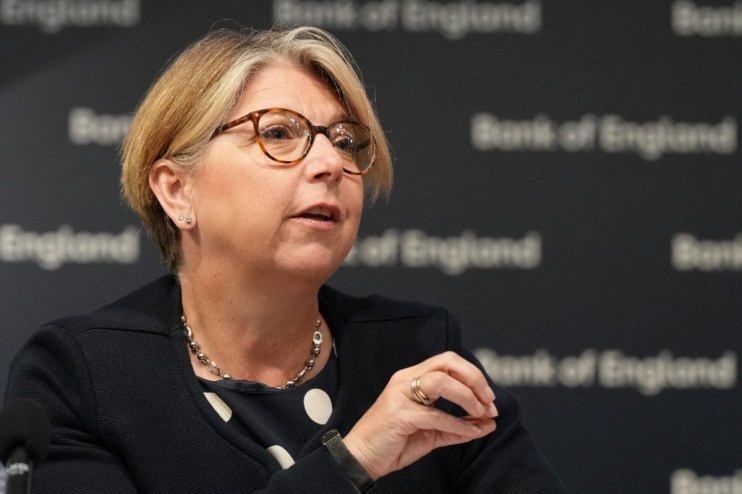
The Bank of England’s lead for fintech policy and digital currency has laid out a sweeping vision for the UK’s next generation of payments infrastructure amid a rallying cry for the UK to not lag behind its peers.
Sarah Breeden, a rate-setter at the central bank and the deputy governor for financial stability, said the UK led the way in 2008 as a pioneer of 24-hour instant bank transfers.
But the central bank official warned that the “innovation frontier did not stop in 2008”.
“Other countries now offer interbank retail payment systems with features not yet available in the UK.”
Breeden highlighted Sweden’s Swish and Brazil’s Pix as examples of systems that have overtaken the UK by offering seamless mobile and retailer-direct payments.
Speaking at City and Financial Global’s Payments Regulation and Innovation Summit on Monday, the deputy governor set the stage for a multi-money future where “people should be able to choose between traditional deposits, tokenized deposits, regulated, systemic stablecoins, and potentially a digital pound.”
The Bank and the Treasury are currently in a “design phase” for a digital pound, with a joint progress report expected later this year.
Bank’s back-and-forth on stablecoin
The Bank has faced criticism for its sluggish acceptance of stablecoins, leading to concerns the UK would miss out on a slice of the over $200bn global market.
Governor Andrew Bailey fronted the Bank’s caution, previously telling the Treasury committee he would need “a lot of convincing” for the use case of stablecoin.
In the same session, he said he would “question” the need “to introduce a new form of money”.
But in the last few weeks, Bailey issued a major climb-down following industry pressure as well as political lobbying from the Reform Party’s Nigel Farage, who branded Bailey a “dinosaur” for his views on digital assets.
In October, Bailey wrote in the Financial Times that it would be “wrong to be against stablecoins as a matter of principle”.
The Bank’s consultation paper released on stablecoin a month later in November was also hailed as a “watershed” moment after altering rules so that if a stablecoin issuer is sound but faces market panic that prevents them from selling safe assets, the Bank could provide a loan of cash liquidity.
This provides a financial stability backstop and ensures a coin can meet its 1:1 rule – designed to maintain a constant value equal to one pound – without collapsing its price
Ahead of the consultation, the Bank was handed a stiff warning from the fintech industry body Innovate Finance, which said it risks “killing” London’s potential to become a global hub for stablecoins with its “prescriptive” rules.