Are we seeing the death of the corporate box in sports stadiums?

The future landscape of sports stadiums is undergoing a radical revolution: clubs and architects alike are growing in confidence, wanting their arenas to be 365-day businesses that go far beyond the 90 minutes of enjoyment football offers.
Look at the planned chimneys on Birmingham City’s master plan and the three towers on Manchester United’s 100,000-seat project dubbed New Trafford. Then take in the brewery inside the Tottenham Hotspur Stadium and the complex being built around the new tier nearing completion at Manchester City’s Etihad Stadium.
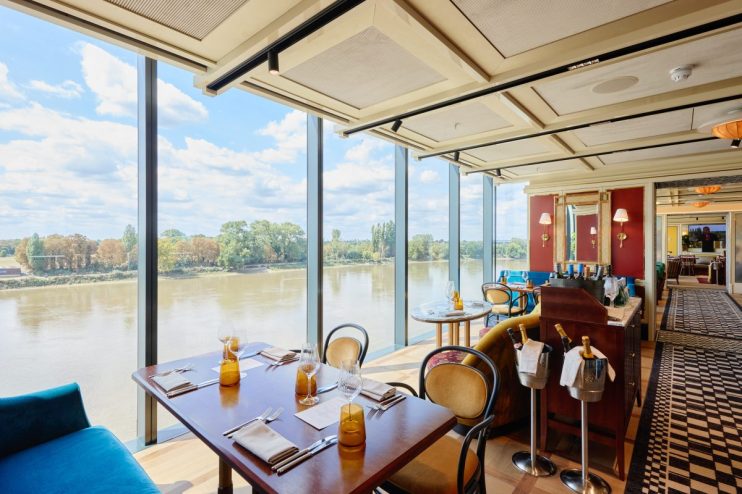
But it is in the capital, on the banks of the Thames, where recent regenerations have caught the eye. Fulham FC’s Riverside Stand leans out over the banks of London’s main waterway, boasts a rooftop pool and an awful lot of glass facing away from the pitch. It’s all a bit… stereotypical Fulham.
In fact, the club’s chief executive Alistair Mackintosh had quite the statement prepared when Riverside’s Sky Deck opened last year. “At other clubs you hear the c-word,” he proclaimed. “Here the c-words are champagne and caviar.”
Corporate box future
But sitting in the stand, opposite the iconic Craven Cottage, you’ll notice that the newest landmark on the west London banks does not feature a corporate box. At all.
“We haven’t intentionally built the stand with no boxes,” the club’s head of sales Jimmy Ord tells City AM. “But what we’ve built is first and foremost designed to operate in an everyday mode. We aren’t setting out to remove the concept of a corporate box but I think we wanted to operate it as an everyday venue and felt that if we put walls and walls of suites in the Riverside it would be reductive.”
It is an interesting concept, and a trend increasingly seen across the sporting landscape. Tottenham’s new-build has two stories of boxes, but much more prominent is the premium second tier that lends itself to lounge and wider offerings.
Twickenham’s 82,000-seat Allianz Stadium features ample premium restaurant and off-site offerings alongside its ring of corporate boxes.
“We don’t see the future of hospitality representing what boxes have represented [previously],” Ord adds, “which is along the lines of, ‘I must almost be forced to commit to an arbitrary number of seats dictated by the club or the venue, I then have to work incredibly hard 20-plus times season to find 10 people of value again’. That’s a real challenge.”
Changing habits
Neil Bailey, chief of hospitality firm Pitch Experiences, says stock for the Six Nations – which is hosted across the road from Twickenham at Harlequins’s Stoop and comes with a ticket in the bigger bowl for the match – sells well because people are after flexibility. Fans can take two seats on a table of 10, or a table of 10 once per year. Flexibility is king.
“And when we’re looking at the boxes for next season,” he says, “we’re looking at a slightly more informal, relaxed experience away from stale, staid boxes.
“That’s centered around the match, it’s far more curated and bespoke – from the music with playlists or DJs to the food – so when a Korean pop band is on at Wembley Stadium, we could do Korean chefs.
“But we’re also looking at activities in the box to make it a bit more engaging and interactive and we’d also do activations around brands and partnerships such as champagne tastings, tequila tastings and tailor fittings.
“The role of boxes is changing.”
A ticket to the three-story Sky Deck costs £7,750 for the season, while single match tickets are also available. But should redevelopments take place elsewhere at Craven Cottage, would Fulham design more stands without boxes?
“We will consider every angle,” Ord adds. “From an experience point of view, how does [a new development] become additive to the experience that the Riverside already represents?”
Is the corporate box dead? Probably not. But it appears to be approaching life support, and a new wave of premium offering is expanding like never before.