Dive time: How the diving watch plumbed new depths

Almost a century ago, one of Switzerland’s historic maisons created the enduring formula for the water-resistant diving watch. With its screwed-down caseback, screwdown winding crown and rubber gaskets, the sub-aquatic world has been Rolex’s ‘Oyster’ ever since.
As our timeline below shows, diving-watch casemaking has been a crucible for engineering innovation since 1926. Admittedly some of this innovation is showboating for the sake of it, with dive watches now able to operate far beyond the human body’s own limits beneath the waves.
This year’s horological novelties nicely demonstrate this point. The venerable marine chronometer pioneer Ulysse Nardin has gone beyond what was even believed to be possible with its new Diver [AIR], the lightest mechanical dive watch ever made. “If it’s possible, it’s done. If it’s impossible, it will be done,” said Paul-David Nardin in 1876 – and sure enough his successors have lived up to this ambitious slogan.
To achieve the exceptionally light weight of just 52g (including the strap; under 46g without it) material had to be removed from the Diver X Skeleton’s ‘skeletal’ mechanics, without compromising the reliability and precision performance expected of a diving watch. For perspective, Ulysse Nardin’s Diver 44mm released in 2019 weighed 120.5g, as would be expected for a sturdy, robust dive watch. The Diver [AIR] manages to lose an incredible 68.6g and comes in at less than half of the Diver X Skeleton.
Tudor, Ulysse Nardin et al
Generally, watch movements are crafted from brass, which has a density of 8.7g/cm³, making it relatively heavy. Aluminium, at 2.7g/cm³, is lighter, but its softness makes it unsuitable for the rigorous demands of a watch movement. Titanium, at 4.5g/cm³, offers a promising balance – being 45 per cent stronger than steel – but it is notoriously tricky to work with, tending to catch fire during machining.
Despite this, Ulysse Nardin has wrangled titanium into the nigh-on diaphanous bridges suspending the mechanics seemingly in mid-air. On the outside, the materials alchemy continues, using a blend of upcycled nylon from old fishing nets, in 60:40 combination with carbon fibre recovered from the world’s fastest ‘IMOCA’ sailing boats. Combined it guarantees 200 metres’ water resistance and £33,420 less in your bank account.
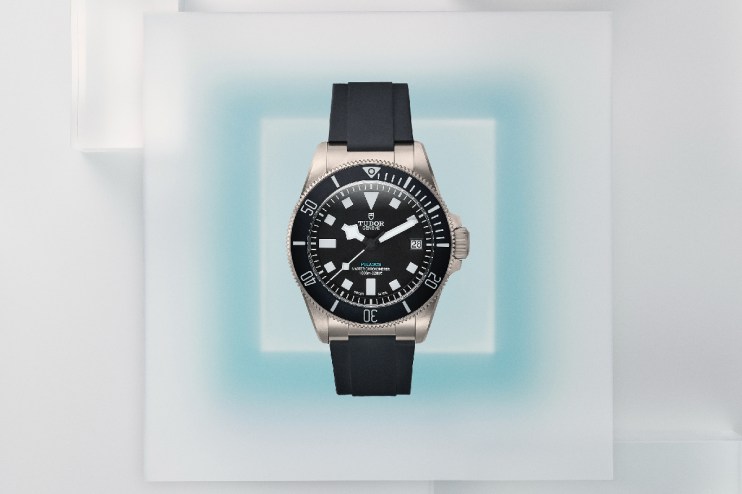
If you think that’s going to extremes, Tudor would like you to hold its beer. The Rolex stablemate has proven that the sheer depth a watch can plunge to remains the ultimate bragging right.
Waterproof to a full kilometre, and priced at just £5,070 (with chronometer levels of precision thrown in), Tudor’s new ‘Pelagos Ultra’ really is the ultra-version of the modern Swiss diving watch.
Engineered specifically to overcome the challenges associated with hardcore ‘saturation’ diving, this is the most technically capable Pelagos ever made, fitted with a proprietary bracelet adjustment system for quick switches between wetsuit or skin, and has a 43mm titanium case complete with a a helium escape valve, a Rolex invention of 1963 that changed everything for commercial divers.
For the purposes of coastal holidaying with a bit of recreational SCUBA diving involved, Bremont’s latest ‘Supermarine’ is perhaps more realistic. Rated to ‘just’ 500 metres’ water resistance, it still more than ensures peace of mind. With a suavely sculpted 3D ‘wave’ dial and classic case construct, it strikes that perfect balance: a design that neatly straddles beach and beach bar. Trust a British brand to think so stylishly yet so practically.
Timeline: What lies beneath
From the watch that defined diving for a century to the race to the bottom and the savvy innovations it brought about.
1926: The oyster is born
Rolex’s ‘Oyster’ system sets the bar high with a watch featuring a screwed-down case ring, back and bezel, plus crown and multiple rubber gaskets. It had submarine levels of watertightness that garnered a Daily Mail cover story when Mercedes Glitz swam the English Channel wearing one the following year.
1937: chronograph diver
The world’s first ‘chronograph’ dive watch is released by St Imier village’s biggest employer, Longines, whose stopwatch function was operated by patented ‘mushroom’ shaped waterproof pushbuttons, affording an ‘instant reset to zero’ flyback mechanism. Because that’s exactly what you need 100 metres below the waves.
1939: A diving pocket watch?
Rolex may have coined the watertight watch as we know it, but this didn’t preclude a commercial boo-boo in the form of an Oyster pocket watch. Thankfully, it was rescued from ridicule when the Italian Navy came knocking via Panerai, looking for a large luminous dive watch. A simple 90º rotation, strap added, and presto! – an icon was born.
1953: fifty fathoms
War accelerates innovation, yet again: at the behest of France’s Royal Navy, whose frogmen benefitted from Blancpain’s ‘Fifty Fathoms’. This watch coined the principal trope of the modern dive watch: a rotating ‘bezel’ to keep track of your oxygen reserves. And what’s more, it pipped Rolex’s Submariner to the post by a year.
1967: The Sea-dweller
Rolex gets back in the game, souping up its 1954 (James Bond-endorsed) Submariner for the extreme demands of French commercial diving firm COMEX. The ‘Sea-Dweller’ debuted a small valve on the side, which gradually releases helium. It means when you de-pressurise from long periods ‘saturated’ in a bathyscaphe or diving-bell’s breathing gas mix, your watch dial’s crystal dome doesn’t ‘pop’ off from the internal pressure of seeped-in helium atoms.
1973: a kilometre deep
Proving its sea-legs, Omega teamed up with the catchily-named International Underwater Contractors and attached a Seamaster 1000 watch to the arm of a Beaver Mark IV deep-sea submersible. Diving to a kilometer below the waves, the watch was rigorously tested in the unforgiving darkness of the sea-bed – and passed with flying colours.
