Winter Olympics 2026: How insurance keeps Milano Cortina on track

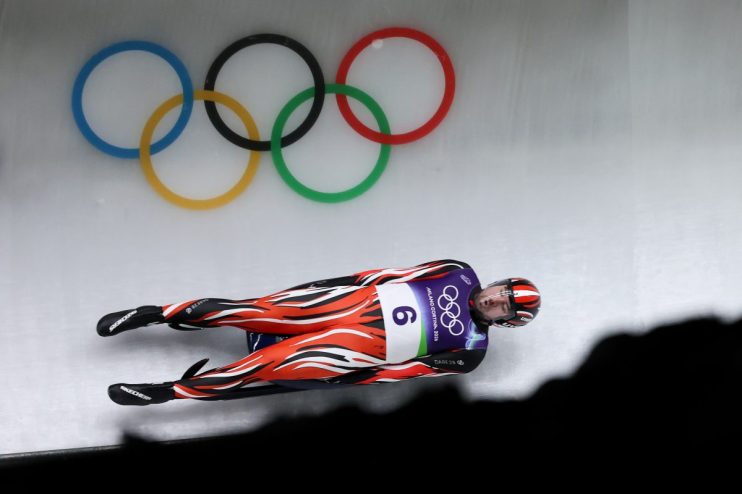
Every four years, the world’s greatest athletes fight to take gold, but it’s the unseen safety nets, drafted by insurers, that keep the Winter Olympics running smoothly.
German-based Allianz became the exclusive insurance partner of the International Olympic Committee (IOC) in 2021, with coverage until the 2032 summer games in Brisbane, under the oversight of Eike Burgel, global head of the Olympic and Paralympic programme.
Despite the misconception that there is a single overarching Olympics policy, insurance for these games is much more complex. Allianz alone covers 15–17 lines of business, depending on whether it is a summer or winter games, with reinsurance and further, more niche, lines handled through Lloyd’s of London.
The games rely on various types of coverage; including property and liability, cyber protection, medical assistance, and transportation. Allianz does not insure sporting outcomes or athletic performance, nor does it, like most general insurance companies, cover terrorism.
Deanim Jadean, global technical manager for the insurance giant’s Olympic and Paralympic partnership, explained that “games bring many risks together in one place and time.”
“No single carrier can carry that alone. The responsible approach is a market effort supported by reinsurance capacity, with policies written for the host environment,” he added.
Behind the medals
Although both are part of the Olympic Games, the summer and winter games have different lines and valuations.
So, while the Winter Olympics this year in Milano Cortina involve fewer athletes – around 3,500 compared to over 11,000 at the Summer Games two years ago in Paris – the venues are more geographically dispersed, with more than 16 venues spanning Milan, Cortina, Livigno, Bormio, and Verona, which increases logistical and insurance complexity.
Allianz has said it expects significant activity around the trip and ticket cancellation insurance line, as flu season is already upon the Italian population.
Another difference between the various Olympiads is that each poses own different risks: winter sports often carry higher physical risks, such as icy surfaces and speed, while summer sports may involve heat exposure or water-based environments.
Going for gold
And when it comes to medals, the cost of a lost or stolen piece of gold can hurt a lot more than the loss of sentimental value, as rising metal prices have driven raw material costs up recently.
A spokesperson at Gallagher told City AM that Olympic medallists should inform their home insurer if they have won a medal or medals that will be kept at their property, as the value may exceed the single item limit for belongings.
Although the International Olympic Committee will replace medals, athletes will likely need to bear the cost.
However, they explained that gold medals haven’t been solid gold for over a century. Today, they are made of at least 92.5 per cent silver and plated with six grams of pure gold.
“But with the rising metal market, the estimated value of a single gold medal has risen to around £1,750. Silver medals are worth roughly £1,000, with bronze coming in much lower in value at under £10 – although clearly still hugely valuable to its owner,” they added.
Winter Olympics lessons
Like many major events on the world stage, the 2020 Summer Olympics in Tokyo were held during the global Covid-19 pandemic, leading to the first Olympiad postponement in history – the sporting bonanza was moved to 2021.
The IOC had taken out around $800m in event-cancellation insurance through Lloyd’s of London, with global reinsurers Swiss Re and Munich Re.
It was later revealed in the final budget that the Tokyo 2020 committee received an insurance payout of approximately $500m (£360m) to help offset the costs of the one-year delay to the games.
For the 2026 Winter Olympics, Marsh cyber chief Kelly Butler noted to City AM that the event faces a complex online threat.
Milano Cortina, which has been underway for much of this month, has already suffered cyber attacks, which Italian foreign minister Antonio Tajani claims came from “Russian origin”. Russia was been from the Olympics following its invasion of Ukraine in 2022 having suffered consequences for state sponsored doping for years prior.
“To protect the integrity of the event, it’s essential for strong, multi-layered cybersecurity measures, including zero-trust principles and international collaboration, to stay ahead of evolving threats and ensure a safe and secure games,” Butler added.
With games planning often taking place three-to-five years before hosting the quadrennial event, Buergel stated that “Allianz [is already working] with the Organising Committee for the Olympic Games for 2030 in the French Alps and 2032 in Brisbane.”