Why Champions League revamp is a case of Uefa 1, Domestic competitions 0

The revamped Champions League has created more drama for Uefa but increased the risk of competitive imbalance in domestic leagues, according to a new report.
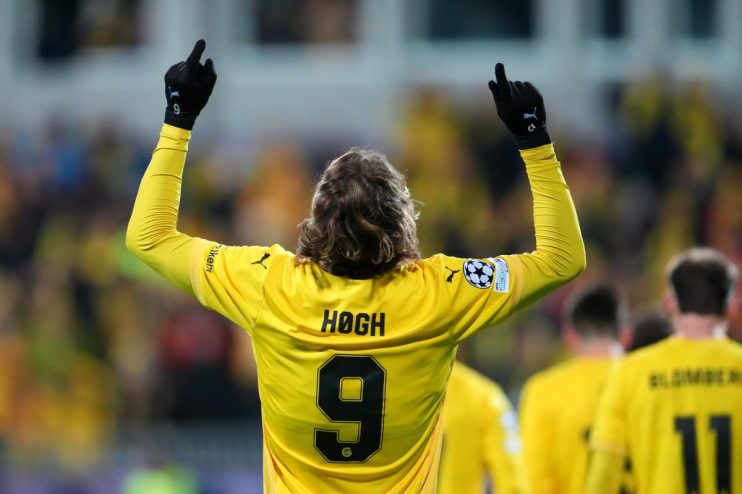
Bodo/Glimt’s shock win over Atletico Madrid was not just one of the standout results of the league phase of Uefa’s elite club competition, it also served as a handy snapshot of the merits of the Champions League’s “Swiss model” revamp.
In coming from behind in the Spanish capital to win 2-1 on the eighth and final matchday of the phase, the Norwegian club from inside the Arctic Circle crept up to 23rd place in the 36-team table, just inside the qualifying zone for the next round.
In doing so, Bodo/Glimt took their earnings from this season’s Champions League to an estimated €42m (£36m) – less than half of the sum generated by the biggest teams, but a fortune for an outfit playing in one of Europe’s more modest domestic markets.
Therein lies a potential problem, according to a new report on the format by independent consultants Football Benchmark.
Champions League format has worked for Uefa
The Champions League revamp was designed to generate more excitement, more rights-selling opportunities and, ultimately, more revenue. In all three of those departments, the signs are that it has succeeded.
Switching from the 32-team group stage in place until 2024 to a 36-team league phase has increased the number of matches by more than 50 per cent. Based on its two complete editions, it has arguably made the action more engaging too.
The shake-up has largely solved the group format’s biggest problem: too many dead rubbers. In its final year, 20 of the 32 clubs had nothing to play for in their final group game; in this season’s league phase only six of 36 teams knew their fate before the last matchday.
Though the level of jeopardy for big clubs is debatable given that only 12 sides exit at the league phase, that 17 of the 18 final-round games had something riding on them fixes something and gave us moments like Benfica’s injury-time goalkeeper goal.
All this helped Uefa and umbrella body European Football Clubs to sell the commercial and media rights to the Champions League for around 30 per cent more than in the previous cycle, and that sum is only expected to go up in the next one.
That means bigger distributions for participating teams, with Bayern Munich, Manchester City, Liverpool, Arsenal and Chelsea having already earned more than €90m (£78m) before the knockout stage has even begun and even minnows Kairat Almaty banking €20m (£17m).
Why domestic leagues could suffer
But that largesse may come at a cost – one likely to be paid for by domestic leagues.
While Bayern’s €100m (£87m) earnings only equate to 13 per cent of their operating revenue, the €42m windfall secured by Bodo/Glimt’s heroics is 140 per cent. For Qarabag, who finished 22nd, their €36m (£31m) was 200 per cent of operating revenue.
As Football Benchmark’s report notes: “This dynamic is contributing to domestic dominance, particularly in smaller leagues, where a single European campaign can alter competitive balance and entrench persistent title winners.
“Similar effects can also be observed in larger leagues, where repeated access to Champions League revenues reinforces long-term financial superiority, limits upward mobility for challengers, and, in some cases, concentrates title outcomes amongst the same clubs season after season.”
In other words, the money in the Champions League is now so good that it is cementing the haves and have-nots at domestic level.
And just as Uefa’s rights deals went up with extra excitement, so predictability in, say, Norway or Azerbaijan might have the opposite effect on their competitions’ sponsorships and broadcast contracts, which are already being buffeted by industry headwinds.
Chalk this one down as Uefa 1, Domestic leagues 0.