Why Battle of the Sexes tennis match fell short of One Point Slam

Tennis recently revived the “Battle of the Sexes” concept as a way to generate attention, attract headlines and spark debate. In doing so, however, the sport risks overlooking a simple truth: women’s tennis no longer needs comparison to prove its value.
Women’s tennis is a strong product in its own right, with four of the world’s five highest-paid female athletes coming from the sport. Players such as Aryna Sabalenka, Naomi Osaka, Emma Raducanu and Coco Gauff are global stars whose appeal does not depend on novelty. While the recent Battle of the Sexes format undoubtedly drew interest, it did so on a court that will never be replicated, with altered dimensions and rules that changed the nature of the contest. Rather than highlighting elite performance, it risked distracting from it.
The timing also felt awkward. Only weeks earlier, the WTA announced one of the most significant sponsorship deals in its history with Mercedes-Benz, a $500m partnership that underlined women’s tennis as a premium, standalone commercial proposition. That agreement was built on the strength of the tour, its athletes and its audience, not on comparison with the men’s game.
Battle of the Sexes a let down?
The WTA has become one of the most effective rights holders in global sport and is projected to see a 400 per cent increase in sponsorship over the next decade. It has shown that women’s competitions do not need to be positioned alongside men’s sport to succeed commercially. Instead, it offers a clear model for how an independent women’s global rights holder can build sustainable revenue and long-term credibility on their own terms.
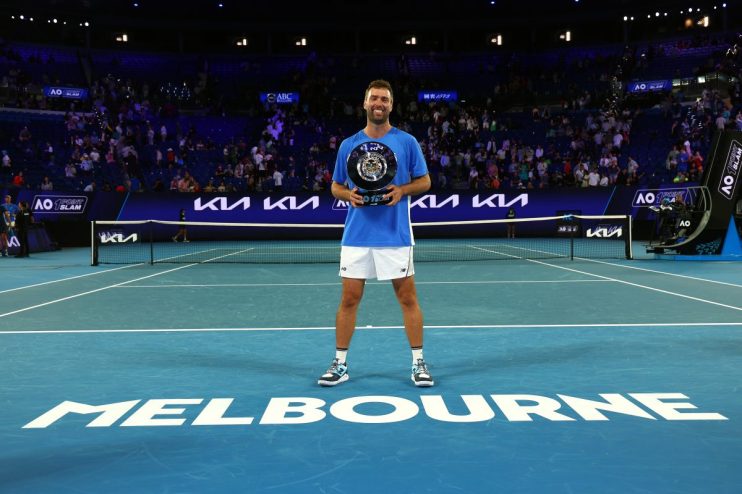
By contrast, innovation has worked particularly well in Australia. The Million Dollar One Point Slam at the Australian Open felt genuinely engaging rather than gimmicky. One point, one serves for the pros, two serves for the amateurs, winner takes all. The simplicity created real tension, and for once it felt plausible that anyone, even an amateur could win.
That outcome was what made it special. Seeing an amateur face a female professional in the final and the amateur leave with just under £500,000 gave the event a human story that truly resonated. Alongside the mixed-team competition at the United Cup a week earlier, where Belinda Bencic stood out above all male and female players, both events demonstrated how men’s and women’s sport can be presented together in a way that feels natural, balanced, and compelling.
Tennis does not need to reshape the court to stay relevant. It simply needs ideas that respect the game and the audience that follows it.
Tom Inskip is the founder of Committed PR, part of the Not Not Normal Group