Nigel Farage: Reform will tax the banks even if they don’t like it
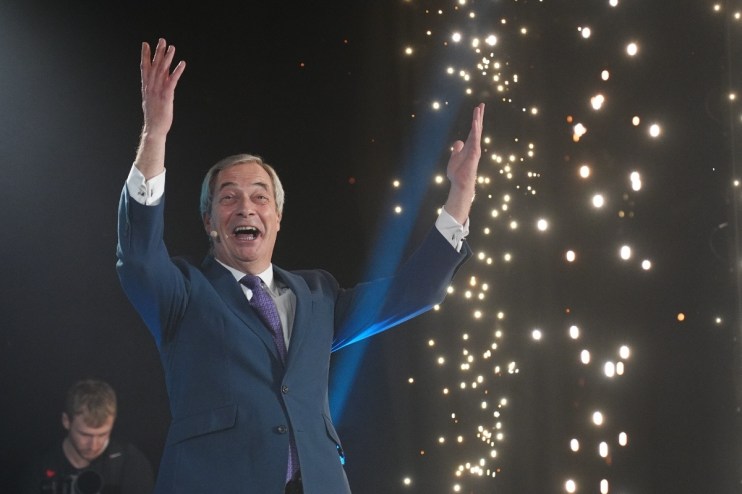
Nigel Farage has confirmed Reform will slap a tax on the UK’s banking giants in the latest dramatic escalation of his party’s tensions with the City.
Speaking at the World Economic Forum in the Davos, Farage said: “This will be tough for banks to accept but I am sorry – the drain on public finances is just too great.”
He framed the move as not a direct tax but instead the banks were “not going to get free money anymore”.
A tax on the sector was previously floated in the Reform manifesto, leading to the industry warning of “real consequences in the economy”.
Farage’s remarks echo lobbying calls from the left-leaning Institute for Public Policy Research (IPPR), which called for Chancellor Rachel Reeves to hit city banks with a £8bn levy in November’s Budget.
The think tank argued for a raid earnings from the banks’ quantitative easing (QE), where the Bank of England bought a large amount of government bonds from commercial lenders to lower interest rates and stimulate the economy.
To pay for these bonds, the Bank of England created new central bank reserves for the commercial banks, on which it paid interest at its official rate.
As interest rates climbed to a post-financial crisis high of 5.25 per cent last year, the central bank was forced to pay the lenders higher interest on the reserves than what it earned from the bonds. The IPPR projects losses on these bonds – paid for by the Treasury – will top £22bn annually.
Banks were able to skirt a tax in the Budget, with both British and US giants announcing whopping investments into the UK economy for the coming years.
“Some of the banks won’t like it,” Farage told a Bloomberg event in Davos.
“Well, I don’t like the banks very much because they debanked me didn’t they?”
Farage’s debanking scandal led to the resignation of Natwest boss Alison Rose after Coutts – a private bank part of the Natwest group – identified the politician as a politically exposed person (PEP).
PEPs refer to those who hold public office and as a result are subject to extra due diligence by financial firms. Farage has said his account was shut down unfairly because the bank disagreed with his personal and political beliefs.
Farage’s bid for City reform
It is not the first time Farage and Reform UK officials have been in crosshairs with officials at the City.
Deputy leader Richard Tice has opened the door to sweeping reforms of the Bank of England as part of the party’s ‘Big Reform’ hopes for the City of London.
One such idea could involve including Treasury representatives on the Bank’s Monetary Policy Committee.
The party has also lashed out at the Bank’s “dinosaur bureaucrats” for its regulatory approach on Britons’ ownership of stablecoins, crypto assets that are pegged to currencies.
In his interview with Bloomberg at Davos, Farage appeared to hint at his cold relationship with Andrew Bailey as he did not rule out cutting the governor’s term short in order to replace him with another candidate.
“I’m not questioning the independence of [the Bank],” Farage said.
“What I am saying is that we need a new, more innovative approach to all of this.”
Farage was the sole UK political leader to attend the World Economic Forum conference in Switzerland.
Announcing his arrival in Davos, the Reform leader said he was aiming to “confront” leaders’ views at the event and meet with Trump administration officials, whom he has struck a close relationship with over the years.