IOC looks tin-eared at best, cruel at worst over Ukraine helmet saga

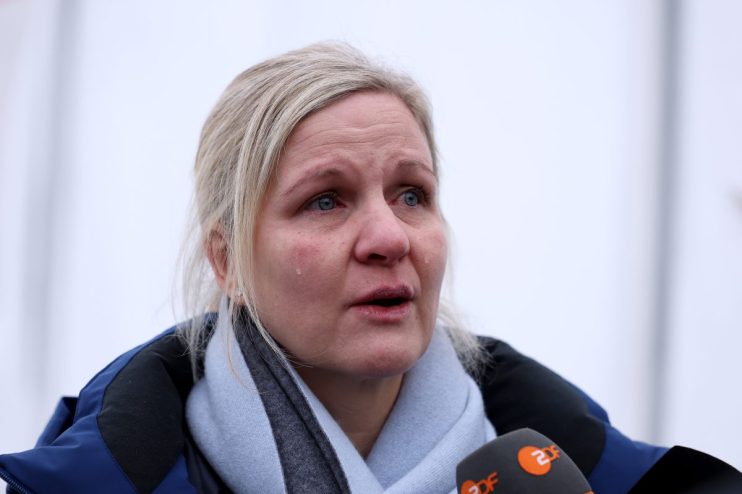
The reputations of the IOC and its president Kirsty Coventry have suffered badly from its handling of the Ukraine helmet row at the Winter Olympics, says Ed Warner.
Are you not entertained? The Winter Olympics have delivered stories ranging from the titillating (penile injections, condom shortages and a narcissistic declaration of infidelity) to the enraging (the banned helmet of remembrance) via good old fashioned controversial (fingered curling stones anyone?). And all against the backdrop of stunning sporting imagery that is only spoiled for the churlish by the whirring of the drones that are delivering the visual feasts into our living rooms.
These are almost the Games that the International Olympic Committee will have been desperate for after the colossal faux pas that was Beijing 2022. All the key boxes have been ticked, even down to a welter of medals for the Italian team on home ice and snow.
“Almost”, because the memory from these Olympics that will likely linger longest is the IOC’s crass mishandling of the controversy over Ukrainian skeleton athlete Vladyslav Heraskevych’s helmet commemorating athletes killed by Russia in the war it is waging on his country.
In disqualifying the defiant athlete, the IOC further cemented its reputation for being out of touch with a world it surely exists to serve not rule.
It is hard to judge who was more distraught in the hours and minutes ahead of the start of the skeleton competition: Heraskevych, his father, or IOC president Kirsty Coventry who is presiding over her first Games as their commander-in-chief.
“660 Ukrainian athletes and coaches have been killed by Russia since the full-scale invasion began. We are proud of Vladyslav and of what he did. Having courage is worth more than any medal.”
Ukraine president Volodymyr Zelensky
Coventry was in tears after her personal intervention failed to persuade the athlete to relent. While revealing a humanity that few would have expected of her predecessor Thomas Bach had he been handed such a situation during his reign, her dissolving only emphasised the inflexibility of the behemoth under her rule.
One can only speculate as to the exact mix of emotions the president was feeling in that moment: frustration, shame, empathy, exhaustion, anger? I like to think they in part reflected the stark realisation that the IOC was simply wrong. But maybe that’s just wishful thinking on my part – a hope that Coventry will prove a more enlightened leader than her mentor Bach.
The IOC plumbed the reputational depths during the helmet saga with this hardline summation by its spokesman Mark Adams: “He can, and we would encourage him, to express his grief, but let me be clear. It’s not the message, it’s the place that counts. There are 130 conflicts going on in the world. We cannot have 130 different conflicts featured, however terrible they are, during the field of play, during the actual competition.”
But Mr Adams and Ms Coventry, the IOC has banned the Russia team from the Olympics precisely because of this conflict. Your members have chosen this war over all others as worthy of the exclusion of a nation. You have marked it out above the rest as worthy of punishment, and yet are now punishing an athlete for expressing views that are aligned with your own.
In the process you have made yourselves appear tin-eared at best and cruel at worst. It has not gone unnoticed, by the way, that you appear keen to reintegrate the official Russian team in time for your LA28 Olympics.
Your concern about Heraskevych’s helmet creating an unmanageable precedent is understandable. That way slogan madness lies, the thousands of athletes in your events being given carte blanche to emblazoned their beliefs across their kit.
One person’s belief can easily appear a prejudice, which could sow discontent in the athletes village and certainly wouldn’t be great for negotiations with commercial partners. I get it.
Why, though, didn’t you take this opportunity to display the human side of the new IOC regime while simultaneously closing down the possibility of copycat sloganeering by athletes?
Allow Heraskevych to compete while using him as an example to explain the rationale for your regulations and to make it clear that his transgression will of necessity have to be a one-off. Enlist him to thank you for making him an exception in order to reinforce your rules for the future.
If Heraskevych was offered and turned down that chance, then tell us. My bet is that he wasn’t, otherwise you would have told us. Instead you offered him a black armband and a photo op with the helmet in the mixed zone. That surely was a tacit admission that you knew you were on the wrong side of the argument.
Heraskevych‘s rejection of the proffered fudge was admirable. Outside your IOC bubble, be clear that your reputations have suffered badly.
Keep the faith
Minutes before Matt Weston secured Team GB’s first medal at Milano Cortina 2026, a veteran of GB’s Summer Olympics teams messaged to ask what I thought would happen if GB won none at these Games. Would there be all sorts of inquests?
Only that morning the BBC reported British Olympic Association chair Katherine Grainger saying there was the potential for Britain to win a record number of medals and that “there rightly will be questions if we do not achieve that”.
For the record, that record is five, the tally in both 2014 and 2018.
Ever since I entered the world of sports leadership back in 2007 I’ve spoken out against the tyranny of public medal targets, and fully intend to do so until I hang up my logoed polo shirt.
Ahead of these Winter Olympics I said I would celebrate GB athletes proving themselves competitive with any medals won a fantastic cause for celebration. With four days of sport remaining, British competitiveness is absolutely undeniable, medals have indeed been won – and have been fabulous to watch.
Count these medals – definitely do that – but please don’t use their absence in some sports as grounds for funding cut punishments, and their total number to constitute a floor from which all athletes and their governing bodies are urged to “kick on”.
Grainger’s mid-Olympics comments came against a backdrop of the media weaving a narrative of Team GB waiting too long for a first medal. In my experience, which stretches back to the BOA hierarchy placing undue pressure on the athletics coaching team at the Beijing Olympics, such agonising is largely self-inflicted – and doesn’t change sporting outcomes.
Perhaps the BOA is overly anxious to please its sponsors or satisfy what it (misguidedly) presumes to be public demand; maybe it gets trapped in its own Games hype bubble.
Whatever the cause, I offer a personal guideline from my years in athletics: don’t talk about medal tallies mid-competition – leave that until after the closing ceremony. Don’t burden athletes with your own hopes and fears. Just let them get on with what they do best and the medal table will take care of itself.
Love train
Two weekends ago the Valentines ParkRun in Essex had 490 runners. On Saturday, Valentine’s Day itself, 2,331 tackled the 5k – over 70 per cent first time “tourists” at that venue.
My lovestruck correspondent reports a 10-minute queue to cross the finish line. Mankind’s capacity to think alike never ceases to surprise.
Clearly not a day for PBs (fewer than one per cent of runners posted one), but maybe a new romance or two took root in the crowd waiting to have their barcodes scanned. Beats dinner in Fred Sirieix’s First Dates restaurant, surely?
Ed Warner is chair of GB Wheelchair Rugby and writes his sport column at sportinc.substack.com