Former Goldman Sachs chief backs F1 to hold, and increase, value

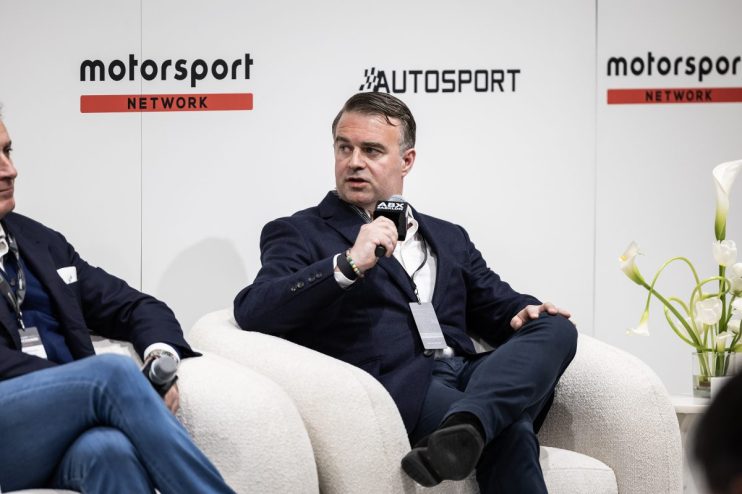
Formula 1 has not yet reached value maturity and can be considered one of the most reliable investments in sport, according to the former head of sports at Goldman Sachs.
The premium motorsports series has gone through a major ownership shake-up, with stake sales across the grid seeing team valuations skyrocket.
And Elis Jones, former head of global sports advisory at Goldman Sachs, believes those valuations will continue to rise in the short to medium terms.
“When looking at it from an investment standpoint, can I make a return over five-to-seven years?” he said at the Autosport Business Exchange London, a Motorsport Network event, on Wednesday. “And the answer has been ‘very much so’ for the last five-to-seven years, and from my perspective, ‘very much so’ over the next five-to-10 plus years.
“If you were designing a sport today that touched almost every continent in the world on a very regular basis, it would look like Formula 1.”
Formula 1 asset class
Two years ago Audi announced a 75 per cent acquisition of Sauber and completed a full buyout before selling a stake to the Qatar Investment Authority last year.
McLaren’s majority owners Mumtalakat snapped up a series of minority stakes at a valuation of $4.5bn last autumn while Aston Martin finalised a deal with HPS Investment Partners and Accel in a deal that valued its Formula 1 team at more than £1.5bn.
Williams raised capital in 2024 while Mercedes F1 boss Toto Wolff’s divestment of part of his one-third shareholding valued the team at over £3.5bn.
“The inadvertent consequence of employing a cost cap several years ago – $150m – has meant that the sport under Liberty has seen a huge growth in popularity based on the macro trends,” Jones continued. “And these teams now start to make money.
“In European football, for the most part, you don’t make any money. When you look at the NFL, almost all teams make money, but to varying degrees, and in the NBA, about 50 per cent of the teams may make money. And most importantly, there’s scarcity value.”