Birmingham City: How Wagner and West Mids Mayor unlocked stadium plan

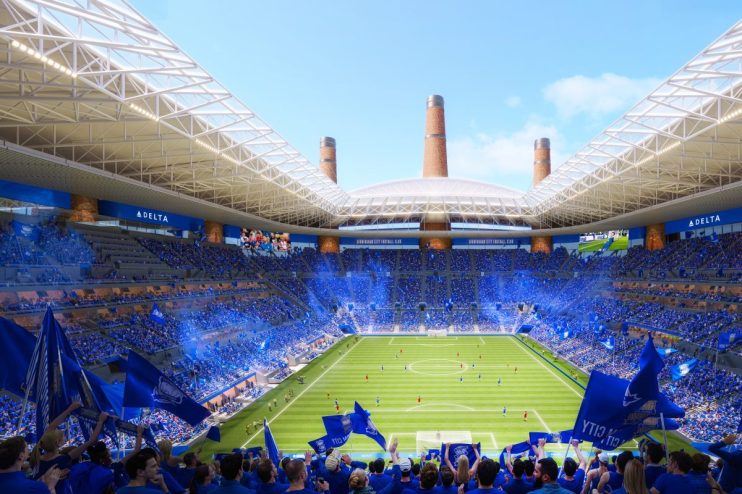
Last year, at the end of January, the Mayor of the West Midlands Richard Parker picked up the phone to Birmingham City owner Tom Wagner to hear a football club shareholder frustrated with the public interest surrounding the construction of a new arena for Manchester United rather than his stadium project in Britain’s second city.
Fast forward a year and plans for the Blues’s 12-chimney behemoth have been published, with strong public backing. And it is the public and private sector working together, Parker tells City AM, with taxpayer funding of new transport connections in Birmingham alongside private capital for a new sports quarter on disused land, that has been key.
“We helped take that plan into No10,” he says, “into the Transport Secretary and into the Chancellor. And that plan was not just about the ambition of the investment he wanted to make, but also about the jobs it would deliver – first time jobs to people in that very disadvantaged bit of Birmingham.
“We backed his investment, and I was really clear to the government and the Chancellor that we need to welcome these investors. They’re coming here, they could put their money anywhere, and I didn’t want anyone like Wagner to turn his back on this place because he hadn’t had the right support from myself or the Chancellor when he had such a convincing case.”
Wagner investing in UK
It is a study in how, increasingly, American investors are using sport to build real estate empires on British shores. The Birmingham sports quarter will see City’s ground become one of the best in the country. Combine that with Wagner’s Knighthead Capital owning a stake in the city’s Hundred team, Birmingham Phoenix, and it demonstrates the opportunity British cities outside of London can provide to investors.
“It is a very exciting time. I was really feeling clear that we can’t let these opportunities fall through our grasp, and it’s driven by the investment Knighthead Capital are making, which is really important,” says Parker, who succeeded former John Lewis managing director Andy Street as Mayor of the West Midlands.
“We’ve got the Euros coming [in 2028] – Aston Villa’s stadium is going to be used – so we have to support that. We’ve got European athletics coming here this summer so it’s a really exciting time, and it’s putting this region and this city on the global stage. It’s fantastic.”
Parker says that every £1bn pumped into the region by Wagner will see a return multiplier of 2.5x, meaning Birmingham’s investment could return £10bn to the region. He adds that he will “absolutely” push the council to approve the ambitious Birmingham City stadium plans, while he says he’d want the city to be part of Manchester mayor Andy Burnham’s desire for a non-London Olympic bid in 2040.
Birmingham City – alongside Ryan Reynolds and Rob Mac’s Wrexham – is one of the most ambitious clubs in the second tier of English football. And they, like their Welsh counterparts, are an example of how smart engagement can tap public money. It’s savvy, and a lesson in always picking up the phone to billionaires.