Tyson v Bruno: How UK’s first pay-per-view fight shaped next 30 years

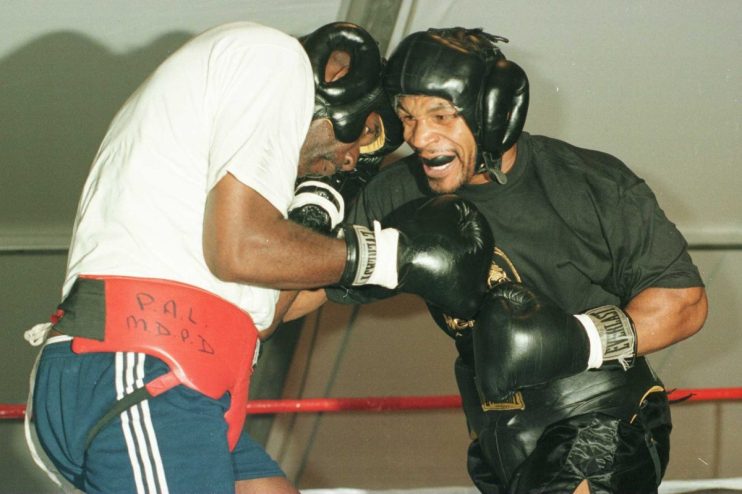
One day in early 1996 at Sky’s Athena Court headquarters in Osterley a group of people made a decision that would change the sporting landscape across the United Kingdom forever. Thirty years ago this week the second fight between Frank Bruno and Mike Tyson had been billed for 16 March 1996, and it was chosen by media conglomerate Sky to be the first domestic pay-per-view fight to be broadcast this side of the Atlantic.
Tyson had won the first fight seven years prior but had since gone to prison after being convicted of raping Desiree Washington in 1991. He was resuming his boxing career, while Briton Bruno was a world champion. And pay-per-view, commonplace in boxing and beyond these days, was an experiment that opened a broadcasting Pandora’s Box.
“Firstly, pay-per-view could only really start with this,” Christopher Haynes, one of the men behind the decision as head of sport PR tells City AM. “You had Bruno, who was world champion, and Tyson on the comeback trail, a fight with a big narrative. But there was also a history of domestic pay-per-view internationally in boxing and through closed circuit primarily within the UK, so there was a history.”
Pay-per-view history
Haynes describes how early obstacles included ensuring call centres had capacity to answer the thousands looking to purchase the fight – a far cry from the “one click and done” enjoyed by consumers today – and how the buy-in from all sides created a sellable narrative akin to the ones used to market fights in the 21st century.
“The most striking thing,” Professor Rob Wilson says, “is how quickly pay-per-view normalised the idea that premium sport carries a premium price. What looked like a one-off boxing spectacle effectively proved the commercial elasticity of live sport.
“Promoters and broadcasters realised fans would pay directly for scarcity – or rather, the biggest fights and the biggest moments. In that sense, it opened the door to a much more consumer-driven sports economy, where revenue isn’t just about advertising or subscriptions but about monetising the most valuable content individually. That shift helped underpin the enormous growth we’ve since seen in rights values, athlete earnings and event promotion.”
The fight itself, hosted on the Las Vegas Strip, was preceded by a strong undercard involving the likes of Ricardo Lopez Nava, Bernard Hopkins and Michael Carbajal and saw a number of varying broadcast agreements for different territories.
Tyson won in the third round. A battering, and not exactly the value for money a paying audience would have got from a 12-round battle. The bout, however, was broadcast again on pay-per-view the following day and beyond before finally going free-to-air much later.
“It paved the way for later trials of other sports including pay-per-view darts,” adds Haynes, who still works a sports consultant. “And more importantly to launch Sky Box Office, which is now Sky Store with movies, pay-per-view, fractional payments, different [rental] windows on movies, and the downloading of music. It is not just accepted, but a norm.”
Pandora’s Box
One broadcaster, in a bid to get around the pay-per-view, even employed actors to mimic the fight in real-time. It was comical, but somewhat replicates the watchalong culture of today’s YouTube influencers. It has its place.
“There’s an element of a Pandora’s Box,” Prof Wilson concludes of the UK’s first PPV event. “It accelerated fragmentation and rising costs for fans. What began with occasional boxing events has evolved into a landscape where major fights, MMA cards, and even some football and entertainment properties sit behind additional paywalls on top of subscriptions.
“The risk, and we’re arguably seeing it now, is that the industry pushes the willingness-to-pay boundary too far, which drives piracy, casual disengagement, and a shrinking younger audience.
“The challenge for the next decade will be balance. How can rights holders preserve the premium value of marquee events while ensuring sport remains culturally accessible rather than becoming a luxury product for the most committed fans?”
One decision in the industrial estate since dubbed Skyberia, 30 years ago, dramatically altered the sporting landscape. The narrative and drama of sport was monetised in the UK like never before, and we’re still seeing the domino effect of that in the hundreds of pay-per-view boxing cards that have become commonplace in the years since.