Honda Prelude 2026 review: Clever comeback for classic coupe

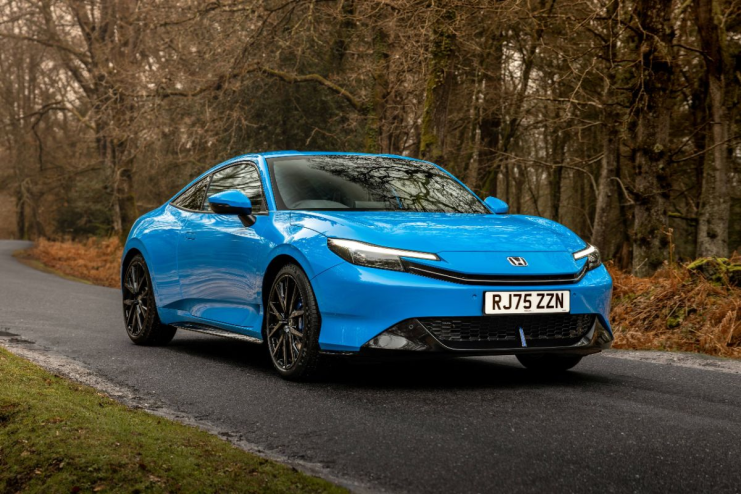
Honda Prelude is a nameplate we last saw in the UK 25 years ago. And Honda’s not bringing it back applied to yet another electric SUV, but a bona fide two-door coupe, just like the original from 1978.
This is a purist move from this most purist of car companies. In other firms, marketing can call the shots. At Honda, it’s the engineers whose word is final. Hence why the new 2026 Honda Prelude is one of the more intelligent types of new car.
For starters, it’s a hybrid, rather than a plug-in hybrid or even an EV. This has allowed an authentically low-slung body to sit atop the Honda Civic-derived underpinnings, one that’s optimised for weight (it’s a handy 1,480kg), rigidity and, yes, head-turning good looks.
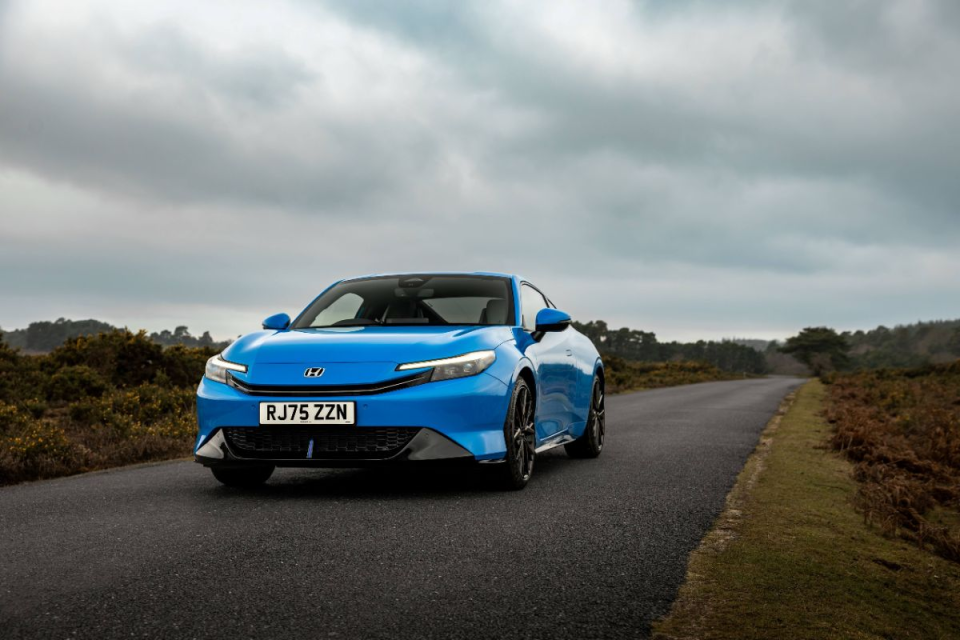
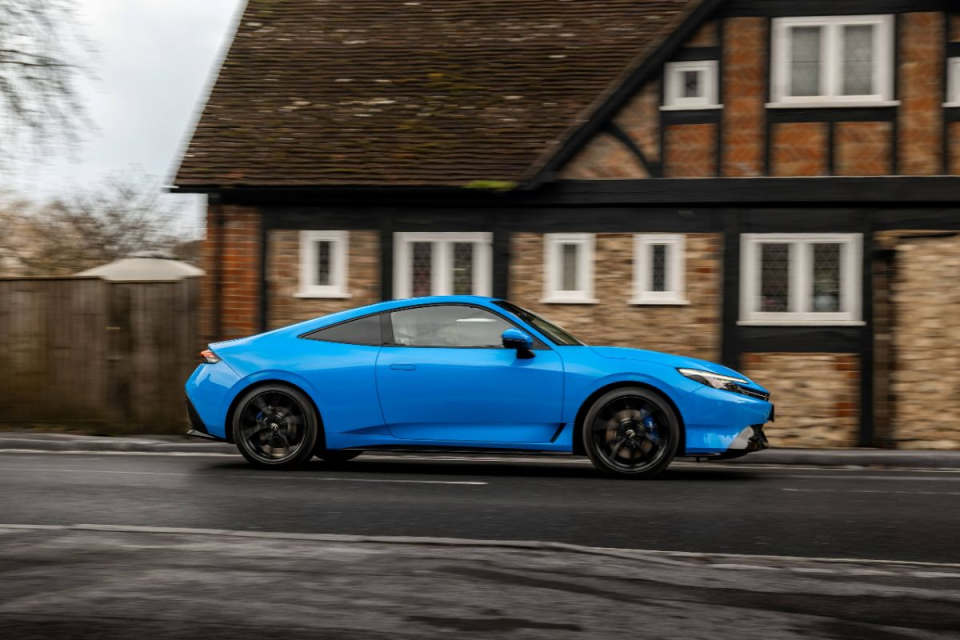
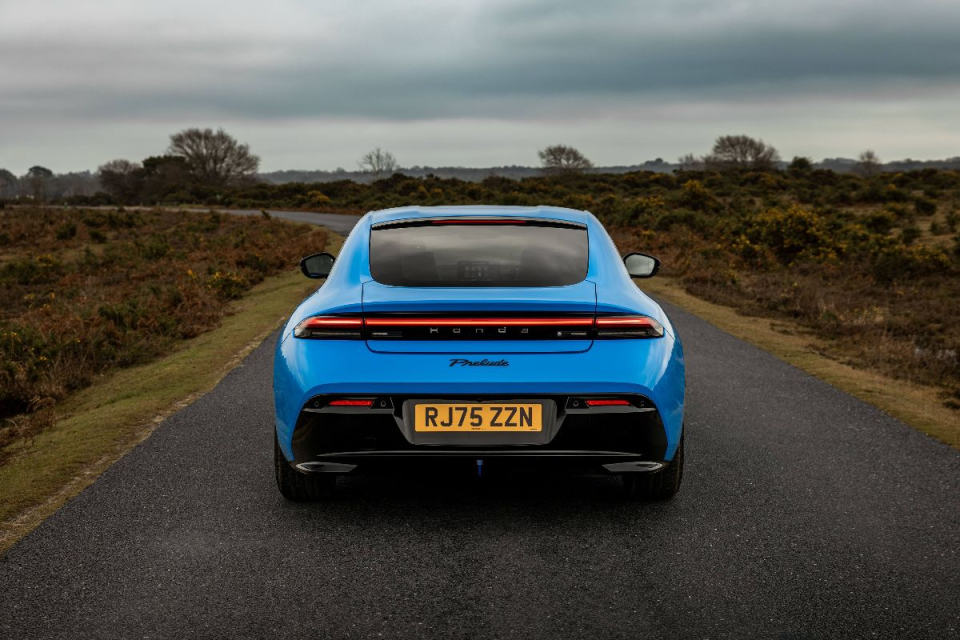
This is a great-looking car. It’s not an in-your-face showboat, like so many modern cars, but a sleek and svelte one, appearing particularly eye-catching from the rear thanks to its swooping roofline. I also spy a hint of modern-era Porsche 911 around the tail lamps, which is no bad thing.
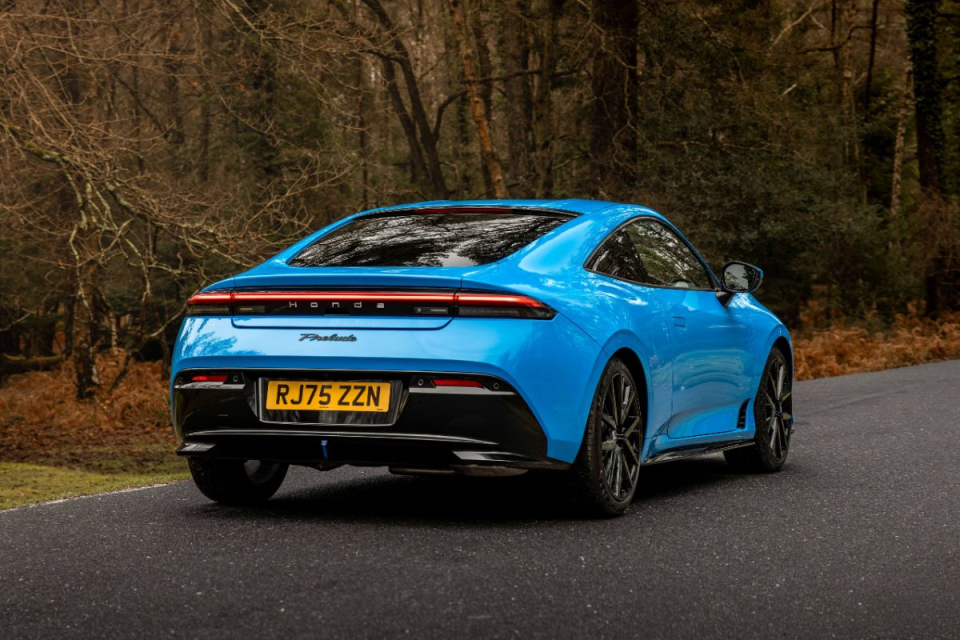
It’s only offered in four colours, mind – standard black, or white, grey and this fabulous Racing Blue as £700 options. But then, Honda’s only set to sell 400 in this financial year, and 500 the next, so the chances of Prelude owners seeing another one, never mind one in the same colour, are slim. Its key rival, the BMW 2 Series Coupe, will sell several multiples more.
Don’t think such small volumes make this £40,995 car a half-hearted effort, though. Indeed, as I discovered on a fabulous morning in Oxfordshire, it’s anything but…
Inside the 2026 Honda Prelude
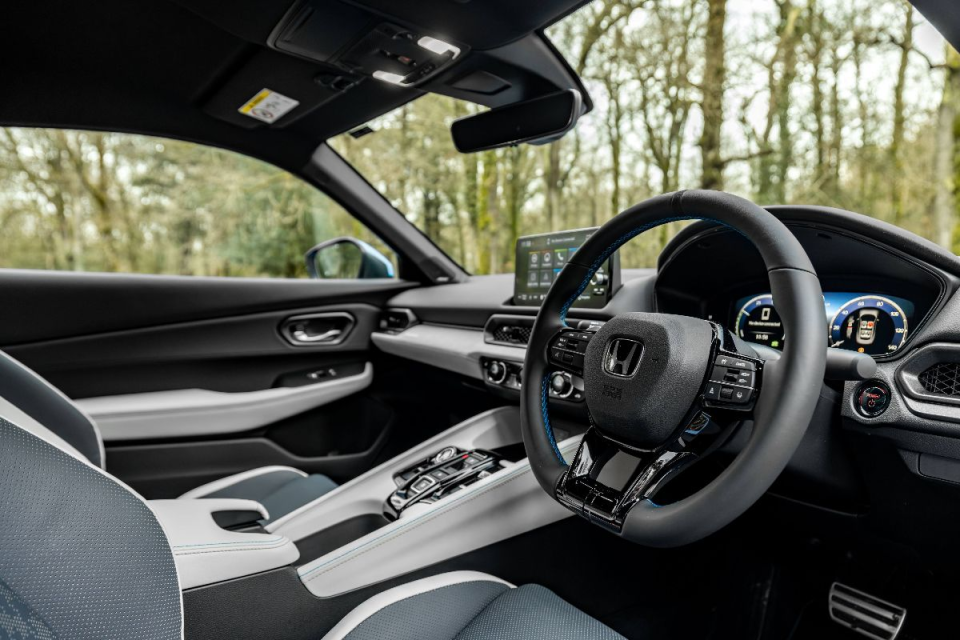
The Civic link is obvious when you step inside. The Honda Prelude shares a dashboard with its family hatchback sibling, albeit one with plenty of bespoke tailoring, from trimmed surfaces that feel like Japanese paper to a flat-bottomed steering wheel that is lovely to hold.
The low-slung seats are bespoke, too. Indeed, they’re asymmetrical – the driver’s seat is firmer and more heavily bolstered at the sides, while the passenger seat is a little softer and easier to get in and out of. A very engineeringy touch.
You can pick white or black interior colour schemes, and either is beautifully trimmed, with a snazzy ‘Prelude’ logo stitched in the dashboard. Equipment on the single Advance grade is all-inclusive, extending to a Bose premium audio system, although electric seats are oddly unavailable.
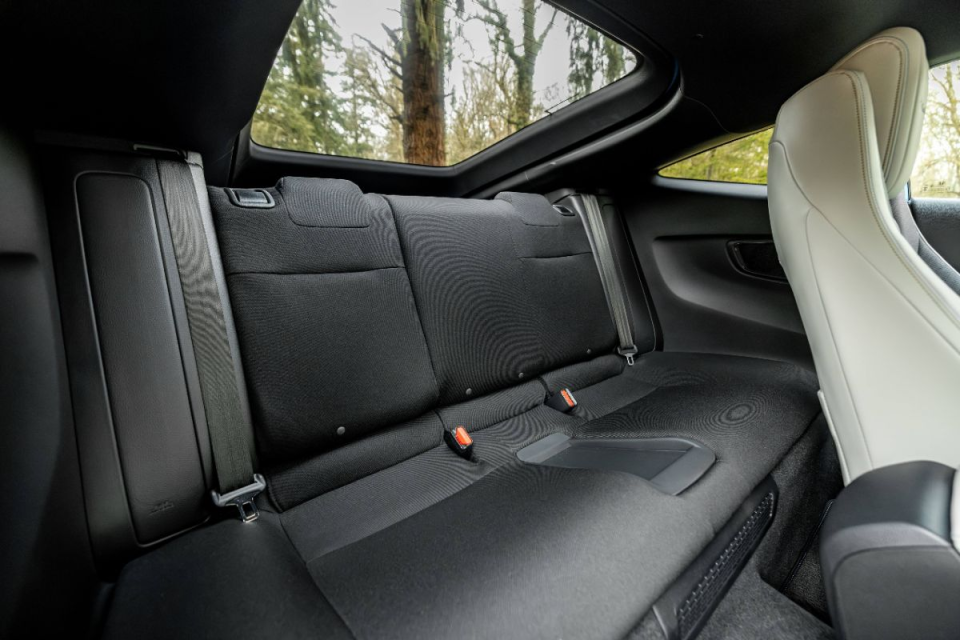
This is billed as a four-seat coupe but, like in a Porsche 911, nobody sitting in the back will thank you (the front seats also ‘forget’ the backrest angle when you tip them back forward).
Over-shoulder vision is gloomy too, in contrast to the excellent forward visibility, aided by a low dashboard and thin windscreen pillars.
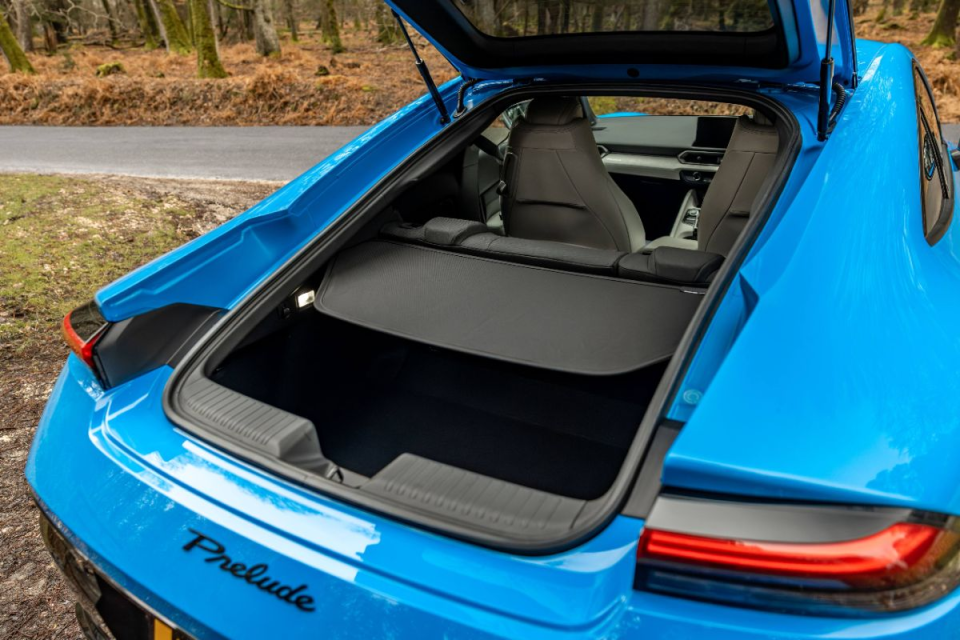
The extreme roofline means the tailgate is huge, and it extends so far forwards that rear passengers’ heads will be exposed when it’s open. Be careful they’re not sitting upright when you slam it closed.
The parcel shelf – a piece of netting – is an afterthought, too. The boot is well-shaped, albeit compact, at 264 litres (expanding to 663 litres with the rear seats folded).
Driving the 2026 Honda Prelude
The Honda Prelude uses the same 2.0-litre e:HEV hybrid technology as the Civic. Its petrol engine produces a meek-sounding 143hp, while the punchy electric motor serves up a more interesting 184hp. And it’s this fast-reacting motor that actually drives the Prelude; the petrol engine simply supplies the energy.
The result is a slightly disappointing 0-62mph in 8.2 seconds. However, a far flatter torque curve ensures ample power is delivered across the engine range, not just at high revs. Less peak power, more usable power is Honda’s pitch.
Adding to this complex setup are four driving modes – default GT, Comfort, Sport and Individual – plus Honda’s intriguing S+ eight-speed manual-mimicking gearbox.
You’ll often as not start out driving in hushed, sophisticated EV mode. The engine seamlessly cuts in as speeds increase. Press harder and the revs will rise, with the constant engine note characteristic of a CVT gearbox. The noise (which has some electronic augmentation) gets louder as you go up through the modes. It’s OK, if far from the wailing high-rev VTEC engines of old.
Two things impressed me in this everyday drive mode: the instant response to the accelerator, thanks to the electric motor’s torque, and the seamless acceleration you get from combining an e-motor with a CVT gearbox. This means you’ll often be driving more quickly than you realise, so fuss-free is the powertrain. VTEC fans will yearn for more drama, but for an intelligent GT coupe, I think the approach suits it well.
The ‘S+’ mode creates artificial gears, which are reasonably convincing. Rev-matching downshifts are particularly entertaining, and you can go up and down gears via the steering wheel paddles. Shame you can’t leave it in manual mode, though; the computers quickly override things and take back control.
While the responsive nature of the hybrid powertrain is satisfying in everyday driving, it’s best to switch into S+ mode on twisty roads, as it tightens the drivetrain up and places more emphasis on the petrol engine. This makes it smoother and more responsive as you’re going on and off the accelerator through corners.
The hybrid tech delivers great fuel economy, too. On a swift drive mainly on fast A-roads, I still averaged over 47mpg.
2026 Honda Prelude ride and handling
The Prelude has Honda Civic Type R front suspension and adaptive dampers. Combined with the ultra-rigid coupe bodyshell, it makes for a high-end platform that promises an engaging drive.
It delivers. Starting off in Comfort mode, the dampers give just enough suppleness to offset the semi-stiff springs and 19-inch wheels. It feels racy, but not OTT. But out of town, I quickly found GT to be my preferred mode, thanks to the tighter body control that felt calmer over undulating surfaces.
The wheels do transmit a bit of road surface grittiness into the cabin, but the ride itself is absorbent enough, making the Honda Prelude a great car for A-road charges. I love the steering weight in GT mode too, which is firm and robust, witout being either too light (Comfort) or too heavy (Sport).
Handling is very sophisticated. There’s plenty of front-end precision and bite, allowing it to be threaded through corners at speed with accuracy. It has a fuss-free nature, feeling accurate and confident without overloading you with feedback. Perfect GT car fodder, without the rawness and intensity of a hot hatchback.
Smart electronics that add some braking at the rear help the Honda Prelude turn precisely into corners, while that clever front suspension geometry provides great traction out of tight bends, quelling torque steer in the process. The deeper you dig, the more impressive it becomes.
Verdict: 2026 Honda Prelude
The Prelude is a very ‘Honda’ kind of car. It’s all about the engineering, eschewing on-the-surface thrills for an intelligent, thinking person’s drive.
Not everyone will like the hybrid engine, because it’s not a VTEC turbo, but I think it’s a very 21st century answer to powering a sporty coupe. And given how, even during a morning of swift driving, I averaged over 47mpg, it’s a brilliant alternative if you don’t want to go electric.
Stylish, understated, meticulously built and delivering a cultured GT-style drive, the 2026 Prelude is Honda at its best: a car that enthusiasts should certainly look to test-drive. We are glad to have it back.
• Richard Aucock writes for Motoring Research