Back to Starbucks: How Starbucks coffee shops are revitalising community-first third places

In bustling cities and quiet neighbourhoods alike, Starbucks familiar green siren often signals more than just a caffeine stop. It represents that essential ‘third place’ – a reliable comfort zone bridging the gap between home and work, a space for quiet focus, friendly catchups, or simply a moment’s pause.
But in a world where connection often happens online more than off, many of those third places have been quietly disappearing. As a brand built on human connection – Starbucks mission is more relevant today than ever. That’s why the brand is reimagining what a modern third place can be: welcoming, accessible, and as vibrant and diverse as the communities it serves. In other words, the brand is getting “Back to Starbucks”.
A commitment to local communities
Since the first Starbucks store opened its doors in Seattle’s historic Pike Place Market in 1971, the coffeehouse has served the community more than just its expertly crafted coffee. Coffeehouses have long acted as vital neighbourhood waypoints.
From day one, Starbucks was built on one simple idea: bringing people together over good coffee. Now with coffeehouses all over the world, Starbucks is more committed than ever to ensuring it remains at the heart of local communities.
Visit the Ümraniye Yamanevler store in Türkiye and you’ll find an example of this commitment in action. Each Starbucks coffeehouse is unique, designed to be vibrant expressions of the surrounding neighbourhoods – the Ümraniye Yamanevler store is no exception.
More than a café, the Ümraniye Yamanevler coffeehouse symbolises Starbucks investment in the neighbourhood’s future. Starbucks partnered with non-profit organisation Community Volunteers Foundation (TOG) to create a space that is uniquely designed to serve the area’s young people – where they can learn, create, connect, and plan for the future. It’s all part of a wider commitment in the Middle East, North Africa and Türkiye, where The Starbucks Foundation and the Alshaya Group are investing $6million into equipping 250,000 young people with critical life and career skills.
Central to the “Back to Starbucks” direction is this focus on local impact. Starbucks stores strive to deliver measurable benefits that ripple across the entire community – creating sustainable jobs, youth opportunities, and providing skills training that extend beyond just barista roles.
Elsewhere, in Saudi Arabia, Starbucks opened its first all-female-operated drive-thru back in 2022. The coffeehouse was a boost to the local economy, supporting the government’s aim of increasing its female workforce from 22 percent to 30 percent over the coming years.

Spaces where everyone is welcome
With an estimated 1.3 billion people – or 16% of the world’s population, having some kind of disability, when it comes to third places the issue of accessibility cannot be overlooked. After all, appealing to the community means creating spaces that work for everyone in the community.
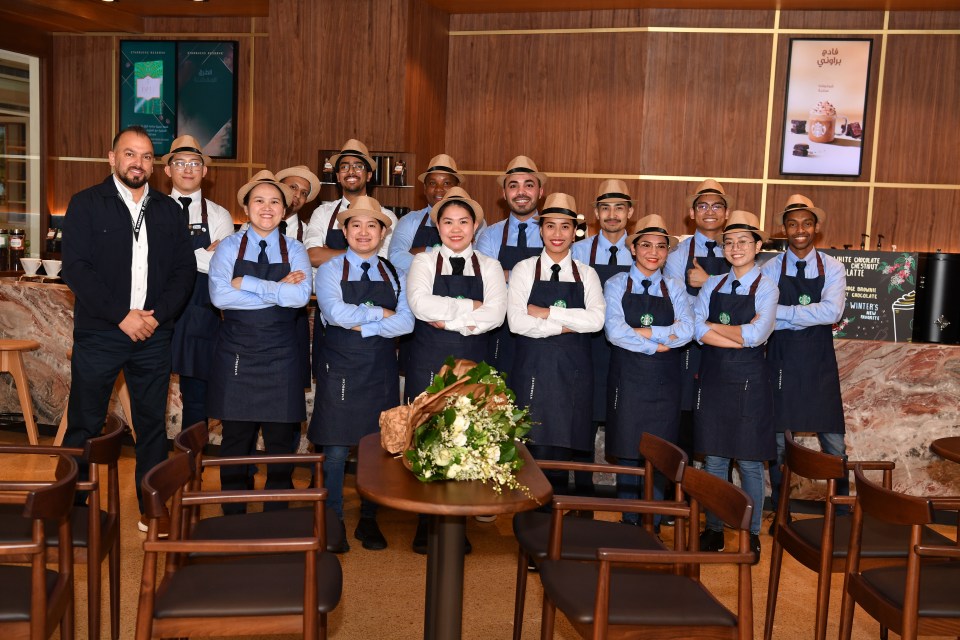
A growing number of Starbucks Signing Stores are springing up across the globe – the most recent of which opened earlier this year in Kuwait. Located in the second largest shopping mall in the Persian Gulf, The Avenues, the Starbucks baristas working here have been trained in Kuwaiti Sign Language. But the training covers more than just communication – it’s designed to foster deeper understanding and respect of Deaf culture, allowing for more meaningful everyday interactions between baristas and Deaf or hard of hearing customers.
Kuwait is one of several such stores. In the UK, Starbucks formed partnerships with industry experts like the British Deaf Association (BDA) and the Deaf Leadership, Accessibility Office, and Access Alliance Network to create more accessible stores. Sparked by one barista’s personal mission to learn sign language to better serve customers, now over 11,000 Starbucks baristas across the UK have been trained in British Sign Language.
“Back to Starbucks” and the future of the ‘third place’
Starbucks is revitalising third places for 21st century communities. But it’s less of a transformation and more a return to what made people fall in the love with the brand in the first place – creating welcoming spaces where people gather to drink the finest coffee, handcrafted by skilled baristas. It’s a simple commitment, but an important one: it’s time to get “Back to Starbucks”.
Readers interested in learning more about Starbucks vision for the future of its stores, and the importance of more adaptable, accessible, third places, are encouraged to visit the Starbucks Stories EMEA website.