London skyscraper given green light after Roman Basilica forced planning revamp


The City of London has approved plans for 85 Gracechurch Street, which had to be reworked in light of the discovery of a historic Roman Basilica under the site.
It also approved plans for a 45-storey tower at 63 St Mary Axe, which will sit at the edge of the City of London’s Eastern Cluster.
Continuing with 85 Gracechurch’s Roman theme, the proposals for 63 St Mary include the display of a currently-buried section of London’s ancient Roman Wall.
Together, the two developments will add more than 110,000 square metres of ‘best-in-class’ Grade A, sustainable office space to the City, and create more than 6,500 jobs, the Corporation said.
“Every new building must earn its place in the Square Mile, and these are two standout schemes that do just that. Both 85 Gracechurch Street and 63 St Mary’s Axe capture the dynamic of our City: ambitious, inclusive, and rooted in our extraordinary heritage,” chair of the City of London Corporation Planning and Transportation Committee, Tom Sleigh, said.
“Together, these buildings… cement the City’s status as the engine room of the UK economy. Their addition to the future skyline will preserve our capital’s status as a leading global city,” Sleigh said.

Gracechurch Street’s ‘extraordinary’ basilica
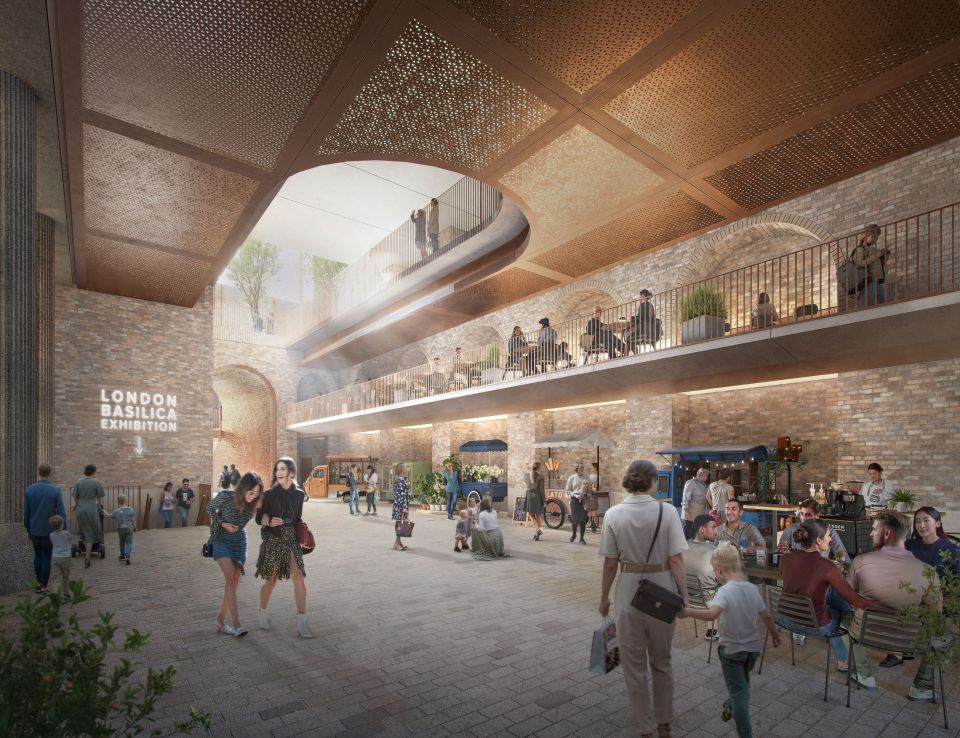
The proposed scheme for 85 Gracechurch Street now incorporates a public exhibition space in the 32-storey commercial building, which will celebrate the remains of the first Roman Basilica of London.
The public immersive experience will be where visitors can step into Roman London, “telling the story of the development of the City through time”, Hertshten Properties, which will develop the site, has said.
The remains of the Basilica are believed to be part of the Tribunal, a designated area within the Basilica where magistrates, political leaders, and important officials would have adjudicated on a raised stage, presiding over significant decisions affecting Roman London and beyond.
“It’s like discovering the Speaker’s Chair and chamber of the House of Commons, 2,000 years into the future,” Sophie Jackson, Director of Development at MOLA, said when the discovery was made.