UK Sport: We invest £32m in winter sports because Britain cares deeply

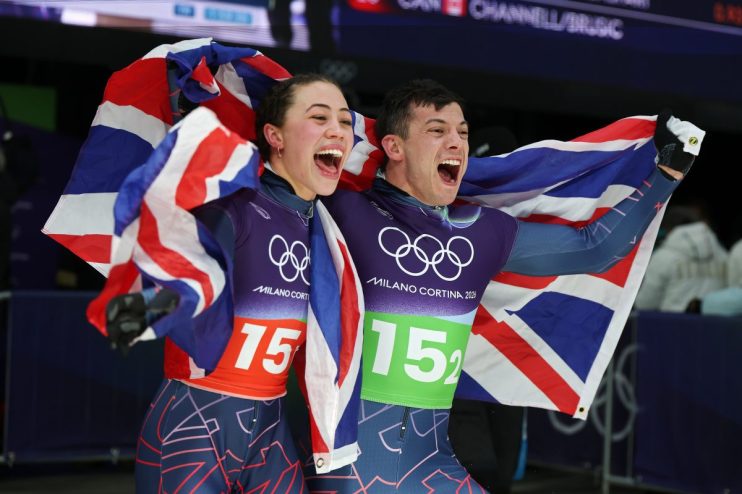
Milan Cortina and the British public’s appetite for melon grabs and curling showed why UK Sport invested £32.5m in winter sports in this Olympic cycle, says CEO Sally Munday.
Watching years of dedication come together in a single run at Milan Cortina earlier this month was extraordinary.
Matt Weston’s performance en route to Team GB’s first gold of the Winter Olympics was sport at its most compelling: an athlete at the top of his game, executing under the pressure of personal ambition, the hopes of family and friends, and a nation willing him on.
The composure he showed reflected not only a remarkable athlete, but a skeleton programme that, through sustained investment, has grown from modest beginnings into a world-leading force.
For Weston, who became Britain’s first ever double Winter Olympic gold medallist with victory in the mixed skeleton alongside Tabitha Stoecker, the journey to the podium started a long way from the sliding track in northern Italy.
He had been a highly promising taekwondo athlete and rugby player before injury forced him out at 17. His Olympic dream was reignited through a UK Sport Discover Your Gold talent identification programme, the same pathway that has now produced a succession of British skeleton champions.
The fact that more than 5,000 people have signed up for the British Bobsleigh and Skeleton Association’s next talent campaign shows the impact this team is already having. Curling taster sessions in Scotland for the final weekend of the Games were selling out too.
British Winter Olympic history is marked by iconic moments – Torvill and Dean, Rhona Martin’s “stone of destiny”, Eddie the Eagle. But never before have we been enthralled by so many British athletes competing among the very best.
Why does Britain invest in winter sport at all?
Alongside our record haul of five medals, including three gold, Team GB delivered 24 top-10 finishes, the most in our history, placing us ahead of traditional winter sport powerhouses such as Canada and Switzerland.
For all the pride and excitement that Milan Cortina delivered, Winter Olympic success is never forged in the glare of the Games themselves. It takes shape quietly and methodically over time.
Team GB’s performances in Italy were the product of hard graft from athletes, coaches, practitioners and support staff, guided by National Governing Bodies and underpinned by long-term investment from the National Lottery and the UK Government.
Some may question why a nation without a winter climate invests in winter sport at all. In many ways, the answer is simple: because the British public cares deeply about it.
Recent polling shows Team GB and ParalympicsGB now rank as the institutions the country feels most proud of. BBC Sport recorded its largest-ever audience consumption for a Winter Olympics this year, driven by record streaming and digital engagement.
In the depths of a particularly grey February, many of us become armchair curling experts for a fortnight and take delight in working out our melon grabs from our Japan airs and Canadian bacons.
Winter sport success gives people something positive and shared to hold onto, which is why Olympic and Paralympic moments resonate so deeply.
At UK Sport, we invested £32.5m across Winter Olympic and Paralympic sports in this cycle. That backing has helped Britain remain one of the world’s leading non-Alpine winter nations.
Team GB can improve in 2030 Winter Olympics
Crucially, that investment supports gifted, determined athletes from every corner of the UK whose talent and ambition deserve the chance to shine on the biggest global stage.
And when you see Charlotte Bankes and Huw Nightingale come back from disappointment to win gold, Bruce Mouat’s team show such camaraderie through victory and defeat, or Mia Brookes put everything on the line in pursuit of gold, you see exactly why. These athletes reflect the very best of who we are.
And yet, as Milan Cortina reminded us, success in elite sport is never guaranteed. It is decided by the finest of margins.
With so much young talent in Team GB, the French Alps in 2030 offer another opportunity on European soil to go further still, to convert more of our top-10 finishes into podium performances.
But opportunity guarantees nothing. Global competition is intensifying, and what got us here will not automatically keep us here.
That is why, at UK Sport, we are committed to continuing to evolve – working more collaboratively across our winter sports, strengthening how we support athletes, and ensuring that every pound of investment works as hard as the athletes it backs. If we stand still, we go backwards.
This was an extraordinary fortnight. It showed what is possible and strengthens our resolve to do what it takes to keep moving forward and enable our athletes to achieve their ambitions.
Britain has proved it can defy expectations in winter sport. Our job now is to build on it.
Sally Munday is CEO of UK Sport.