UK economy contracts 0.1 per cent in blow to Rachel Reeves

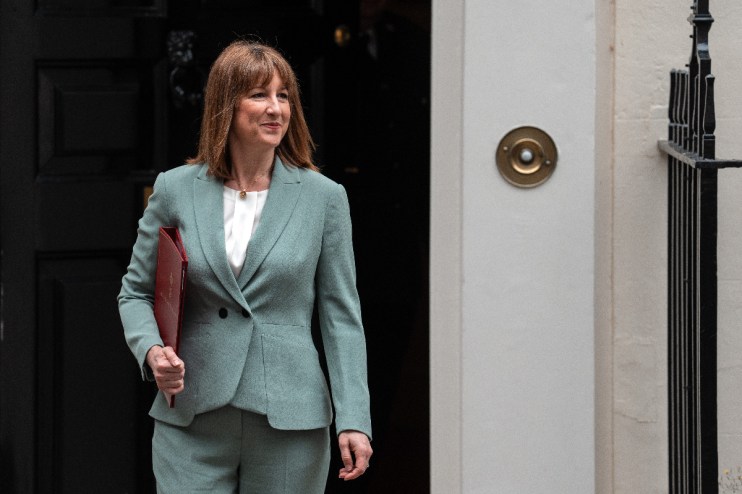
Rachel Reeves’ waning growth agenda has been dealt another blow after the UK economy contracted 0.1 per cent in May.
The Chancellor has endured a bruising few weeks after government U-turns and spending splurges have cut into the fiscal headroom she outlined in the Autumn.
Fresh figures from the Office for National Statistics have confirmed her growth mission was still lagging.
May’s results fall short of City economists’ expectations of 0.1 per cent growth.
Production marked the steepest drop at 0.9 per cent and construction shrunk 0.6 per cent. Meanwhile services grew just 0.1 per cent.
Liz McKeown, director of economic statistics at the ONS, said: “The economy contracted slightly in May with notable falls in production and construction only partly offset by growth in services.”
“May’s fall in production was driven by oil and gas extraction, car manufacturing and the often-erratic pharmaceutical industry.”
Responding to the figures, Andrew Griffith, Shadow Business Secretary said: “This month’s data shows a clear pattern with business output down, our trade balance worse and the economy shrinking.
“Try as she might, the Chancellor only has herself to blame. This socialist government doesn’t understand business but must urgently listen to those who do and reverse their onslaught of tax and regulations.”
Reeves said it was “disappointing” to see the economy shrink for the second month in a row.
The Chancellor said: “Getting more money in people’s pockets is my number one mission. While today’s figures are disappointing, I am determined to kickstart economic growth and deliver on that promise.
“The choices we have made in our first year in government have seen us extend the £3 bus fare cap, fund Free School Meals for over half a million more children, press ahead with plans to deliver free breakfast clubs for every child in the country and increase the National Minimum and National Living Wage, giving a pay rise to three million workers.”
This follows figures from April, which showed the economy contracted 0.3 per cent during the month, compared to growth of 0.7 per cent in the first quarter.
Reeves’ £20bn tax grab on employers came into effect at the beginning of April and has been blamed for falling headcounts and a row back on hiring amid higher costs for businesses.
Paul Dales, chief UK economist at Capital Economics, said May’s decline, along with April, “continued to reverse some of the 0.7 per cent quarterly leap in GDP in the first quarter.”
Dales added: “We think GDP will rise by a fairly subdued one per cent this year due to the lingering drags from a weakening global economy and the rises in domestic taxes for UK businesses.”
The dire growth figures and Chancellor’s £190bn splurge in the government’s Spending Review have spiked concerns for a tax-heavy Autumn Budget.
Reeves hit by damning OBR report
The Office for Budget Responsibility (OBR) added to these fears after warning earlier this week that the UK economy was set for a “daunting” year due to unfunded spending commitments and global trade tensions.
In a report on Tuesday, the OBR said recent U-turns on welfare reforms and winter fuel payments were “not reflected in medium-term forecasts and budgets” and set to put greater strain on public finances.
Reeves increased taxes by £40bn in October 2024 and promised that the scale of the hikes was a one-time measure.
But following the Labour’s latest U-turn on welfare reforms, which ministers had hoped would secure £5bn in savings, the government has not committed to ruling out a number of tax hikes.
Downing Street has flirted with the notion of a wealth tax, even amidst an unprecedented exodus of Britain’s top earners.
During Prime Minister’s Questions on Monday, Sir Keir Starmer pointedly ignored a question on introducing a wealth tax, despite being quick to rule out hikes to VAT, income tax or national insurance.
But despite an increase in income tax being ruled out, Starmer failed to rule out extending the freeze, often dubbed as a “stealth tax”.
The Institute for Fiscal Studies (IFS) suggested a freeze on thresholds could raise the government nearly £9bn in revenue.
The Chancellor will deliver the Treasury’s Financial Services Growth and Competitiveness Strategy on Tuesday, where she hopes to harness the power of investors, banks and fintech to revive her ailing growth agenda.
Reeves has met with a series of the industry’s bigwigs throughout the year with the hope of drumming up growth prospects.