Reform top the polls but voters cool on Nigel Farage

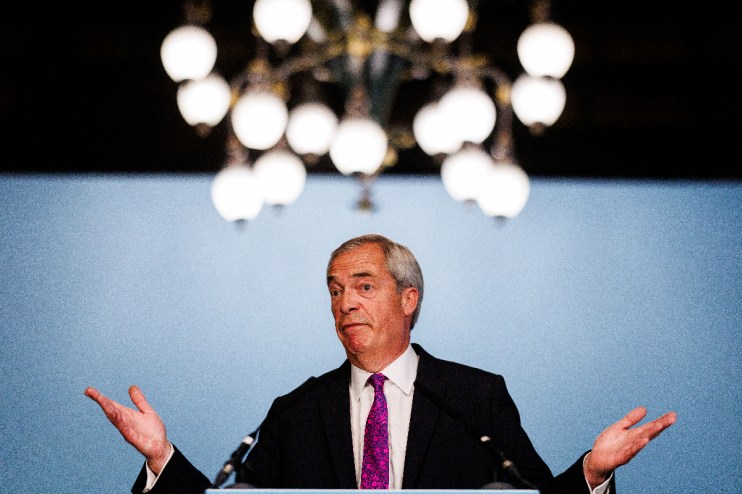
Reform UK continues to ride high in the opinion polls – climbing 16 points since last year’s election – yet voters appeared to have cooled on Nigel Farage as new City AM polling suggests he’s lost some of his shine.
A post-government slump in support for the Conservative Party and lack of approval for the Labour Party’s grip on Downing Street has opened up the electoral playing field for Farage’s insurgent party which has capitalised on voters’ discontent on key policy issues such as immigration.
A new City AM/Freshwater Strategy poll has found that the party has maintained its position as the party most likely to win the next general election, surging to a voting share of 31 per cent in July.
The Labour Party meanwhile would win 23 per cent of the voters, followed by the Conservative Party on 19 per cent, the Liberal Democrats on 16 per cent and the Green Party on six per cent.
But Nigel Farage’s own net approval ratings have dropped to a record low since the City AM/Freshwater Strategy monthly survey of voters launched in January, dropping from a relative high of minus 2 in June to minus 13 this month.
Net approval for Kemi Badenoch stood at minus 16 while ratings for Keir Starmer were as low as minus 38 following Labour’s ‘week from hell.’
Ed Davey, the leader of the Liberal Democrats, was the most popular of the UK politicians voters were asked about while Robert Jenrick and Wes Streeting were tied at minus 10.
A separate poll by YouGov suggested nearly a fifth (18 per cent of voters) would consider backing a new party led by Jeremy Corbyn after reports suggested he would set up a new left-wing party with the former Labour MP Zarah Sultana.
Reform UK vs the OBR
Fresh polling figures point to the chasm in voters’ approval for the two dominant parties of the last century.
The Labour Party faces an uphill battle in sticking to fiscal rules while floating tax hikes without interfering with manifesto pledges, all while it hopes to drive higher growth.
The Conservative Party, meanwhile, is struggling to draw support back from voters after spluttering growth rates and peak inflation of over 11 per cent towards the end of their 14 years in power.
Reform UK has floated a number of policies, including imposing taxes on renewable energy and deporting foreign prisoners, to attract voters.
The Office for Budget Responsibility (OBR) warned that successive governments had taken public finances on an “unsustainable path”, with Labour not able to “afford the array of promises it has made to the public”.
Among the most costly policies and events it highlighted as posing a risk to the UK were the triple lock pension, investment in net zero technology, damage from climate change and a lack of demand from pension scheme holdings in buying gilts, otherwise known as UK government bonds.
A policy paper produced by OBR analysts said public debt risked spiralling to 270 per cent as a share of GDP in the next 50 years.
Reform UK chairman Zia Yusuf labelled the watchdog’s economists as “useless fake experts” and blamed “gutless politicians” for handing over responsibility in the running of government to a “bunch of morons”.
Method note: Freshwater Strategy interviewed n=1,259 eligible voters in the UK, aged 18+ online, between 4-6 July 2025. Margin of Error +/- 2.8%. Data are weighted to be representative of UK voters. Freshwater Strategy are members of the British Polling Council and abide by their rules.