Office demand outstrips construction as new starts plummet

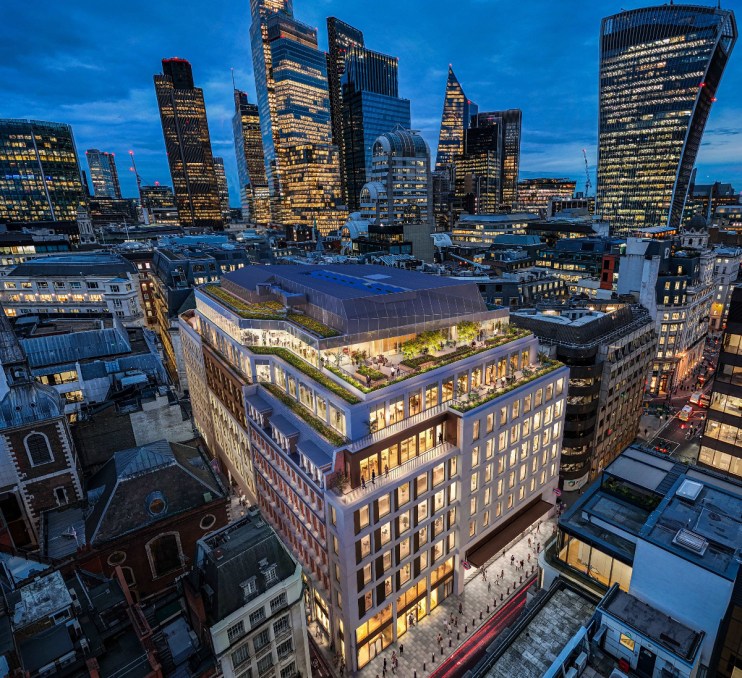
New London office construction starts have fallen to their lowest level since 2004, just as businesses up their demand for workspace, says Joanna Hodgson
On a frosty Wednesday last week, the famed panoramic view from north London’s Alexandra Palace, featuring a host of landmarks including the Shard and HSBC Tower, had an abundance of cranes dotted across the skyline. But while the general public might see a building boom, the capital’s collection of office agents and developers observe construction is much quieter than in recent years.
New office construction starts in London last year fell to their lowest level since 2004, latest figures from real estate data provider CoStar show. There were spades in the ground commencing on just 3.1m sq ft of new office space in 2025, a 35 per cent drop from the prior year, and the total space underway, 15.6m sq ft, is the lowest since 2020 when the pandemic drastically hit the commercial property market.
Patrick Scanlon, senior director of market analytics at CoStar comments: “Persistently high borrowing, construction and labour costs, along with prolonged economic uncertainty, have caused developers to pause for breath.”
But at the same time, numerous employers are hunting for workspace, and the extent of those requirements can be laid bare today. Research compiled for City AM by property consultancy JLL says current central London office demand is estimated to be 13.4m sq ft, equivalent to more than ten 22 Bishopsgate towers (the Square Mile’s tallest building). That compares with 12.2m sq ft recorded just over a year ago, and sits 36 per cent above the long-term average.
So which sort of firms are seeking space, and as well as new buildings could there be appetite for the capital’s large volumes of less modern properties?
High demand comes even as hybrid working, which boomed during the Covid crisis, remains popular. But many bosses have called teams back to meet more regularly in-person.
Jeremy Attfield, head of City office at JLL says the “flight to quality is accelerating”. He adds: “Companies are paying premium rents for high-quality spaces in central London because these locations deliver measurable advantages: access to skilled workers, enhanced productivity through in-person teamwork, and professional environments that support client relationships.”
JLL’s research points to firms looking at their property strategies well ahead of lease expiries due to concerns over the constrained development pipeline. Almost 70 per cent of current active requirements are from occupiers with lease events from 2027 onwards.
Demand in the capital is being led by the banking and finance and professional services sectors, which together represent two‑thirds of all active requirements. The TMT (technology, media and telecommunications) and service industries also maintain a meaningful presence. AI is helping to fuel new demand, particularly around Euston and Kings Cross and is expected to continue this year, says Alex Browning, JLL’s head of West End agency.
Upcoming projects would-be tenants have been eyeing include 10 King William Street, being developed by Helical and TfL’s property division Places for London. The £300m Fletcher Priest-designed building is due to complete by the end of the year, wrapping around and over the new Cannon Street entrance to Bank station. It comprises 139,000 sq ft of offices, as well as terraces and a wellness suite which could be used for yoga classes.
London-listed Helical’s chief executive Matthew Bonning-Snook says demand for high quality offices in prime City locations continues to outstrip supply, with the Square Mile’s limited pipeline creating “significant competition” among occupiers for the best space.
While landlords of modern blocks are expecting space to fill-up well, those behind much older space could experience more challenging conditions.
James Strevens, head of City leasing at property agent BNP Paribas Real Estate comments: “A growing proportion of London’s office stock is at real risk of obsolescence. Buildings that don’t meet modern ESG, energy and wellbeing standards are becoming increasingly difficult to let, and landlords who fail to invest could find themselves sitting on stranded assets as occupiers focus on the very best amenity rich space.”
However, businesses are not only looking at brand new space. Some 3.9m sq ft of lettings were signed for refurbished offices in central London in 2025. “Well-located, secondary buildings with ‘good bones’ that are priced realistically and offer flexibility can still appeal to cost-conscious tenants, particularly as supply tightens,” says Strevens.
BNP Paribas Real Estate recorded a high level of office refurbishments completing last year in the capital. It expects that the trend should continue over the next 12 months, driven by scarcity of ‘Grade A’ space and high occupier demand, presenting an opportunity for landlords.
In addition CoStar’s Scanlon says there are early signs that 2026 could mark a rebound in new office construction. Several developers have committed to start new large projects speculatively amid strengthening tenant demand and falling borrowing costs.
Views across the capital may very soon feature more building equipment.