Inflation remains a headache on both sides of the Atlantic

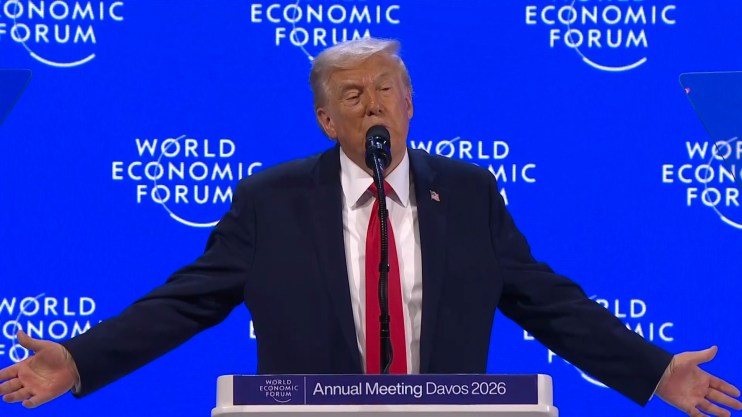
Donald Trump made many claims in his Davos speech yesterday and there aren’t enough pages in this newspaper to do justice to them all, but his assertion that “inflation has been defeated” is worth considering.
With midterm elections coming up Trump knows the cost of living is a real concern, just as it is here, and he wants to champion the taming of price increases as a major achievement. First things first, at 2.7 per cent the rate is still 35 per cent higher than the Fed’s 2 per cent target.
Still, it’s a long way from the post pandemic high of 8 per cent. But it’s a mixed bag. Gas prices have fallen, but food prices are still rising (up 0.7 per cent in December alone) so, as with much of the President’s declarations, elements of truth are mixed with wild rhetoric. Trump said that his critics (those who said tariffs would lead to higher inflation) have been confounded, but this is simply wrong and economists expect inflation to linger for longer as a direct result of the President’s flagship trade policy.
Meal deals are insanely good value
But Trump isn’t the only politician spinning the numbers. On this side of the Atlantic, inflation ticked up at the end of last year to 3.4 per cent, driven upwards by direct taxes on things like tobacco as well as increased costs imposed by the government.
One person particularly exercised by all this is Labour MP Luke Charters, who has launched a campaign calling for supermarkets to lower the cost of their meal deals. In a video (in which he erroneously blames Brexit for food inflation) he says he’s written to retailers asking them to bring their popular sandwich, drink and crisps combo down to £3.50. But as Sam Bowman pointed out in response, a Tesco meal deal is currently £3.85. In 2015 it was £3 which, adjusted for inflation, would be £4.20 today.
That supermarkets can offer this value is nothing short of miraculous and is worth celebrating.
It also means that Luke can abandon his campaign and spend more time reading up on the impact of high energy prices, higher business taxes, higher labour costs and increased regulation – all of which are being imposed by his government and all of which have contributed to inflation.