I went to the Winter Olympics but I found Milan shrugging its shoulders

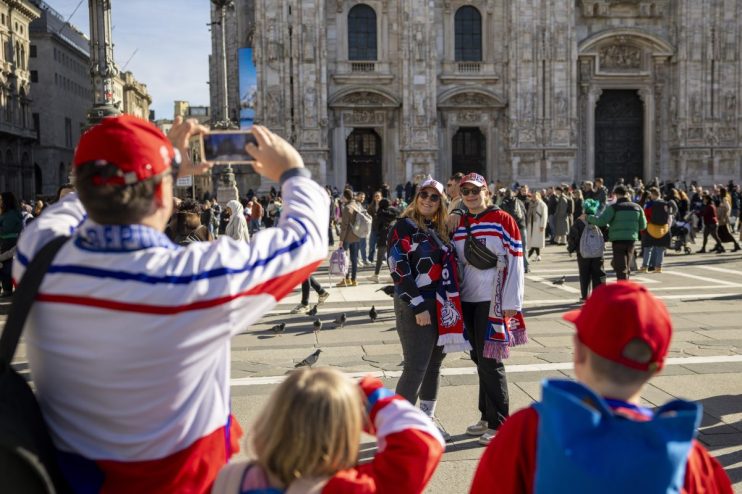
Milan is parading its beauty at the Winter Olympics. The sun is out, the centuries-old streets are majestic and pristine. Prada, Gucci and Ralph Lauren logos plaster every corner, and there is no shortage of Michelin Guide restaurants. It’s no surprise that London has been haemorrhaging non-doms and wealthy investors to this glorious metropolis.
But it also feels quiet – too quiet for an Olympic games. Not as buzzy as I expected. Squint and you can just about spot the occasional sports jersey, peaking out behind gilets and Barbour jackets.
On the eve of my first ice hockey game on Monday, I wander round the city centre in search of a bar to find other fans. But everywhere is closed. Shops are shuttered, and most bars aren’t open on Mondays – no exceptions for the Olympics.
Just before I give up and head home, I stumble on a trusty Irish pub with the lights still on and grab the last seat at the bar. On the TV, a Serie A football match plays. Next to me is a visitor from Los Angeles – he is part of the team organising the 2028 Summer Olympics and is here to learn lessons. He says the vibe will be much better in LA.
“From the moment you touch down at the airport, it’ll feel fucking electric,” he says, with typical American understatement. “Every bar will be open late, every street will have a party.”
By 10pm the last pub in Milan is jam packed, and they run out of Guinness. I ask the bartender what else is on tap. She says she can’t help me – her shift just finished.
Winter Olympics reality
The next morning, I head to the Milano Santagiulia Ice Hockey Arena for my first game. Faithful to the stereotype of Italian efficiency, Milan hadn’t actually finished building its new hockey arena by the time the Games began.
As I walk in, the occasional loose wire still hangs from the ceiling, waiting to connect up to something – hopefully nothing important. The arena has ended up with a capacity several thousand below planned because deadlines for building the stands weren’t met. All the seats at one end are missing, instead replaced by a giant wall, painted all in black, perhaps an attempt to hide it from the TV cameras.
There were also issues with the rink, which had non-standard dimensions. Mere weeks before the Winter Olympics were due to start, the world’s biggest hockey league, the NHL, was threatening not to send players to Italy over that and a failed ice quality test. Their concerns were placated.
Inside the stadium are various food shops labelled “future market”. A bit like the (now closed) London Amazon Fresh stores, you tap your card to open gates to the store, while a series of cameras and sensors figure out what you’ve picked up and what to charge you as you walk out.
It’s a system that, if well-designed, can massively speed up the queues for snacks at game intervals by removing the frictions of payments. Except – for Winter Olympics sponsorship reasons – the stores only accept Visa cards, confounding the hoards of Amex-armed American hockey fans, leading to much longer queues.
The mood inside the venue is fantastic. But the rest of Milan is shrugging its shoulders.