The cult of cute: The strange drama of corporate mascots

While they remind us of our childhoods, mascots are as much a part of corporate culture as ever. Simon Coates asks why
Last winter the language learning app Duolingo announced the death of its cartoon mascot, Duo the Owl. Duo had died, they said, after being hit by a car while he was waiting for users to complete their Duolingo language lessons.
Online reactions were intense. Netflix posted condolences on its Instagram account, as did the official Assassin’s Creed and Halo social feeds. Fellow mascot Cap’n Crunch posted a photo of himself raising a bowl of cereal to the owl’s memory. KFC France posted what looked suspiciously like a deep-fried owl.
Then, 13 days later, Duolingo said it was only joking. Duo had faked his own death and he was actually alive and well. “Faking my death was the test,” the bird posted on X. “And you all passed.” Not everyone saw the funny side. “What was that death all about? You just betrayed my trust,” said one follower. “Cancelling my subscription and uninstalled. I’ll learn French on a BETTER APP that doesn’t murder a bird as a publicity stunt,” wrote another. Someone else called the owl “a piece of sh*t”.
Duo’s death was devised by Duolingo’s social media co-ordinator, Zaria Parvez. When she came clean on her LinkedIn account, the comments were furious. Parvez had clearly struck a nerve.
How mascots are changing in the 2020s
The role of the company mascot is changing. Once passive characters, they are now provocateurs with all the psychological manipulation and mood swings of social media influencers. The line between fact and fiction is becoming increasingly blurred. Digital culture expert Jamie Cohen runs courses on internet literacy and brand icons at the City University of New York. So why are mascots received in such an emotional way, despite audiences knowing they’re not real?
“Brands need mascots to create memorable recognition and develop a fandom,” he says. “People enjoy storytelling so, when a brand leans into a mascot, it has the opportunity to not only shape a narrative, but also to offer audiences a way to follow along. It disguises and diverts audiences away from the overt capitalism of the corporate world.”
Ranging from animated, cartoonish logos to furry creatures, mascots are usually employed to make brands more relatable, to differentiate one company from another and to simplify complex messages. It’s not uncommon for the public to generate an emotional connection even if they aren’t killed off as part of the campaign.
Pepsiman – an insanely jacked, superhero-esque figure clad in skintight blue and white lycra and sporting a smooth, featureless face – was conceived by Pepsi for its Japanese audience. He first swung into view as a TV ad-fronting, thirst-slaking mascot in 1996. After making his one and only appearance as the hero in a 1999 budget PlayStation game of the same name, Pepsi retired the mascot and he faded into obscurity.
However, since Sony featured the Pepsiman game as part of its 25th anniversary marketing campaign in 2019, the internet has been awash with new fans cosplaying as the character, making amateur Pepsiman YouTube documentaries and even remixing the original Pepsiman theme song (sample lyric: hear the sound of carbonisation, echoing throughout the nation).
Can the New York Mets survive without Grimace?
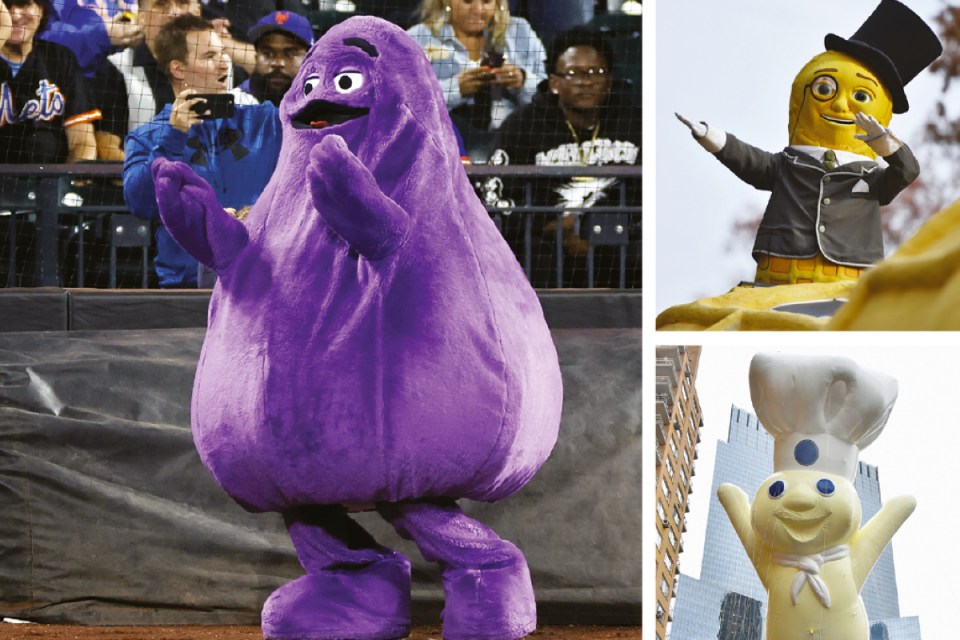
Fans have become superstitious about the power of mascots. In June 2024, the New York Mets baseball team faced the Miami Marlins. The Mets were suffering a long losing streak, and Grimace, the purple, furry member of the McDonald’s mascot crew, had been invited to throw the first pitch of the game. The Mets beat the Marlins and went on to win their next seven games in a row. Mets fans reasoned this was all down to Grimace, and the monster now enjoys cult-like status as the team’s lucky charm. A purple seat has been installed at their Citi Field stadium and Mets fans continue to wear Grimace costumes in tribute to the mascot’s magical influence.
Bourree Lam is the executive editor at the Mozilla Foundation, the American non-profit focused on ensuring the internet remains a global public resource. She revels in the power of these strange creatures. “I love mascots more now because they show one thing I love about humans: instead of seeing a perfect AI generated image, we’d rather see a real person in a big puffy costume doing something silly,” she says.
Lam says one of her favourites is Tsubakuro, mascot for the Tokyo Yakult Swallows baseball team. A black swallow with red markings, Tsubakuro is famed for physically attacking opposition mascots and showing opposing players the rude comments he writes about them in his notebook.
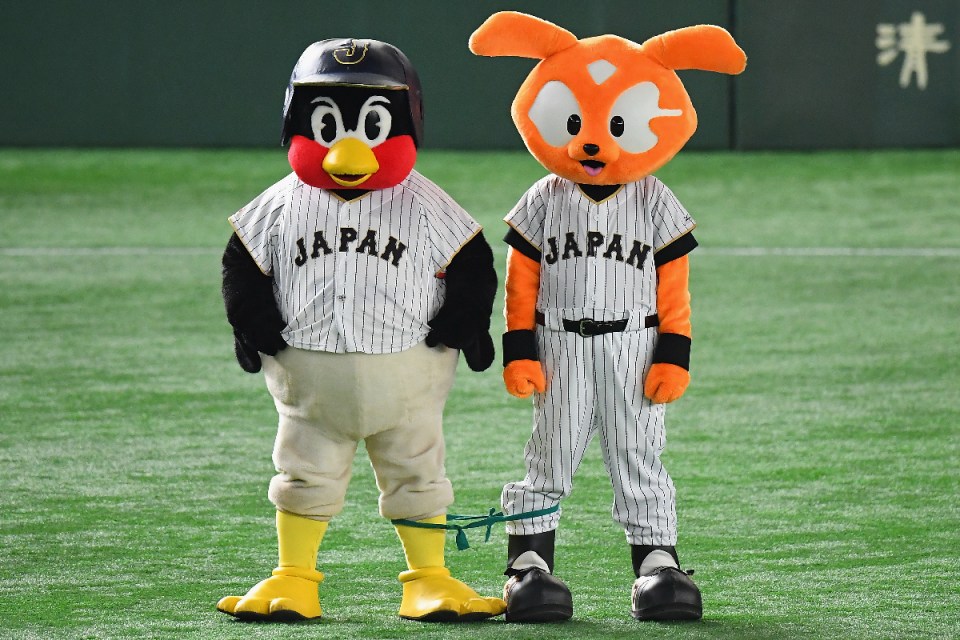
Another she follows is Gritty the googly-eyed, orange-furred mascot for the Philadelphia Flyers ice hockey squad. When rivals the Pittsburgh Penguins tweeted “lol ok” in response to his introduction, Gritty’s account replied, “Sleep with one eye open tonight, bird.” Gritty has lived up to his name in other ways: in 2020, Flyers season ticket holder Chris Greenwell accused Gritty of assaulting his 13-year old son Brandon as they posed for a photo. Brandon, Greenwell claimed, had to be rushed to hospital after Gritty had punched the boy in the back. Investigations by the Flyers and the Philadelphia Police Department failed to find sufficient evidence to support the claim, and the mascot was eventually cleared of all charges.
Grimace also experienced infamy prior to his adoption as a New York Mets phenomenon. In 2023, McDonald’s released a limited edition, Grimace-themed milkshake in celebration of the monster’s 52nd birthday. Shortly after the launch, TikToker Austin Frazier posted a video of himself drinking the shake before falling to the floor, apparently dead. Other TikTokers soon got involved, creating videos of themselves collapsing or in perilous situations after guzzling a Grimace shake. The craze grew.
Courteney Cox, Tiktok and the monstrous mascots
By the end of the year, Courteney Cox had created an online video of her dog lapping up the drink and transforming into a purple monster, and the number of TikTok views for the #GrimaceShake hashtag was close to three billion. Posting on LinkedIn, McDonald’s social media director Guillaume Huin said he had nothing to do with what happened, putting it all down to “peak absurdist Gen Z humor.”
In a later TikTok video, Frazier explained the motivation behind his first #GrimaceShake post, saying he had been inspired by the videos other users had made when Burger King launched its red and black Spider-Verse Burger as part of a campaign around the release of 2023’s Spider-Man: Across the Spider-Verse film. “I saw a guy do it with the burger where he took a bite,” he said. “And the next scene was him in the hospital, so I thought, ‘OK, let’s do something similar’.”
In 2020, American snack brand Planters killed off its iconic mascot, Mr. Peanut, in an elaborate campaign that included a Super Bowl commercial
Duo the Owl was not the first mascot to suffer a controversial death at the hands of a marketing agency. In 2020, American snack brand Planters killed off its iconic mascot, Mr. Peanut, in an elaborate campaign that included a commercial screened during television coverage of the Super Bowl. The ad showed the nut swerving off the road in his car, the Nutmobile, and dropping off a cliff to his death.
Like Duo’s shock ending, subsequent online reactions were varied and colourful. Snickers and Mr Clean posted commiserations on social media, with Mr Clean pointing out that Mr. Peanut was, “Always classy, always crunchy, always cleaned up nicely.” Others were less sympathetic. One Twitter user said, “Mr Peanut was a bootlicker who made his fortune off the oppression and death of his fellow peanuts”, while a Reddit poster called Peanut a capitalist ghoul who sells his own species to feed the hungry maw of American consumerism.
Who killed Mr Peanut?
VaynerMedia was the marketing agency behind Mr. Peanut’s death. In a CNBC interview, the company’s creative director Mike Pierantozzi said the campaign had taken its cues from deaths in the Marvel film multiverse. “We started talking about how the internet reacts when someone dies — specifically, we were thinking about fictional characters,” he said. “When Iron Man died, we saw an incredible reaction on Twitter and on social media. It’s such a strange phenomenon.”
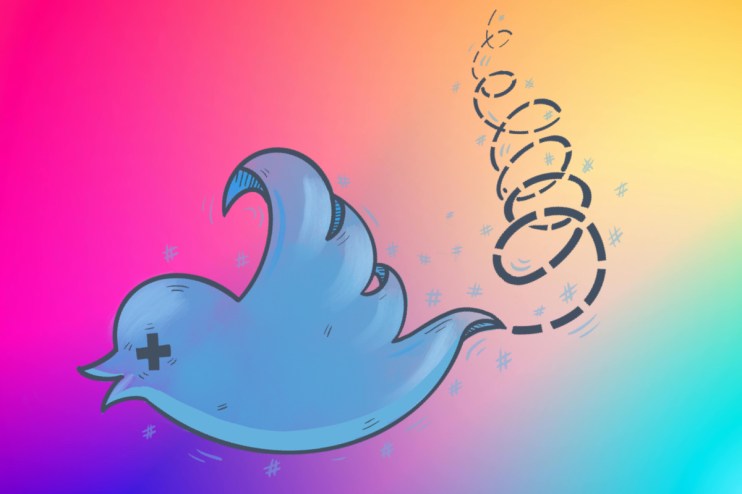
There was less fanfare when the Twitter mascot Larry the Bird was killed off following the purchase of the platform by Elon Musk, who was presumably unwilling to share the limelight even with a fictional character.
Lam foresees yet more plot twisting in the future for the world’s mascots. “We can expect the people behind mascots to come up with new stories for them and continue to craft their personalities,” she says. “They could take it in a number of directions, the way any good story goes.”
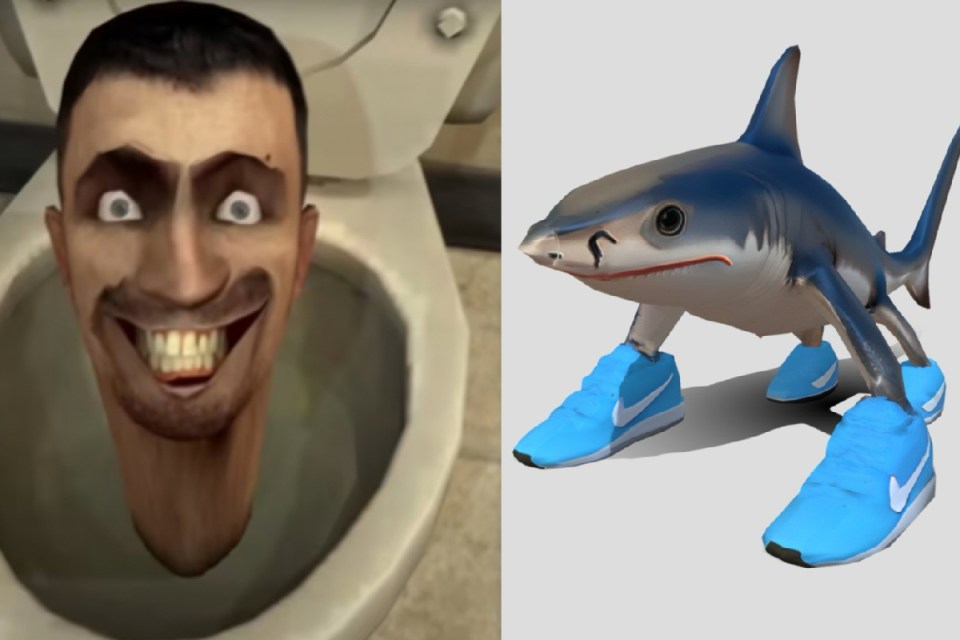
Cohen predicts a closer connection between mascots, human influencers and the current trend for “brainrot” – unpredictable, nonsensical, often AI-generated content that began to emerge across social media last year. Brainrot characters include a three-legged, Nike kicks-wearing shark called Tralalero Tralala, the ubiquitous head-in-a-lavatory Skibidi Toilet, and Ballerina Cappuccina, a human dancer with a cup of coffee for a head.
Skincare brand CeraVe has taken note: its new mascot is a seven-foot goat with great skin named Sarah V, inspired by users (apparently) calling CeraVe the greatest of all time (or G.O.A.T.). Her debut Instagram reel has racked up almost 57 million views. “Welcome friend, so excited you’re here!” said fellow mascot the Pillsbury Doughboy (fun fact: the Pillsbury Doughboy was the inspiration behind Ghostbusters’ monstrous Stay Puft Marshmallow Man).
While there is something endearingly nostalgic about the idea of mascots, many of which have been around for decades, they also fit perfectly into the attention-hungry media landscape of 2026, a time when a brands’ ability to stand out on social media often means the difference between survival and failure. Plus, in a world where everything seems to be in constant, dizzying flux, perhaps a bunch of men in fluffy costumes is the mindless diversion we all need from time to time.