Google and Apple can give Team GB Lottery-like boost up medal tables

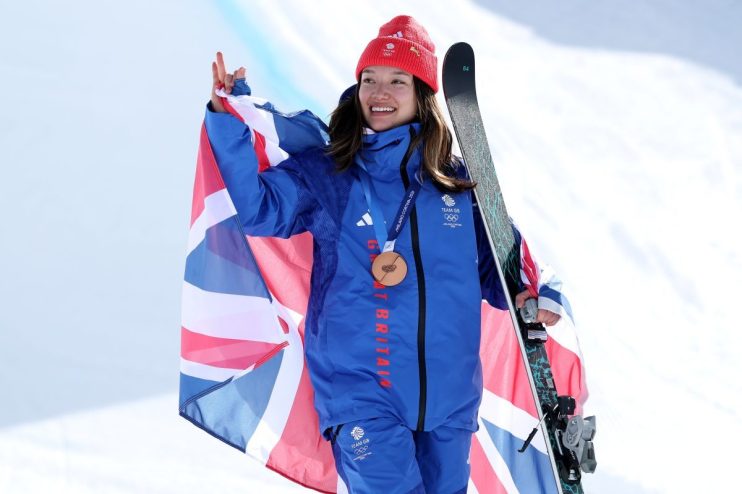
It took John Major’s National Lottery brainwave to turn GB into an Olympic and Paralympic force but Big Tech could do the same, argues Ed Warner.
With Milan Cortina a wrap, British athletes have completed a full set of post-Covid Olympics and Paralympics, both Summer and Winter, in 21 months. A solitary silver medal from the ParalympicsGB team won’t have been what funding agency UK Sport was hoping for, but it should prove an additional nudge for it to conduct a fundamental review of Great Britain’s high performance system in the hunt for medals in the Games beyond LA28.
Britain’s performance arc has been much trumpeted. Prime Minister John Major’s reaction to the abject failure at the Atlanta Olympics of 1996 has become the stuff of legend; the introduction of National Lottery funding for elite sport the policy yardstick by which other nations measure themselves. From just a single gold to 29 and third place in the medal table at a home Olympics within 16 years was a reflection not simply of money, but of the system that it funded functioning more effectively than those of most competitor nations.
“That [lottery funding] is going to revolutionise sport and it has only happened because I invented, and this government passed, the British lottery.”
John Major interviewed in 1996
The competition has not stood still, however. Although not on a football industry scale, a global sporting arms race has eroded the financial advantage Great Britain had bestowed on its athletes. In choosing to allow inflation to eat away at the purchasing power of its annual investment in elite sport, Britain’s politicians have enabled rival countries to catch up and in some cases take the lead.
Nor has UK Sport’s early obsessive, laser-focus on medals stood up to scrutiny. Doping and safeguarding scandals, as well as an intense debate about elitism and fairness between and within sports, followed medal success. The simple desire to win that accompanied Lottery funding has – correctly, to my mind – been superseded by one of winning in the right way. A touch less ruthlessness has opened the door a little wider to other countries, though, even if it has enabled a culturally more palatable sporting system.
The net effect is that Britain has slipped down the Summer Olympics medal table, from second place at Rio 2016 to fourth in Tokyo and seventh at Paris 2024. Team GB’s overall medal count has remained resilient, but unless we flip to the American construct of ranking by overall medals rather than by golds alone, the conclusion must be that being on the wrong side of too many fine margins is an indication that a previous competitive advantage is being eroded.
For now, Britain’s Summer Paralympians continue to hold their own, securing second place in Paris – albeit a long way behind China, which dominated there just as its Winter athletes did this month. This outcome in part reflects the reluctance of many nations to commit fully to funding elite disability sport, as well as failures to direct scarce funding effectively in what is a complex high performance landscape.
It may be, however, that the United States is stung into correcting its own severe underachievement in disability sport in time for a home Paralympics, and in doing so stiffens the challenge for British athletes and shows other nations the way for future Games. It will be far from easy for ParalympicsGB to maintain its lofty medal table standing in future cycles.
Hamstrung by funding constraints, UK Sport has been devoting considerable time and effort to finding efficiencies within the performance network that it oversees. Governing bodies such as the one I chair, GB Wheelchair Rugby, are being encouraged to find collaborative opportunities between ourselves, to try and strip out duplicative effort.
Such initiatives go against the grain of history, each sport being constructed to serve its own specific, broad membership rather than simply deliver an elite GB team. However, I’m observing a general willingness currently to challenge the status quo and turn over every organisational stone in the quest to resource high performance programmes effectively.
The trouble is that restructuring and economising will only take Britain’s elite system so far. Ultimately, more money needs to be found to counter the effect of inflation. By my rough reckoning, the average national governing body overseeing a British Olympic and/or Paralympic sport suffered a 25-30 per cent cut in real terms in its Lottery funding between the Tokyo and Paris cycles. And that squeeze has continued since.
It’s hard to see where the next sports-mad British political leader is coming from who might emulate Major, especially given the demands on National Lottery funds and the Exchequer from across society in these straitened times.
Controversial though it will be to some, the solution to my eyes must be found within the commercial sector – even if this smacks of selling athletic souls.
The British Olympic Association and ParalympicsGB both source sponsors to alleviate the cost of sending their teams to the Games. These brands enjoy the reflected glow of medal success for relatively little outlay. Are these contracts optimal?
This is not to begrudge the sponsors their smart deals, or be any less grateful for the enhanced experience their money enables for British athletes. Rather it is to challenge UK Sport, the BOA, ParalympicsGB and us governing bodies to be much more imaginative and ambitious in seeking corporate backing for athletes and the networks that support them. And for us to do so collectively rather than piecemeal as at present.
If technology holds the future of sport in its palm – how events are delivered and consumed; how athletes are identified and coached – then collaboration with tech giants rather than supermarkets, cereal and shampoo manufacturers must be the way forward.
Power GB athletes by the likes of Google, Copilot and Apple. Look through such global brands’ national origins and appeal to the opportunities that partnership with elite sport could offer their leaders in shaping product development. And price such collaboration appropriately, in the tens and hundreds of millions. After all, sport can shape tech’s future as much as vice versa.
It’s worth Britain getting to this promising land before Australia, Germany and France, surely? Recruit Sir John to the pitch team perhaps…
Ain’t no sunshine
Many leading golfers and some tennis players boycotted the Rio 2016 Olympics citing concerns about the Zika virus in Brazil at the time.
Will current star golfers be prepared to contest the Race to Dubai finale of the DP World Tour or their tennis counterparts the WTA Finals in Riyadh, both in November? There will be lavish prize money on offer to lure them if these events go ahead, unlike at the Olympics.
At least these showcases for the Middle East’s credentials as a sporting host are at the back end of the year, when the current conflict in the region will surely have abated. How about athletics’ Diamond League season opener in Doha in May, though? Or the Artistic Gymnastics World Cup in the same city in April?
What of the volleyball, basketball, football and esports events slated for the region this year, or boxing’s commitment to fight nights in Saudi Arabia? And what degree of risk will F1 be prepared to accept to fans, drivers and teams as it plans the Qatar and Abu Dhabi races that complete its 2026 Grand Prix season?
“Saudi Arabia was fully prepared to host the race once again in Jeddah… We want the international sporting community to know that the Kingdom remains a trusted partner and destination for global sport.”
Minister for sport Prince Abdulaziz bin Turki Al Faisal after the cancellation of next month’s Saudi Grand Prix
Much, of course, depends on the development of the conflict in the coming weeks, but expect promoters in the Middle East to throw even more money at the world’s athletes as they strive to protect their huge investment in establishing a sporting power base. Reputations are hard and expensively won but can be lost in an instant.
Ed Warner is chair of GB Wheelchair Rugby and writes his sport column at sportinc.substack.com