The unlikely City florist that once served the royals

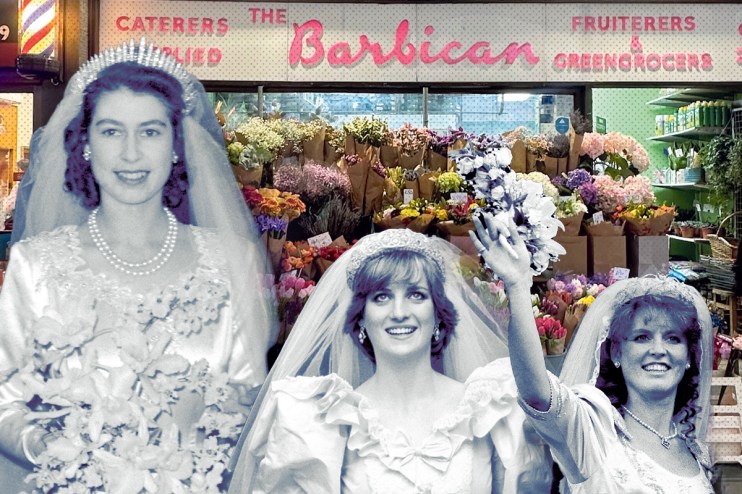
The City’s oldest florist may not look like much anymore, but it once was the top choice for royal weddings from Diana to the Queen, discovers Anna Moloney
Walking down Goswell Road, just in the north of the Square Mile, you’d be forgiven for passing straight by Longmans Florist. Sat under a concrete overhang of Golden Lane Estate (a Barbican brutalist predecessor), it’s fair to say that from the outside – stacked up with plastic crates and racks of fruit – you wouldn’t assume it was anything much. And yet, right here in the City, squeezed between a dry cleaner’s and a £10-a-go barber, lies the florist that once made the wedding bouquets for both Princess Diana and Queen (then-Princess) Elizabeth II.
Established in 1896, Longmans is not just the oldest florist in the Square Mile, it’s amongst the oldest in the whole country. It started not with a florist, but a barber, Hulbert Longman, who opened his barber shop in the city in 1888. But after starting to sell buttonholes and nosegays as well as giving cuts and shaves, Hulbert fell in love with flowers – and so the Longman legacy was born.
So what happened? Of course, the concrete shaded shop that remains today is not the original. In fact, Longmans has had a peripatetic history in the Square Mile since its first premises in Mark Lane, hopping between homes in Ludgate Hill, Fenchurch Street, Lime Street, Smithfields and so many other City corners that Mary Burke – a florist who has worked for Longmans for over 40 years – cannot even remember all of them.
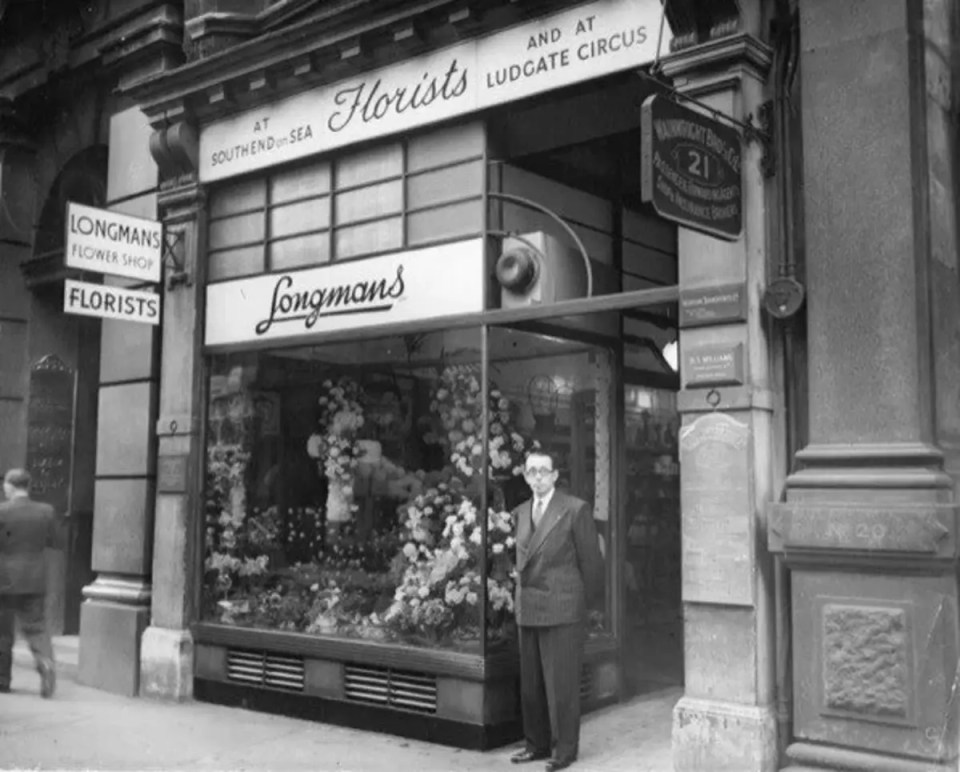
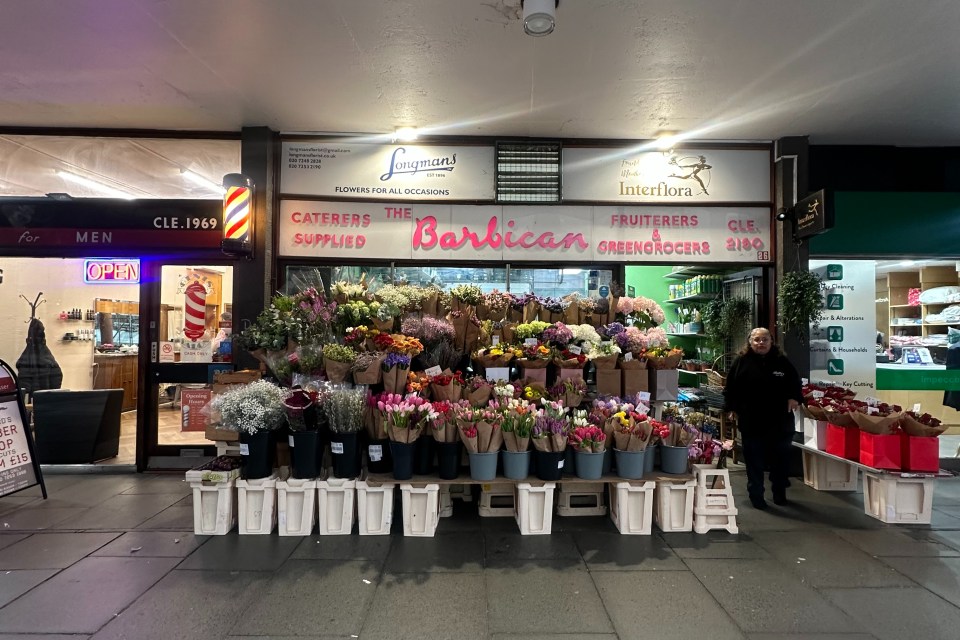
Indeed, when I popped into Longmans this week, after they graciously agreed to squeeze me in during a busy Valentine’s run-up, chatting to me as they tied up bouquets, I found myself in the midst of a Victorian novel-like family tree of Longmans and nephews and Mrs Owenses and sisters, as Mary and fellow long-serving florist Emma Glynn tried to piece together the shop’s history for me.
When I call up Lottie Longman, the great granddaughter of Hulbert who trained at Longmans but now runs her own florist under her name in Scotland, it’s much the same – a patchwork history that nobody can quite remember the full details of. Lottie tells me she’s been meaning to get her father, now 96, to speak to a dictaphone to have a record of it all.
Which may explain why it’s so easy to walk by the shop today without realising how much history hides behind the gaudy pink awning.
Rise to royal florist
What we do know is that they certainly learned how to throw a good bouquet together.
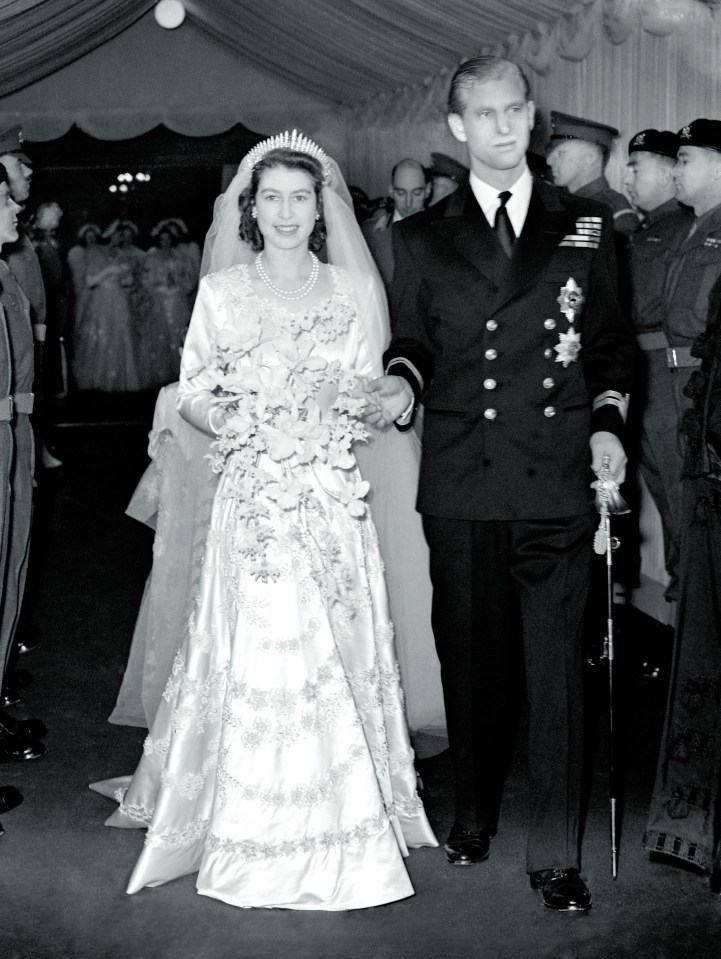
Passed down to Hulbert’s son, Martin Hulbert Longman (later a founding member of Interflora), the shop formed a relationship with the Worshipful Company of Gardeners and from there gained access to the royals. Martin went on to design and make the wedding bouquet carried by Princess Elizabeth for her 1947 royal wedding to Prince Philip, and later made her coronation bouquet too. For the wedding, he submitted several design proposals to Buckingham Palace, with the Princess opting for an all-white bouquet featuring British-grown orchids and a sprig of myrtle. He personally delivered it to the palace on the morning of the wedding.
The original bouquet actually ended up going missing on the wedding day – reportedly misplaced between the wedding ceremony and breakfast – and a replica had to be quickly made for the official wedding portraits. From then, the Longmans learned their lesson, and made it tradition to have two bridal bouquets to be made for royal weddings – so as to ensure a backup.
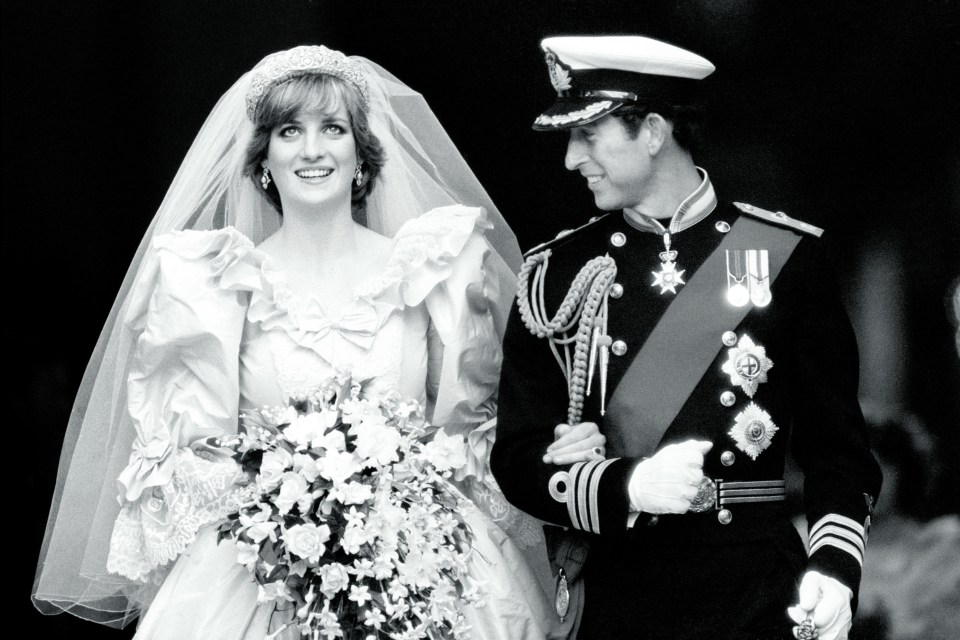
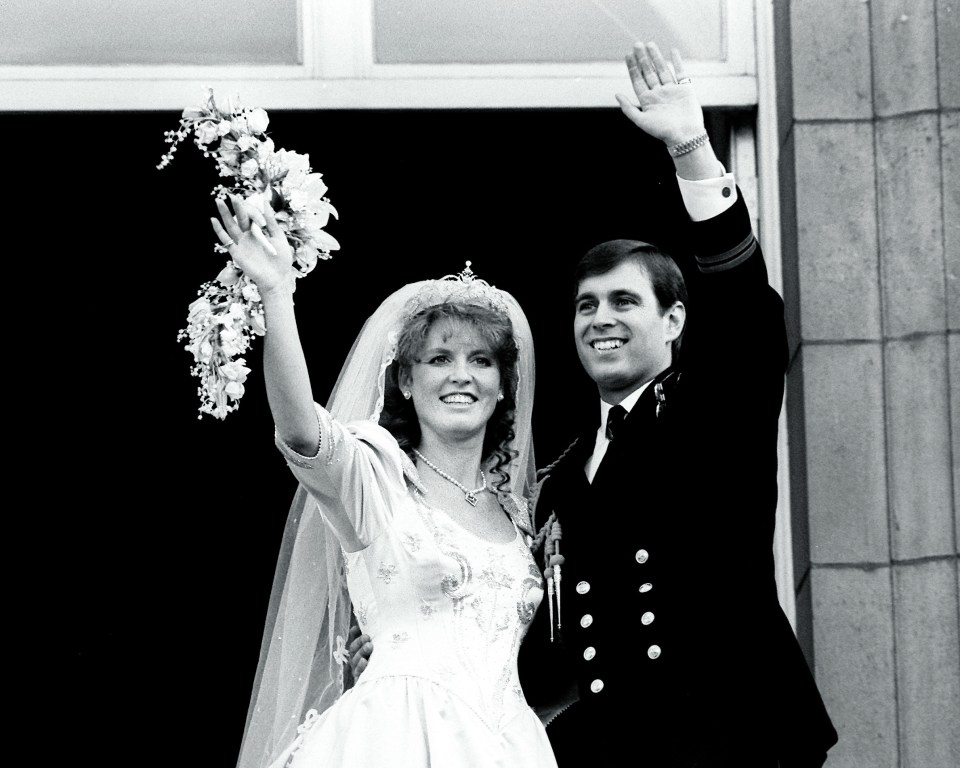
Putting the tradition in motion was the next Longman, David, who made the bridal bouquet for none other than Princess Diana. In the spirit of 80s maximalism, the people’s princess chose a large cascading arrangement made up of gardenias, odontoglossum orchids, lily of the valley, stephanotis, freesias and other blooms, in a bouquet that measured over three foot long and weighed several pounds. Mary tells me that Sarah Ferguson, whose wedding she remembers them doing, wanted something distinct from Diana’s, opting for a much smaller spray bouquet shaped as her initial S.
Mary recalls that they used to have silk replicas of all their royal bouquets (used for design proposals) that they would all “have a go with” in the shop, feeling what it was like to hold up their make-believe aisle.
Longmans’ legacy today
Part of the Worshipful Company of Gardeners, Longmans’ bouquets were always gifted rather than sold to the royals, meaning they never actually had a royal warrant. Today, current owner Bella Patel, who bought the shop eight years ago, tells me they no longer regularly work with the royals, and she would feel disingenuous to drum up the connection too much. They still serve the City’s guilds – though only when they pay on time. Bella says she has no qualms in cutting clients who are impunctual with their payments, whether they be historic ironmongers or otherwise.
At the other end of the British Isles though, the royal tie lives on with Lottie, the last remaining Longman florist, though she said she hopes one of her relatives might go on to take up the mantle. She herself only became interested in the business after university.
Lottie tells me she remembers her father making Diana’s bouquet, when she was aged just 11. It was the school holidays and her father put up scaffolding at the shop, then at the bottom of Fleet Street, so she and her four sisters could all watch the procession. At age 24, she herself ended up training at her father’s shop, and retained links with the original Longmans until 2007 when it was sold out of the family.
“I joined in 1984 and started right at the bottom as a trainee florist, just to learn the trade and work my way up… We sold the business and the name when my son was just born. I wasn’t allowed to open another shop within five miles. My husband’s Scottish, so we moved to Scotland, and then I thought, ‘I can’t not call it Lotty Longman’, to continue the name, really,” she explained.
Now, in Scotland, Lottie works separately with the royals at Holyrood, and has even gained her own royal warrant.
Back in the City, I ask Bella why she doesn’t drum up the shop’s history more – all but obscured apart from the small ‘EST: 1896’ that peeks out of the corner from the storefront. She seems bemused, as if it’s barely notable. Besides, it’s the 10th February, she’s got flowers to do, and my time is up.