Iran war: From fuel to food, what could get more expensive?

Amid fears the war in Iran could “bring down” the world’s economies, experts have warned the conflict could have wide-ranging impacts which reach into the households of everyday consumers.
The Middle East plays a central role in global energy supplies and shipping routes, and consumer industries have warned the knock-on effects of the conflict could make supermarket shops and refueling cars more expensive.
Energy and fuel costs could already be rising
The Strait of Hormuz, a major shipping lane between Iran and Oman, is vital in the global supply of fuel.
As much as 20 per cent of the world’s petroleum liquid and liquefied natural gas (LNG) consumption was carried through the shipping channel in 2024, according to the US Energy Information Administration.
The cost of LNG prices in Europe jumped almost immediately – up by 50 per cent since last week – as energy bosses and government officials scramble to avoid another cost of living crisis.
A typical combined household gas and electricity bill could climb by £160 to £1,800 a year in the UK, according to analysis by consultancy Cornwall Insight.
As well as impacting Brits directly, extended increases in energy costs could have a wider inflationary impact.
Though analysts believe the UK’s economy could recover quickly from a temporary shock to oil and gas prices, a one-year persistent jump in prices could push inflation up by 0.7 per cent and dampen output growth by 0.2 per cent this year, according to the National Institute of Economic and Social Research.
The Iran war is already impacting the cost of fueling cars in the UK, data suggests.
The RAC estimates average prices rose by 3p per litre for petrol and 5p per litre for diesel between Saturday and Thursday.
Food suppliers call for energy bill support
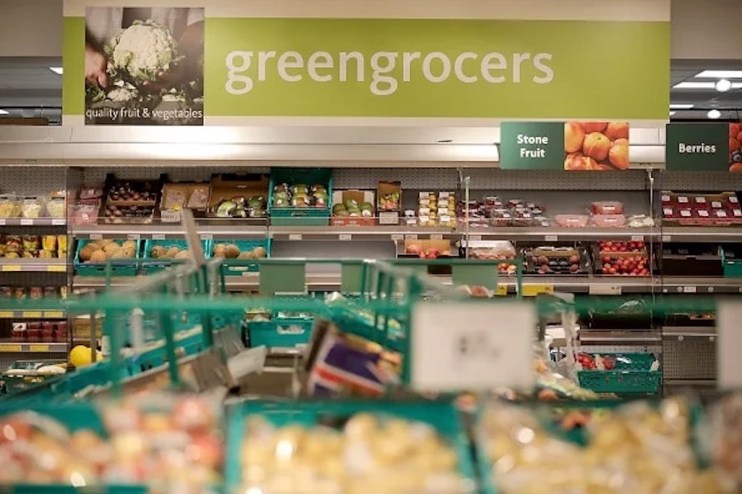
While the imports from the Middle East account for very little of the UK’s food consumption, soaring gas and fuel prices could hit suppliers and be translated into the cost of Brits’ weekly shops.
The rapid surge in the cost of moving tankers through the Middle East is enough to push up shipping prices globally, according to logistics platform Flexport.
Food inflation had fallen in recent months but could be edging up again, with Reuters reporting UK grocery inflation edged back up to 4.3 per cent in the four weeks to 22 February.
Simon Geale, executive vice president at consultancy Proxima, said: “We would probably expect to see food inflation rates edge up by around 15%-20% relative to the current level. So, rather than the 3.5-4% we see currently, something closer to 4.5% – 5%.
“In theory, there should be a lag as cost increases work their way through the system, although some producers and retailers may act now to protect margins, which are traditionally thin in this sector.”
Volatile backdrop
Andrew Opie, director of food and sustainability at the British Retail Consortium, said UK retailers are “adept” at managing supply chain disruption, but could be hit by an extended spike to energy costs.
He said: “Since energy is a significant component of our production costs, sustained increases directly impact the prices of the goods we sell.
“Amidst this volatile backdrop, it is more important than ever that Government keeps other inflationary pressures within its control to a minimum to protect households.”
Balwinder Dhoot, director of growth and sustainability at the Food and Drink Federation, told City AM the government should give manufacturers the same support with energy bills offered to other sectors.
“To help bring down food inflation and protect shoppers from price rises we’ve warned government that it needs to support long-term business resilience and investment. We are an essential and energy intensive sector,” he said.