Why is Britain-hating Bank of England taking Churchill off our banknotes?

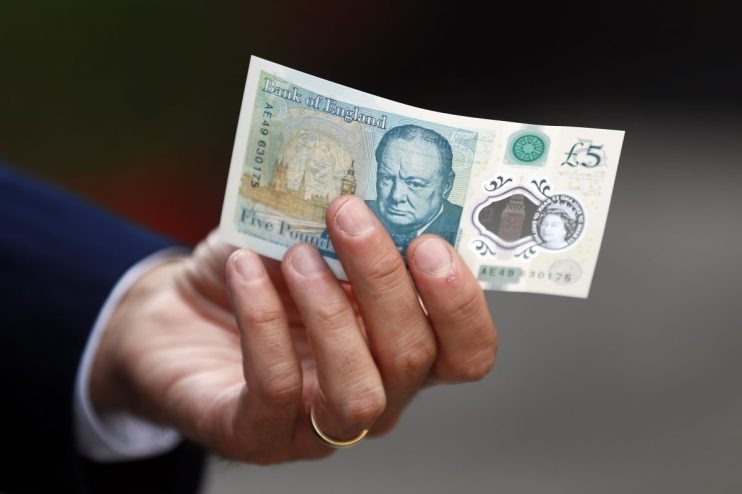
The Bank of England is replacing British icons like Winston Churchill and Jane Austen with pictures of animals on our money. This is not a neutral act, says James Price
The field of numismatics shows us that, in the ancient world, one of the ultimate symbols of a regime’s legitimacy was the minting of coins. It represented a level of administrative control and technical sophistication had been achieved, and it obviously allowed states, including upstarts, to begin to control the economy. In Rome, even brief slave uprisings like Spartacus’ minted their own coins. This has happened ever since – even the Islamic State stamped its malign authority on currency during its short-lived caliphate.
Much can be learned about a civilisation through what it chooses to adorn its money. I was once privileged to see the research collection at the Ashmolean – a literal treasure trove of information about power, military conquest, economics and culture physically connecting us to the past. The first head of a living leader to feature on the obverse of a coin was Julius Caesar, just weeks before his assassination.
I have a sneaking suspicion that the creation of the Euro was as much about the mental effect of sharing a common cash, with the huge differences between European states reduced to pretty pictures on notes, as it was monetary union.
Picking what appears on coins has always been an elite activity, and it is the same today. Panjandrums at the Bank of England have announced that British icons known the world over, including Winston Churchill and Alan Turing, are to be replaced by innocuous images of British wildlife.
Divisive?
Having faced criticism for failing to include any women on banknotes in the past – though Jane Austen does now appear on a tenner – the Bank may have felt animals were a less divisive option.
But erasing classic British symbols from public life is not a neutral act. If they mattered so little then why is the statue of Churchill in Parliament square so often the subject of vandalism by crusties and Islamists who hate the greatness he represents? Britain’s enemies recognise the power of our national heroes – it’s appalling that our institutions don’t seem to.
Flattening our visual realm and erasing the uniqueness of our national story and character is a dangerous game. It makes it easier for the dead hand of bureaucracy to ratchet up control, just as Max Weber warned of an iron cage that dehumanised a society in pursuit of rationalism and efficiency.
Some are worried that this is part of wider efforts to undermine cash in general, to make it harder to hide economic activity from the state (in the same week where Switzerland enshrined cash as a right by referendum). In any case it forms part of a broader pattern. Just this year His Majesty’s Government has been rebranded to the bland, soulless ‘UK Government’.
It’s no wonder that we are witnessing a backlash. ‘Operation Raise the Colours’ was a grassroots campaign to adorn public spaces with the Union Flag and the St George’s Cross. Kemi Badenoch has given voice to widespread frustration with perceived failures of multiculturalism in a society that feels increasingly ghettoised – more like an airport terminal with a welfare state attached than a home.
There’s nothing reactionary about being angry about this – it is the forces of change that are violent, not the gentle voice of conservation. Symbols matter – a cross between official power and sentimentality – they convey legitimacy through common consent without needing to resort to heavy-handed legal enforcement.
The penny is dropping that our history and our values are under attack. We should never, never, never surrender them.
James Price is a senior fellow at the Adam Smith Institute