Lab-grown diamonds are an inflection point for luxury

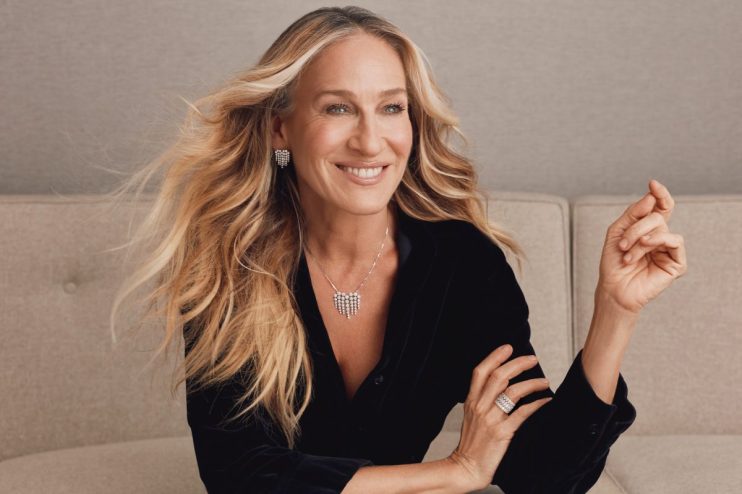
Lab-grown diamonds are chemically, physically, and optically identical to mined stones and they’re going to disrupt an entire industry, says Nathalie Morrison
I spent much of my career in rooms where value was measured in basis points, not brilliance. As the youngest senior client partner at Coutts at 26, I advised clients on wealth management, risk and long-term strategy. It was a world built on trust and tradition – but also one that trained me to recognise structural change early.
My move into diamonds wasn’t planned. It began almost accidentally – a conversation at the school gates that led me down a rabbit hole of research. What I discovered was an industry, long associated with rarity and permanence, on the cusp of profound disruption.
Lab-grown diamonds are not imitations, but a revolution in an industry. I often find myself correcting the misconception that mined and lab-grown stones are different in substance. They are not. They are chemically, physically, and optically identical – both formed from a seed of carbon. This is a fact now widely accepted within the industry. The only difference is origin: one is formed over billions of years beneath the earth, the other in a matter of weeks using advanced technology.
From a financial perspective, the implications were clear. When two products are identical, but one is more sustainable, more transparent and significantly better value, markets tend to move – and quickly.
That is exactly what we are seeing. What was once a niche category is now rapidly expanding, accounting for around a fifth of global diamond sales and growing fast. In the United States, approximately 70 per cent of engagement rings now feature lab-grown stones – a statistic that would have been unthinkable just a decade ago.
Consumer behaviour is shifting because values are shifting. Today’s buyers still want beauty, but they also care about provenance, environmental impact and ethical sourcing. Lab-grown diamonds meet all three criteria.
When I founded Astrea London, it was with a clear conviction: this is not a trend, but a transition. The traditional diamond sector is built on scarcity; the lab-grown sector is built on innovation – and innovation tends to win.
My forecast is simple: on current trajectories, lab-grown diamonds will account for between 75 and 90 per cent of the market by 2032.
In finance, we talk about inflection points – moments when change becomes irreversible. The diamond industry has reached one. The question is no longer whether lab-grown stones will redefine the market, but how quickly the rest of the industry adapts. The good news is that lab-grown and mined diamonds can coexist, giving choice to customers.
Je suis Anglaise!
I grew up in a little village in Saint-Émilion in France and came to London when I was 20. I will always remember the welcome I received – I love the fact that London is so open to people of all cultures and all generations. So it was with some trepidation that I moved with my family to Surrey to be closer to my children’s schools. In fact, the countryside has been just as friendly and we love it. Now that I have married an Englishman and live in the English countryside, I almost feel as though I have become English myself!
Brilliant Battersea
I have recently had two wonderful family days out. I took my children skating in Battersea Power Station, and was struck by what a brilliant destination it has become. There are now over 150 bars, restaurants and a lovely riverside walk. Then we had a fantastic trip to Bicester Village, where we spent the day shopping and enjoying one of the local restaurants for lunch. Both destinations felt very safe and welcoming. If you haven’t been to either or both, I highly recommend them.
Carrie is a creative powerhouse
I work closely with Astrea London’s creative director, Sarah Jessica Parker, who is a shareholder in the business and has become a friend. For me she is, quite simply, one of the most influential figures of our generation – from my mother-in-law, who is 80 and admires her deeply, to my 14-year-old daughter, who cannot wait to watch Sex and the City and discover the fashion world of Carrie.
Sarah Jessica has not only shaped fashion culture but is also a true entrepreneur with a sharp instinct for change and giving back to charity. Many people asked how we met: I simply wrote to her asking if she would consider becoming not just our creative director, but a leading voice for the lab-grown diamond industry. She said yes.
Today, she designs at least one collection a year and plays a key role in influencing and guiding the industry and the brand. In real life, she is much more than her character Carrie – thoughtful, business-focused, and incredibly sharp; I regularly seek her advice on financial and strategic matters.
Nathalie Morrison is the founder and CEO of Astrea London