The Debate: Will digital ID actually erode our civil liberties?

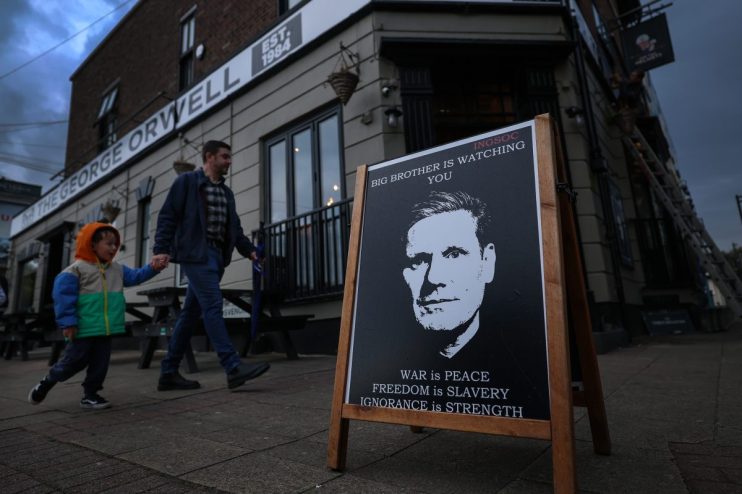
Will Starmer’s plan for digital ID actually erode our civil liberties? We put two experts head to head in this week’s Debate
Yes: This strikes at the heart of British civil liberties. We are not a papers carrying country
The first sign that Starmer’s digital ID cards are an assault on British liberties is this – you have no choice in whether to have one or not. That instantly makes it an oppressive scheme.
It would be one thing to make a digital ID available to people who want one, but this mandatory scheme is being forced on the public whether you want one or not. And it has
already been paired with serious restrictions on our liberty – if you don’t show your digital ID, you won’t be able to legally work.
In Starmer’s Britain, anyone from teenagers starting their first paper round to pensioners working at their local garden centre won’t be able to work unless they present this mandatory digital ID card. A British passport will no longer be documentation that is British enough to legally work.
Ministers are already talking about the multiple other uses for the mandatory digital IDs – including as a requirement to rent, to receive benefits, open a bank account, vote and much more.
So how long will it be before you can’t rent unless you show your digital ID? How long before you can’t see a doctor, go to school, open a bank or even vote without a digital ID?
This strikes at the heart of British civil liberties. We are not a papers carrying country. We have never had checkpoints, much less biometric, digital checkpoints like China. We have liberties by virtue of being on British soil, not because we have a government-issued permit. But Starmer’s digital ID will invert our British civil liberties into a civil license to be granted and indeed withdrawn by the state.
Silkie Carlo is the director of Big Brother Watch
NO: Estonia’s digital ID system has been running for 20 years
With the right safeguards in place, Britcard shouldn’t threaten civil liberties – it could actually give people more control and confidence. Just look at Estonia. Its digital ID system has been running for more than 20 years and is now central to daily life. People use it to securely access thousands of public and private services – whether it’s voting securely from anywhere in the world, starting a company in minutes or handling daily interactions with the state without red tape. Citizens’ trust in the system stems from transparency and user control: people can see exactly how their data is used, and misuse is tightly regulated. That’s why national surveys consistently show Estonians’ trust in their government is far higher than in many other European countries.
The Estonian government even extended this model through e-residency, enabling entrepreneurs worldwide to run EU-based businesses fully online. Today, tens of thousands of people use it to open companies, sign contracts digitally and run operations without borders. It shows how a digital identity, when built on accountability, strong privacy and robust authentication, can go beyond national borders and unlock economic opportunity.
So the real debate around Britcard isn’t whether we should have digital ID at all, but how it’s delivered. If the UK introduces it without meaningful services or clear privacy protections, citizens won’t buy in and trust will collapse. But if it follows proven principles – transparent data use, citizen control and a real focus on making life easier – Britcard can do what Estonia’s ID has done: strengthen civil liberties and improve access to public services.
Liina Vahtras is managing director at E-residency
THE VERDICT
News that Labour will introduce a mandatory digital ID system – formerly dubbed as ‘Britcard’ – has evoked strong opposition from some corners, with much tongue-wagging about civil liberties and the like. Case in point, Boris Johnson, who denounced the scheme as “ruinously expensive, unnecessary and profoundly un-British in its destruction of individual liberty”. But is it actually a case of state overreach, or just a sensible use of modern technology?
As Ms Vahtras raises, we already have case studies from the likes of Estonia, while national ID cards have also been standard in much of Europe for decades, which show the tech can be rolled out safely. Concerns about a slippery slope are valid, but we must keep sight of the current scope: nobody will be required to carry round ID with them, digital cards will only be required for work checks and the government says there will be a way to use them without smartphones. In their current scope then, the plans seem perfectly reasonable, if not inevitable in the digital-first era.