The Debate: Should the UK decriminalise cannabis?

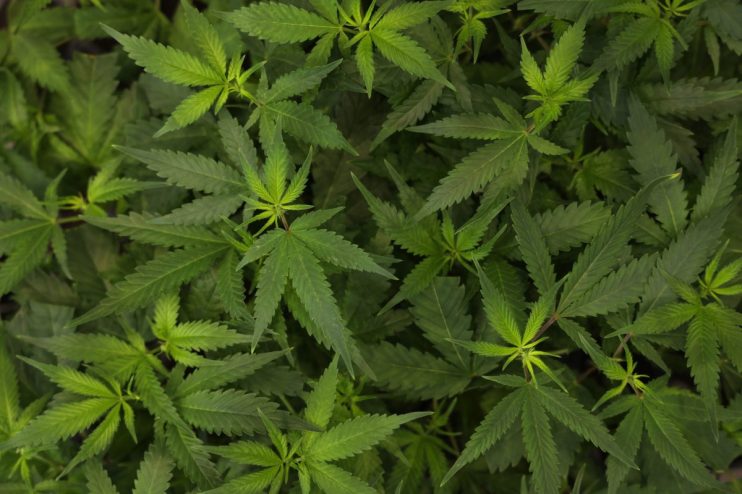
Sadiq Khan says yes, but is the UK really ready for looser rules around cannabis? We get two experts to argue for and against in this week’s Debate
YES: Detainments for cannabis offences have cost taxpayers over £2.5bn in the last decade
The London Drugs Commission’s latest report brings much-needed pragmatism to a conversation the UK has avoided for far too long. Its central finding is clear: the criminalisation of cannabis has failed.
This isn’t about promoting drug use, but about evidence-based reform rooted in public health and common sense. Criminal sanctions have done little to reduce cannabis use, but they’ve caused real harm: young people burdened with lifelong records, patients denied treatment due to stigma and communities disproportionately targeted by outdated enforcement.
Our overstretched criminal justice system is clogged with low-level cannabis offences. Over 90,000 cannabis possession offences were recorded in England and Wales in the year to March 2024 – accounting for 72 per cent of all drug possession offences, according to the Home Office. The Commission rightly highlights the financial and human cost of prosecuting and imprisoning people for these incidents. Detainments for cannabis offences have cost taxpayers well over £2.5bn in the last decade. At a time when prisons are overcrowded and under-resourced, incarcerating non-violent offenders makes neither moral nor economic sense. Decriminalisation would ease this pressure and allow police and courts to focus on serious crime.
One factor for consideration is the fact that regulated cannabis markets internationally have shown the potential to generate substantial tax revenue, which could bring in upwards of £1bn annually for the Treasury.
All the while, the UK is falling behind as countries like Germany, Switzerland and parts of the US and Australia move forward, recognising that controlled regulation protects public health far better than prohibition. Regulated cannabis is grown to rigorous safety standards and is far safer than illicit products, which often vary in potency and can be contaminated. Decriminalisation isn’t legalisation, but it’s a crucial step toward reducing harm and rebalancing the system.
At our clinic, I meet patients whose lives have been transformed by medically prescribed cannabis, yet they still face stigma and legal ambiguity. A more progressive approach won’t just support them, it will begin to repair decades of policy failure.
Jon Robson is CEO and founder of Mamedica
NO: Simply removing penalties without building a regulated supply chain creates its own harm
It’s not that decriminalisation alone is wrong. It’s that it doesn’t go far enough.
Decriminalising cannabis is not about waving a green flag at drug use; it is about right-sizing the law. Every year thousands of Britons receive criminal records, even jail time, for possession of a plant now legal in Canada, Germany, and half the United States. That lifelong burden stifles job, housing, and education opportunities while draining police and court budgets that could be tackling real crime.
Yet simply removing penalties without building a regulated supply chain creates its own harm. When legitimate outlets are absent, the illicit market steps in, pushing products adulterated with mould, mercury, or worse. Consumers lose, public health suffers, and His Majesty’s Treasury collects nothing.
The sustainable answer is to pair future decriminalisation with upgrades to the commercial medical frameworks already in place. Retool the Proceeds of Crime Act (POCA), get the NHS on board and provide stable regulations for operators to succeed. Simultaneously, raise public awareness so illicit consumers transition to safe, legal sources of taxed products. Investors already channel billions into biotech and fintech; a well-regulated cannabis sector could be London’s next growth story.
But that framework takes time. In the interim, ministers immediately should mandate police to treat adult possession as the lowest enforcement priority, release non-violent offenders and expunge non-violent records.
Sceptics will ask: what stops a future home secretary from binning a non-enforcement memo with a single stroke of the pen? Transparency. Publish clear charging guidelines, embed them in the College of Policing manual and monitor outcomes publicly. Once data shows falling arrests, rising standards and declining youth usage, undoing progress will be politically toxic.
Enforcement discretion, record expungement, and prisoner release paired with enhanced legal access offers a smarter, more just path forward than blanket decriminalization.
Will Muecke is a co-founding managing member of Artemis Growth Partners
THE VERDICT
The debate over decriminalising cannabis has ticked along for many years now, but the recent liberalisation of the drug in many countries (Portugal, South Africa, Canada, multiple states in the US) increasingly has the UK looking like an outlier. London Mayor Sadiq Khan’s backing for looser rules around the drug following a new report has brought that back into focus, but is the UK really ready for a radical reset?
Judging by public opinion, almost. According to YouGov, 54 per cent of Brits support decriminalisation, and only 34 per cent are opposed. What’s more, for once, even our columnists agree on the fundamentals: decriminalisation would prevent the unfair penalisation of non-violent offenders, free up police time and allow for the utilisation of the drug’s medical benefits. Mr Muecke disputes the case on pragmatics, but given a proper regulatory framework, seems to concede decriminalisation would have mainly upsides. Add to that the promise of a new homegrown industry with tax revenues to boot, and what’s not to like.