Rocco Forte: Middle East tourism ‘could increase’ after ceasefire

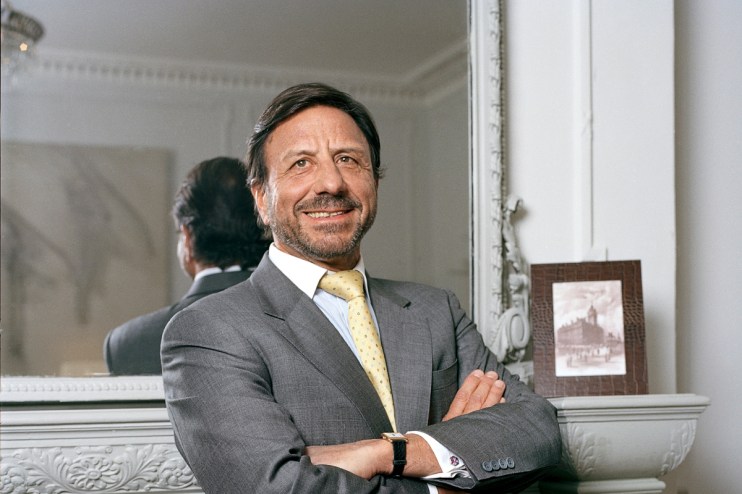
Tourism volumes to the Middle East could increase after a ceasefire in the region if the US and Israel topple the Iranian regime, Sir Rocco Forte has said as he doubled down on investment plans in the region despite an exodus of visitors.
The billionaire hotel magnate, whose eponymous Rocco Forte Hotels is part-owned by Saudi Arabia’s Public Investment Fund, told City AM that the outbreak of war had not affected his expansion in the Gulf, and that the region could become “even better” once tensions subside.
“With the current situation, people obviously aren’t going to travel there, but I don’t think this is necessarily a long-term situation,” he said in an interview. “The Middle East is an area of significant growth, and if there’s the right result after this war, it may become an even better area, because the threat has always been Iran largely creating the trouble.”
Gulf states like Dubai, Abu Dhabi and Saudi Arabia have spent years heavily promoting themselves as holiday destinations to western tourists as part of a region-wide push to reduce their economies’ reliance on oil.
But the outbreak of war across the Middle East – and the wave of flight cancellations, airspace closures and damage to hotels it has caused – has led hundreds of thousands of holidaymakers to cancel trips to the region, costing its tourism industry an estimated $600m (£448m) a day.
Middle East states will ‘invest huge money’ in marketing themselves after the war
An analysis conducted by Oxford Economics estimated that a “protracted conflict scenario” would see the region lose out on roughly 38m international visitors in 2026, translating to a 27 per cent, or £56bn, hit to the area’s burgeoning tourism sector.
But Forte, whose London-headquartered hospitality chain has already confirmed expansion plans to Saudi Arabia’s Red Sea coast and across the wider Gulf, told City AM that the autocratic regime in Iran had acted as a deterrent to investment into the region, and weighed on the wider economies. He added that should Washington and Tel Aviv manage overhaul the leadership, the region’s major players would plough even more resources into advertising themselves to western tourists.
“I think the Emirates will invest a huge amount of money in marketing themselves again once things have settled down,” he said. “I don’t think anything has changed that will change people’s attitudes dramatically – particularly if the threat of the war is diminishes.”
Forte’s hospitality footprint is mostly located across Italy, but the hotel tycoon’s empire also includes Brown’s hotel in London and Edinburgh’s Balmoral, both of which have been swept up in the government’s recent business rates hike.
Landlords across the UK banned Labour MPs from entering their pubs as part of a nationwide backlash from the hospitality industry to the Treasury’s overhaul of the levy, which is the commercial equivalent to council tax.
Pubs and live music venues were handed a subsidy by ministers after weeks of campaigning, but the wider hospitality sector is still facing steep business rates bill increases, which Forte said could be “ruinous” for many in the industry.
Brown’s, a 5-star hotel that can trace its roots back to the early 19th century, is facing a £1.5m hike to its annual tax bill as a result of the shake-up once the changes come into force fully in 2028.
He said: “Everything’s happening at once. All the extra costs have been tied to business all at the same time. And the sort of cumulative effect is enormous.”