UK’s secret Cold War tunnels at the centre of a multi-million pound lawsuit

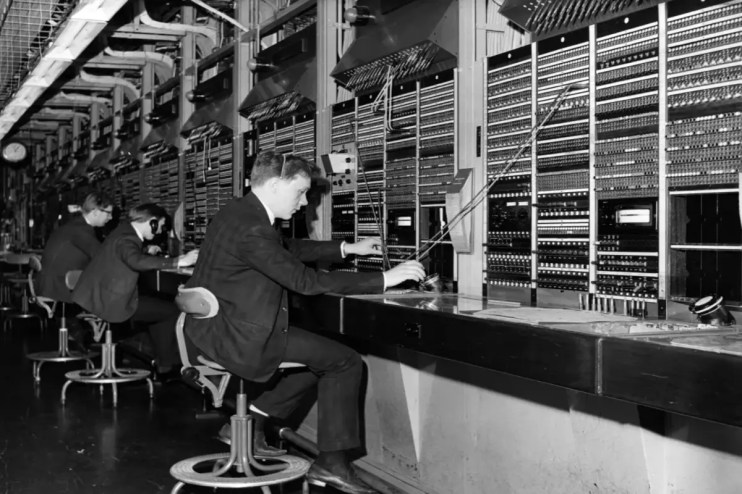
Secret tunnels that run under important locations and landmarks across the UK, including in the City, are at the heart of a legal claim filed to the High Court against FTSE 100 company BT.
The BT Group owns an ‘extensive network of underground deep level tunnels’ (DLT), originally built during the Cold War to protect critical communication lines from bombings.
In London these tunnels, known as the Kingsway Exchange, are located below Chancery Lane, directly below the Central Line, and span 8,000 square meters.
During World War II, the tunnels were occupied by the Special Operations Executive, which was reportedly thought to be the inspiration behind Ian Fleming’s Q Branch in his James Bond novels.
Then in 1981, and keeping with her mission to privatise Britain, Thatcher’s government transferred ownership of the tunnels to British Telecom (BT).
BT has had ownership until the telecoms giant put the tunnels up for sale in 2008. And after a short 15 year wait, it agreed to sell the London tunnels to The London Tunnels, a UK-based group backed by a private equity fund.
With the influx of private equity money the Kingsway Exchange has plans to reopen to the public following a £120m redevelopment project.
Spotlight on tunnels in lawsuit
In the midst of the London Tunnels’ aim to open in 2028 and attract up to 4.2m tourists a year, BT has been served with legal action by a retired real estate lawyer.
London Tunnels Plc and the Kingsway Tunnels are not involved in the claim.
BT Group employed Paul Girvan as a consultant between 2006 and 2018, who provided his services through Paralaw, an external paralegal service company primarily used by BT.
However, as he worked for BT, he ‘discovered’ that BT owned the DLT and noted how complex and extensive the network is.
According to the claimant’s document, as seen by City AM, it was alleged that the existing public search facilities provided by (then) BT Openreach did not contain information about these DLTs, and that this information was only released if BT considered there was a ‘need to know’.
The lawyer said he identified that the search systems that were used were ‘inefficient’ and leading to ‘significant delays in generating search results and sometimes inaccurate’.
Girvan alleged he investigated the ‘problem’ BT had and established a solution called BT Property Search (BTPS), which was meant to help protect BT’s underground tunnels and other assets from construction projects, give BT early warning of potential risks and generate revenue through search fees and Asset Protection Agreements (APA).
He alleged, with approval from the BT head of real estate legal team, that he conducted a trial over the Autumn of 2012, which was ‘successful’.
Girvan claimed that Paralaw operated BTPS under a Collaboration Agreement (CA) with his own company, Paul Girvan Limited.
It was agreed that he would initially hold a 12.5 per cent interest in the proceeds for the first year, and thereafter, Paralaw would assume operational responsibility.
The claim stated that Openreach received approximately two million search requests per year. It noted that “once Openreach products had been fully linked to BTPS, adopting a conservative approach, 50 per cent of that search volume would have necessitated a BTPS search.”
Its financial calculation to the court was that 1,000 searches would have required an APA, producing average annual revenues for him totalling over £6m.
However, the relationships broke down, and Girvan alleges in his claim that in August 2018, he was “excluded from involvement in the operation of BTPS”.
The lawyer is now suing both BT and Paralaw for allegedly breaching contract and conspiracy to commit unlawful means conspiracy over the alleged exclusion.
He is seeking financial compensation for the losses he claims to have suffered, with estimated losses, as confirmed by him, nearing £85m from lost search fees and APA fees. He also seeks interest and legal costs.
BT was contacted for a comment.