IMF warns Bank of England against cutting interest rates

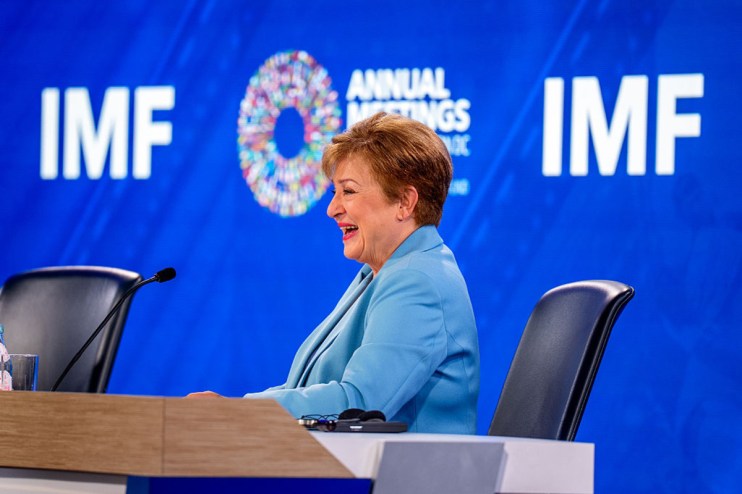
The Bank of England must keep interest rates on hold for as long as risks from the Iran war persist, the International Monetary Fund has said.
In its annual temperature check of Britain’s economic outlook, the fund warned rate setters to keep monetary policy “sufficiently restrictive” to avoid sparking a painful bout of inflation that becomes hard to contain.
Economists have been closely monitoring the UK economy for signs that elevated oil prices caused by the Middle East conflict have led to a cascade of price rises in the wider economy.
Bank of England policymakers are especially concerned about the emergence of so-called second-round effects – when an initial price shock spreads through an economy, leading workers to bargain for more wages, which in turn also gives companies breathing room to raise price further.
Evidence of that pattern, also known as a wage-price spiral, has so far been scant. Tricky trading conditions have made it difficult for firms to restore profit margins by raising prices. And a disintegrating labour market has left workers with little leverage to bargain for higher wages.
Inflation could be ‘entrenched’ with interest rates cut
The weak backdrop has spawned a string of calls for the Bank of England to reduce its benchmark interest rate from its current level of 3.75 per cent and ease monetary conditions.
But IMF officials warned that as long as there remained “heightened uncertainty” in the geopolitical arena, those demands were premature.
“Directors agreed that monetary policy should remain sufficiently restrictive to prevent higher energy prices from becoming entrenched in core inflation and wages,” they wrote.
Separately, the financial institution praised British lawmakers‘ efforts to keep control of the public finances, saying the UK’s fiscal plans struck “a good balance between deficit reduction and growth-friendly spending”.
And in a shot across Andy Burnham’s bows before the former Manchester mayor enters Downing Street, the authors emphasised “the importance of staying the course” on plans to cut the deficit.
“The response to the energy shock has been prudent and should remain tightly targeted, temporary and budget neutral,” they said of the government’s handling of the Iran war. “Over the medium to long term, rising spending pressures from ageing, defence and the energy transition will require difficult choices and greater focus on containing spending and enhancing efficiency.”
Chancellor Rachel Reeves said: “We have the right economic plan to build a stronger more secure Britain, with the IMF backing the choices I’ve made to put the country in a much stronger position than it was two years ago.”