Bank of England may set the stage for interest rate hikes this year

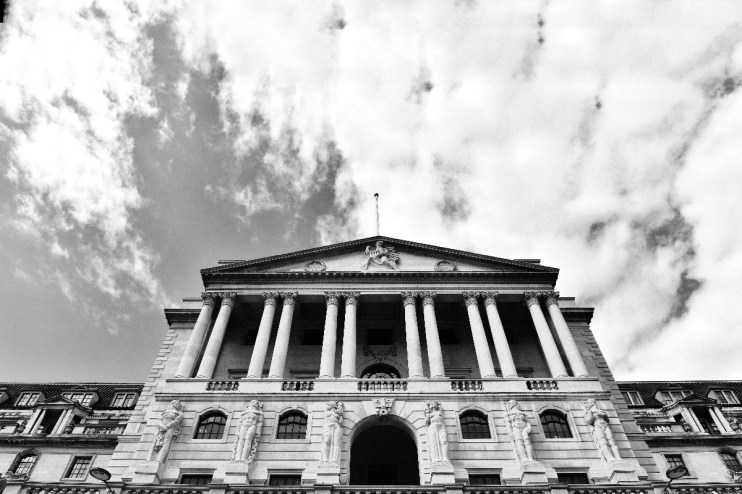
The Bank of England could today roll the pitch for a series of interest rate hikes this year after price shocks triggered by the war in Iran rippled through the global economy in the past quarter, City analysts have predicted.
Analysts across financial firms in the City are expecting the Bank to leave interest rates unchanged at 3.75 per cent. But some traders fear that more policymakers could back two hawkish members of the nine-strong Monetary Policy Committee[MPC], Huw Pill and Megan Greene, in pushing for tighter monetary policy.
Both Greene and Pill voted to raise rates at the last meeting. Strategists at Mizuho fear that the economist Catherine Mann, a member of the committee, will add to division by backing an interest rate hike, while deputy governor Clare Lombardelli has been singled out as another potential hawk.
The Bank has been grappling with higher and more persistent inflation fuelled by a spike in energy prices brought on by the war in Iran. In a report yesterday, the independent think tank NIESR said inflation would likely remain above the Bank’s two percent target until 2029 under even a benign scenario where hostilities cool and oil prices level out at $74 per barrel. .
A 6-3 or 5-4 split on the MPC tomorrow could send traders into a spin and signal more interest rate hikes on the way. The yield on two-year gilts – which signal market expectations on interest rates – are already suggesting investors believe there could be up to three hikes on the horizon.
“Mann has been increasingly vocal about upside inflation risks and I wouldn’t be surprised to see her vote for a hike,” Mizuho’s Evelyne Gomez-Liechti said.
“The hawkish risk comes from Lombardelli, who remains a potential swing vote if concerns around inflation persistence continue to build.”
Economists on the MPC are scarred by the spiralling effects of higher wages and inflation after Russia’s full-scale invasion of Ukraine in 2022, which led to the consumer price index (CPI) ratcheting up to a high of over 11 per cent.
While the MPC has suggested that a weakened jobs market could subdue price pressures in the UK economy, Mann has warned that higher inflation expectations among businesses and households could demand an “activist hike”.
Lombardelli also said in June that as inflation continues to exceed two per cent, the Bank could be prompted to “respond more forcefully”.
Tensions on interest rate outlook
Some City firms including Peel Hunt and Berenberg said that the Bank’s next move will be to cut interest rates after a series of decisions to leave interest rates at 3.75 per cent. The latter’s forecast believed that a cut to interest rates could come as early as December
“We think US President Donald Trump wants to avoid high oil prices because high petrol prices would damage the Republican party’s chances in the 3 November mid-term elections,” Berenberg economist Andrew Wishart said.
“If our reasoning holds, the Bank of England should turn more dovish over the remainder of the year, resume interest rate cuts in December, then lower the policy rate twice more to three per cent in mid-2027.”
Peel Hunt’s Kallum Pickering agreed that a narrower split on the MPC would be the “clearer signal” that interest rate hikes were set to come, though this was a “tail risk” rather than a central hypothesis.
The future of monetary policy largely depends on a fall in oil prices, which briefly skimmed $100 per barrel after an Iran-backed militia fired shots at shipments in the Gulf region.
UBS said it expected the Bank to cut near-term inflation forecasts as data last week suggested that price growth pressures had eased by the end of the first half of the year.
In April, the Bank suggested inflation would edge towards four per cent at the end of this year, even in a situation where trade across the Strait of Hormuz flows freely again.
Traders vs the MPC
Analysts are also nervous about the Bank’s forecast judgments. For April’s Monetary Policy Report, the Bank decided to offer three contrasting scenarios for the UK economy based on different conclusions to tensions in the Middle East.
Morgan Stanley researchers have predicted that the Bank will revert to publishing a central forecast yet still offer two “risk scenarios”, which would express “some desire to return to simplicity”
The Bank’s forecasts and language has become more important for traders, with the MPC previously attributing a squeeze on inflation to financial markets pricing in interest rate hikes.