I’m the only disabled director in the FTSE 100 – these are three questions every CEO must ask

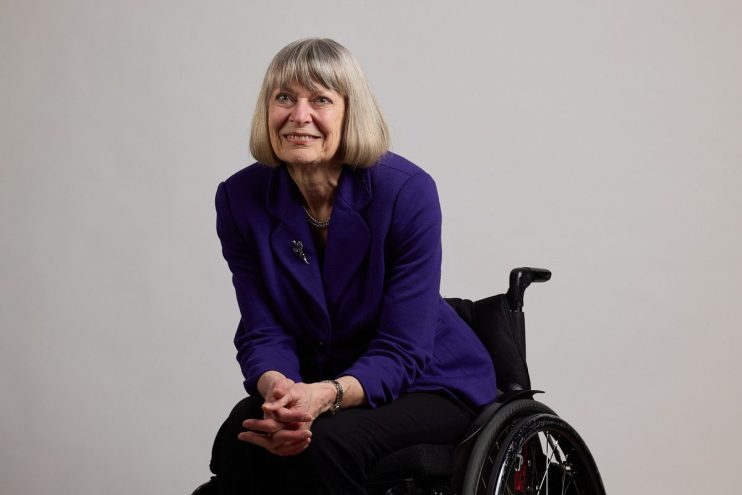
In most organisations 15-20 per cent of employees will classify as disabled, they just aren’t telling you who they are, says Sara Weller
As the only FTSE 100 director who has openly declared having a disability, I am convinced about the opportunity to drive strong commercial and social outcomes, in parallel, by greater inclusion of those with disabilities, up to the highest level of our most respected organisations.
I come to this debate wearing a number of hats – in the past 20 years I have been both an executive and a non-executive Director, sat on four Top 100 plc Boards, acted as a Trustee of leading charities and led Boards of Whitehall Departments.
But I admit it’s been a tough few months for advocates of greater inclusion. “DEI” has become a dirty word. You have needed a Teflon skin to deflect the vitriol coming across the pond. But I am standing my ground; to me, the case for greater disability inclusion is rock solid.
When asked “why should I employ people with disabilities”, my answer is “you already do”. In most organisations 15-20 per cent of employees will classify as disabled, they just aren’t telling you who they are.
Why not?
Because they don’t trust you. You have not convinced them that you will treat their declaration with respect and a constructive conversation about how they can help you at work. So they don’t share. Because they fear they will suddenly be seen as baggage, with their career aspirations extinguished and the expectations others have of them will be mysteriously lowered.
As these employees look up the tree for role models, they find none. The conclusion is clear: “disabled people don’t get promoted around here”; so your talented but unappreciated disabled employees remain hidden under a veil of secrecy cast by non-disclosure from those at the top.
This point is made throughout Spotting the Value, a new report from The Disability Policy Centre, the only disability think tank in the UK. It talks about the dampening effect which cascades inevitably down as a wholly predictable result of non-declaration by senior leaders.
Three simple questions
It is time for businesses to break out of old, worn-out stereotypes of disabled people, and for boards, chairs and CEOs to ask themselves these three simple questions:
Does your workforce reflect, across all levels, the customers and communities you serve?
Does each person you employ feel fully engaged and valued for their contribution?
Is everyone equipped with the environment and tools they need to do their job brilliantly?”
Very few, if any, big UK organisations can answer Yes to these three questions today. I have been on the boards of two who are further ahead than most: BT and Lloyds Banking Group. Both report well into double digit percentages of senior leaders declaring disabilities. Only six of the FTSE 100 even report this number at all. The other four declare three per cent or below. But it’s a start and I applaud their transparency.
UK businesses still wrestle to break free of decades of poor productivity and years of stagnating growth. Yet by allowing systemic disability exclusion to have a hold of their organisation, CEOs and boards are systematically ignoring the opportunity presented by an under-deployed and under-rewarded community of talented people with disabilities, hidden in plain sight in their workforces.
I salute Chloe Schendel-Wilson and her team at the Disability Policy Centre for a gloriously tough talking but optimistic assessment of the untapped potential of disabled people inside our organisations. I urge every FTSE CEO, board chair, and major public sector leaders to read this report, discuss it with colleagues and put its messages into action, before others get there first.
Sara Weller is a Non Executive Director of BT plc, Chairs the Money and Pensions Service, and has been on the Boards of 3 other FTSE 100 businesses (Lloyds Banking Group, United Utilities plc and J Sainsbury plc). Sara is on the ‘Keep Britain Working’ Review Advisory Group and, in 2025, co-Founded ActionAble, a movement formed to encourage Boards to tackle disability exclusion at work.