Has YouGov been barraged by Farage?

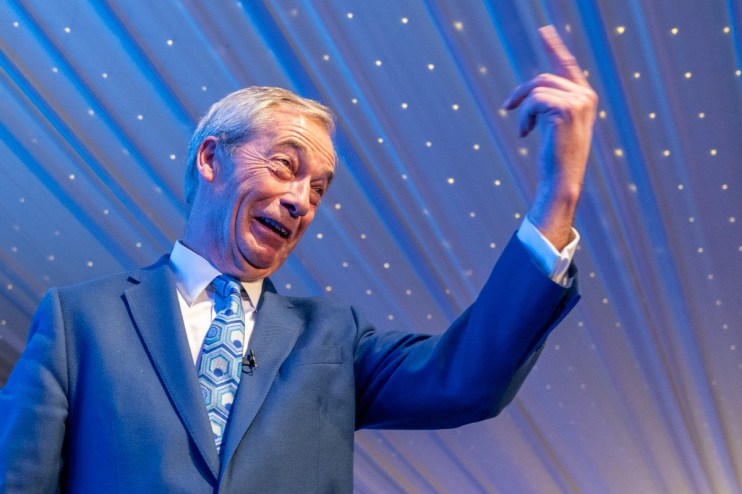
Nigel Farage has never been shy in locking horns with big business.
Just ask Dame Alison Rose, whose stint at Natwest came to a sharp halt after a row with Farage over a debanking. The British banker resigned after Natwest admitted to “serious failings” in closing the Reform UK leader’s account at its high-net-worth subsidiary Coutts.
Rose even missed out on pocketing a £7.6m on her way out the door through not being awarded “good leaver” status – though Farage was quick to remind his legion of followers on social media “don’t feel sorry for her” as Rose still walked away with £2.5m.
Two years on, Farage has his sights on a fresh target after a row with YouGov on its “deceptive” polling data.
On Tuesday, the firm confirmed it had commenced plans to scout for a new chief executive to replace Stephen Shakespeare – the Bard of polling, as he is known in some quarters – who will stay in post until a suitable candidate is found.
On the surface, the case may have a whiff of deja-vu, but is this another repeat of a Farage barrage of an institution?
The feud with YouGov first bubbled up prior to the 2024 general election, where Farage accused YouGov of “suppressing” Reform’s vote by not listing it with the top level options. But tensions boiled over this year when data from the firm showed Farage’s net favourability dropped to the lowest in nearly a year at -37 – a result Farage branded as “systemic bias” in how Yougov samples younger and older voters.
Ahead of the local elections the Clacton MP turned up the heat on YouGov, calling forecasts that Reform would struggle in London and urban centres “fatally flawed”.
Farage touts YouGov’s stock crash
Farage’s opponents point out that the polling company was co-founded by Nadhim Zahawi, the former Conservative MP Reform has just welcomed to its ranks – hardly the kind of person to be plotting against the party. Of course Zahawi hasn’t owned or run YouGov for several years now, though he did join in on the pile on describing his old team an an “outlier” across polls.
But falling under the Farage scruple comes at an uneasy time for the analytics firm.
In early 2025, Steve Hatch was ousted as chief executive after pressure from active investor Gatemore Capital, who called for Hatch to be replaced by then-chairman Shakespeare after the firm’s share price crashed by more than a half since 2023.
Shakespeare – who joint-founded YouGov in 2000 – was named the new top boss whilst a recruitment campaign was launched. But the German-British entrepreneur has remained in post for the last 12 months with the firm stating it was undertaking another “search process”.
Shares have shed more than 80 per cent of their value in the last five years – huge losses that Farage took no hesitation in touting on X.
The main culprit of this drop was a staggering single-day 40 per cent crash in June 2024, as YouGov issued a profit warning as bookings for fast-turnaround research for businesses lagged.
This has also been followed up by woes in the firm’s Shopper arm, which comes from the acquisition of GfK’s Consumer Panel Services. Profit tumbled to £6.8m in the first half of the financial year compared to £13.9m last year.
It led to YouGov launching a “strategic review” of the business – a review that potentially leads to offloading a division just two years after buying it.
As far as the politics goes – YouGov’s latest financials shows it may be holding up against slashed research spend after a 2024 Parliamentary review targeted the area for savings, leading to 39 communication campaigns being cancelled and 46 having their budgets reduced for the 2024/25 period.
YouGov’s research division, which handles the high-value custom studies typically used by government departments, showed research revenue held steady at £195m with two per cent growth.
But with the firm’s own recent polls positioning Farage as a top contender for Number 10, YouGov may not hold its breath for a run of fresh government contracts if one of its top critics gets hold of the purse strings.