City traders’ exoneration in Libor case proves the importance of jury trials

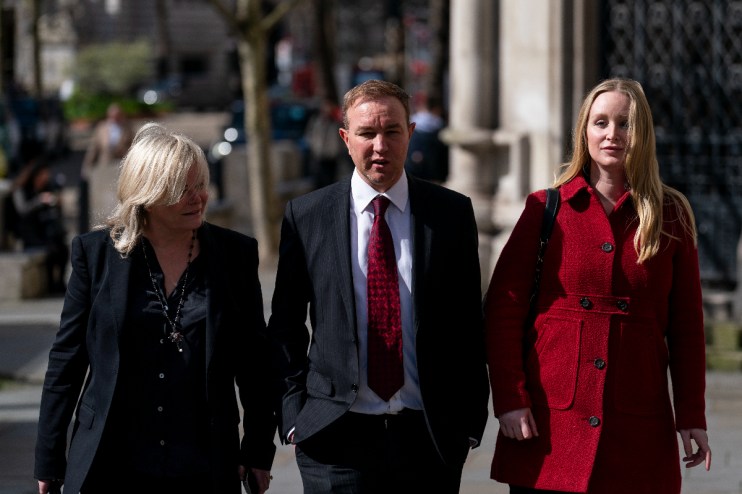
The Supreme Court has today ruled that juries were misdirected in the original trials of Tom Hayes and Carlo Palombo for Libor fraud, affirming an important principle of criminal justice, says Ellen Gallagher
The Supreme Court today overturned the convictions of Tom Hayes and Carlo Palombo, convicted and imprisoned in 2015 and 2019 respectively for a total of 15 years for conspiracy to defraud in connection with Libor/Euribor benchmark manipulation.
This is the culmination of almost ten years of appeals by several of the nine individuals convicted of Libor manipulation in the UK.
A key ground for today’s decision is that the juries were misdirected by the trial judges who, particularly in the case of Hayes, removed from them the question of whether the defendant had acted dishonestly – a key ingredient of the offence. The Supreme Court condemned that approach, finding that the judge over-stepped his role and that the directions were “legally inaccurate” and unfair.
Today’s judgement therefore affirms a foundational principle of the English jury trial – that matters of fact (such as, was the defendant in fact dishonest?) are for the jury alone to determine and not the judge. Departure from this principle in the Libor/Euribor cases created the conditions for unfair trials and led to unsafe convictions.
The right to a jury trial
The decision is handed down against the backdrop of a wider public debate about the role of the jury trial in the English criminal justice system. A recent report by Sir Brian Leveson into the crisis facing the criminal courts set out that, as of December 2024, there were around 75,000 open cases in the Crown Court and trials are currently being listed as far ahead as 2029.
Leveson proposes measures to address this. Among his recommendations is that serious and complex fraud cases are to be tried by judges alone, removing the right to trial by jury for those offences.
Fraud cases frequently raise complex technical issues which can be challenging for juries to understand.
The Libor/Euribor cases were no exception. The subject matter was an esoteric benchmark for short-term interest rates calculated by reference to the canvassed views of traders the details of whose day-to-day roles would be a complete mystery to most people.
Nonetheless, the Supreme Court’s ruling confirms that the evaluation of the facts which a jury provides was a fundamental pillar of a fairly conducted jury trial. Their assessment of the defendant’s conduct was to be preferred over that of the judge.
The judge who presided over the trial of Tom Hayes made an assessment of the factual position which the Supreme Court has now ruled led to an unsafe conviction. If the right to trial by jury for complex fraud cases is to be removed, future defendants will lose the opportunity to have their honesty assessed by a jury of their peers.
There may well be arguments in favour of this approach. But such a profound change to the criminal justice system should be undertaken only if it furthers the proper administration of justice. If the decision is taken simply on the basis that the system cannot afford to do
otherwise, the potential costs may be borne instead by defendants, denied the right to a jury trial which will still be enjoyed by those accused of other offences of equal seriousness.
Ellen Gallagher is a Partner at Vardags specialising in financial crime and investigations